Clutch Life Calculator
Estimate how quickly your clutch might wear out based on your driving habits. Enter your driving conditions below to see your estimated clutch lifespan in miles.
Estimated Clutch Lifespan
Your clutch may last:
Based on your driving habits, this is for your driving style.
Ever mashed the gas pedal in traffic, heard a weird smell, and wondered if your clutch just died? You’re not alone. Clutch burnout doesn’t happen overnight - but it can happen faster than you think if you’re treating it like a suggestion instead of a mechanical system. The truth? A clutch can burn out in as little as 20,000 miles under bad habits, or last over 100,000 miles if treated right. It all depends on how you drive, not just what’s under the hood.
What Actually Happens When a Clutch Burns Out?
A clutch isn’t just a metal disc. It’s a layered system: the pressure plate, the friction material, the release bearing, and the flywheel. When you press the clutch pedal, these parts disengage the engine from the transmission. When you let go, they slam back together - and that’s where wear happens.
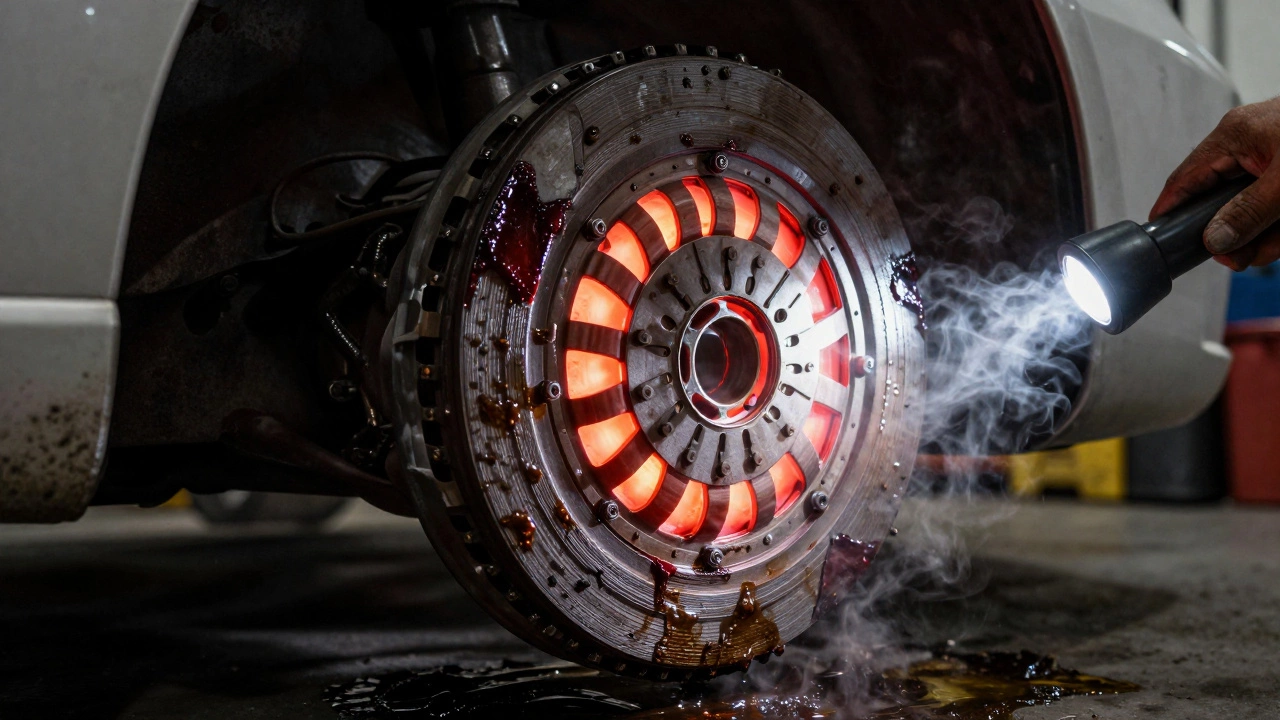
Clutch burnout isn’t about the part snapping. It’s about the friction material on the disc wearing down until it can’t grip anymore. Once that happens, the engine revs but the car doesn’t move - you’ve got clutch slip. That smell? That’s the clutch disc overheating and glazing over. It’s like rubbing sandpaper on a hot stove. Once it’s glazed, it’s done.
How Fast Can It Go? Real Numbers from Real Drivers
Let’s cut through the myths. A clutch doesn’t have a fixed lifespan. It’s not like an oil change you schedule every 5,000 miles. Here’s what we see in real-world repair shops across the UK:
- 10,000-20,000 miles: This is the burnout zone. Happens when drivers ride the clutch - meaning they keep their foot lightly on the pedal while driving, especially in traffic. Also common in stop-and-go city driving with frequent hill starts and aggressive launches.
- 30,000-60,000 miles: Typical for drivers who shift smoothly, don’t “bob” the pedal, and avoid high-RPM launches. This is the average for most manual cars in normal use.
- 80,000-120,000+ miles: Seen in conservative drivers - think delivery drivers who cruise at steady speeds, or people who only use their manual car on weekends. Some Ford Focuses and Volkswagen Golfs in Bristol have hit 140,000 miles with the original clutch.
One mechanic in Bristol told me about a 2012 Mini Cooper that died at 18,000 miles. Owner drove it like a go-kart - constant clutch slipping while waiting at lights, then flooring it on green. The clutch didn’t fail - it just melted.
What Kills a Clutch Fast? The Top 5 Culprits
Here’s what actually wears out your clutch faster than anything else:
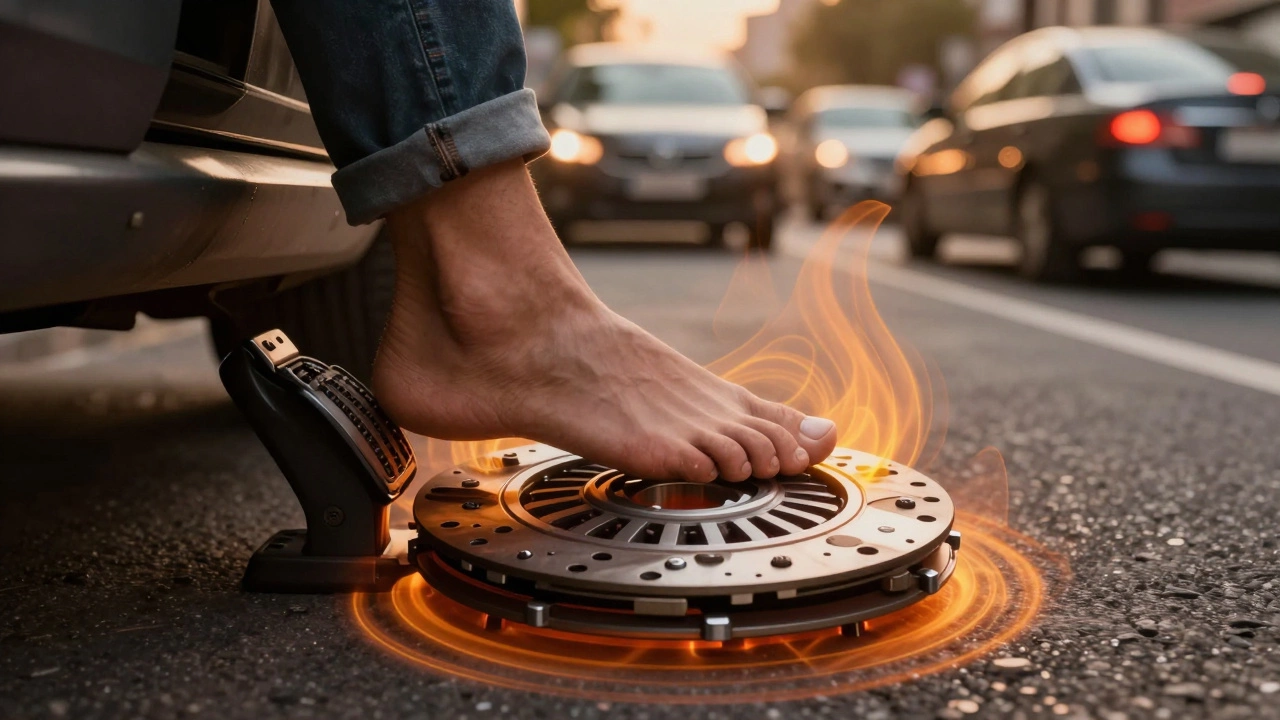
- Riding the clutch - Even light pressure on the pedal while driving creates partial engagement. That generates heat and glazes the friction surface. No, resting your foot on the pedal isn’t harmless.
- High-RPM launches - Revving to 4,000 RPM and dropping the clutch? That’s like slapping the disc with a sledgehammer. Every time you do it, you’re burning off 5,000-8,000 miles of life.
- Hill starts without the handbrake - Holding the car on a slope with just the clutch? You’re grinding the disc against the flywheel. Use the handbrake. It’s not cheating - it’s engineering.
- Driving with a worn-out release bearing - A noisy bearing doesn’t just sound bad. It can cause uneven pressure on the clutch disc, leading to hot spots and premature failure.
- Heavy loads + poor gear selection - Towing, carrying roof boxes, or lugging in too high a gear forces the clutch to slip more. That’s extra heat, extra wear.
How to Tell Your Clutch Is Dying Before It’s Too Late
You don’t need a diagnostic tool to spot trouble. Here are the real signs:
- Engine revs rise but speed doesn’t - Especially when accelerating in higher gears. If your RPM jumps 1,000 without a corresponding speed increase, the clutch is slipping.
- A burning smell - Not engine oil, not brakes. It’s a sharp, acrid odor - like hot plastic or burning toast. That’s the friction material overheating.
- Clutch pedal feels softer or higher - If you now have to press the pedal halfway to the floor to engage, the disc is worn thin. The hydraulic system compensates, but it’s a warning.
- Difficulty shifting gears - Grinding or resistance when shifting, especially into first or reverse, can mean the clutch isn’t fully disengaging.
- Clutch pedal vibration - A shaking pedal under light pressure? That’s usually a warped flywheel or glazed disc.
One driver in Bath ignored the smell for three months. When the clutch finally gave out on the M4, it took 12 hours to tow the car. The repair bill? £850. A simple inspection at 60,000 miles would’ve saved him £600.
Can You Extend Clutch Life? Yes - Here’s How
Clutch longevity isn’t magic. It’s habits. Here’s what works:
- Shift at lower RPMs - 2,000-2,500 RPM is plenty for normal driving. You don’t need to scream the engine.
- Use the handbrake on hills - Always. It removes all load from the clutch during starts.
- Don’t “ride” the clutch in traffic - If you’re stopped for more than 10 seconds, put the car in neutral and take your foot off the pedal.
- Avoid clutch “slip” tuning - Some people think slipping the clutch slightly helps with acceleration. It doesn’t. It just kills the disc faster.
- Get your clutch fluid checked - Low or dirty fluid in the hydraulic system causes inconsistent pressure. That leads to uneven wear.
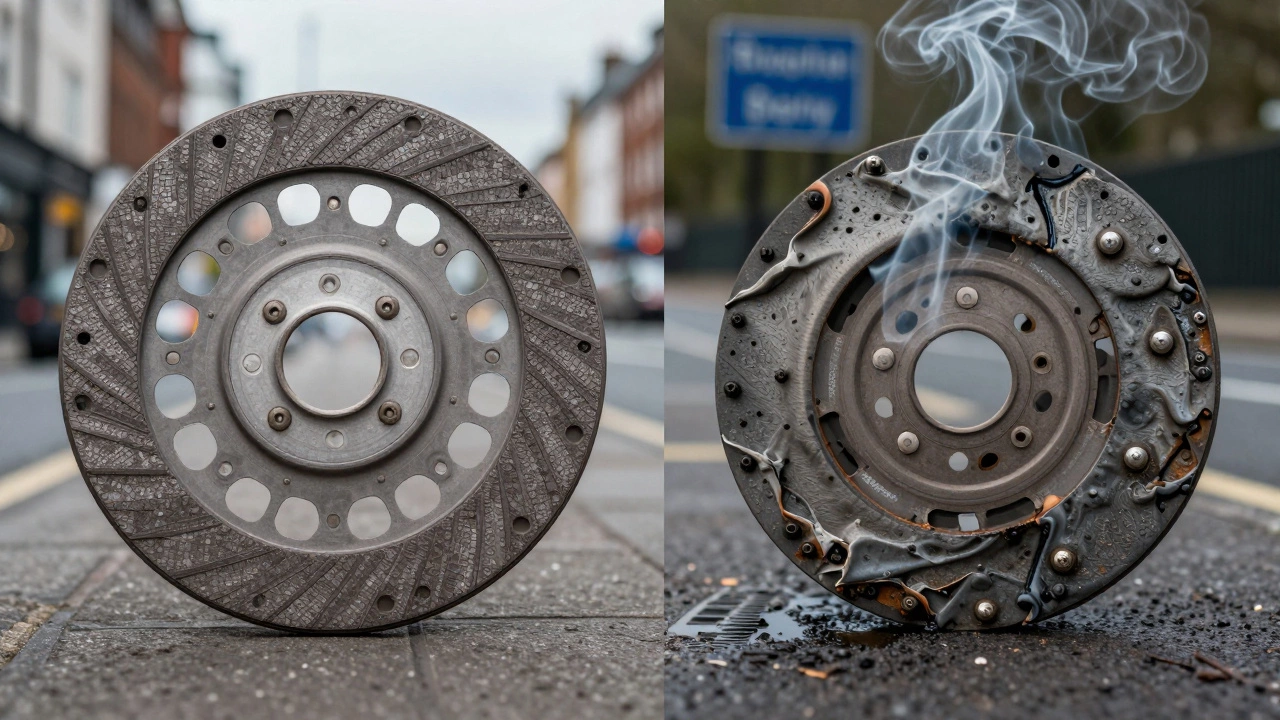
Clutch Kits: What to Look for When Replacing
If your clutch is gone, don’t just grab the cheapest kit. A bad replacement can kill a new clutch in 10,000 miles.
There are three main types:
| Clutch Type | Best For | Lifespan | Cost Range (UK) |
|---|---|---|---|
| Standard OEM | Everyday driving | 80,000-120,000 miles | £300-£500 |
| Performance (Heavy-Duty) | Towing, spirited driving | 60,000-90,000 miles | £450-£700 |
| Race-Grade (Multi-Plate) | Track use only | 10,000-30,000 miles | £800-£1,500 |
Most people should stick with OEM. Performance kits are overkill unless you’re towing or modifying your engine. Race kits? They’re for track days - they’re harsh on daily driving and wear out fast.
Also, always replace the release bearing and flywheel when you replace the clutch. A worn flywheel can ruin a new disc in weeks. Resurfacing the flywheel is cheaper than replacing it - but only if it’s not cracked or warped.
What If You Ignore the Warning Signs?
Driving with a slipping clutch doesn’t just cost you money - it can damage other parts.
- Transmission damage - If the clutch slips too long, the input shaft can overheat and warp.
- Flywheel damage - Glazing or warping can’t be fixed by just replacing the clutch.
- Hydraulic system failure - A worn clutch puts extra strain on the master or slave cylinder.
One guy in Cardiff drove his 2009 Honda Civic for six months with a slipping clutch. When he finally got it fixed, he had to replace the clutch, flywheel, release bearing, and slave cylinder. Total cost: £1,400. A simple clutch job at the first sign of trouble? £650.
Can a clutch burn out in a week?
Yes - but only if you’re driving aggressively every day. If you’re constantly slipping the clutch, doing high-RPM launches, or driving uphill with a heavy load, a clutch can fail in under 1,000 miles. It’s rare, but it happens. One mechanic in Bristol replaced a clutch after just 700 miles because the owner used the car to tow a trailer daily without upgrading the clutch kit.
Does driving in the city wear out a clutch faster?
Absolutely. Stop-and-go traffic means constant clutch engagement and disengagement. Add in hill starts and traffic jams where you’re holding the car on the clutch for minutes at a time, and you’re accelerating wear. City drivers often see 30% less clutch life than highway drivers.
Is it cheaper to replace the clutch myself?
It depends. A clutch kit costs £200-£600. Labor is £400-£700. If you have the tools, experience, and time, you can save money. But if you’re not confident, you risk damaging the flywheel, transmission, or hydraulic system - which can cost thousands. Most DIYers end up paying more in repairs than they saved.
Can you drive with a slipping clutch?
Technically, yes - but you shouldn’t. Driving with a slipping clutch puts extra strain on the transmission and engine. It also increases the risk of getting stranded. If you notice slipping, get it checked within 500 miles. The longer you wait, the more damage you do.
Do clutch kits come with a warranty?
Most reputable brands offer 1-2 years or 20,000-40,000 miles warranty. But warranties are void if you don’t replace the flywheel or release bearing at the same time. Always ask for the warranty terms before buying - and keep your receipt.
Final Thought: It’s Not About the Clutch - It’s About Your Habits
The clutch is one of the most abused parts in a manual car. But it’s not fragile. It’s designed to last - if you let it. You don’t need to drive like a monk. Just avoid the three deadly sins: riding the pedal, high-RPM launches, and hill starts without the handbrake. Do that, and your clutch could outlive your car.