Brake Pad Health Inspector
Enter Your Brake Details
Visual Inspection Guide
Assessment Results
Status
Description
Recommended Actions:
Safety Rating Breakdown:
| Factor | Condition | Risk Level |
|---|
You press the pedal, but the car doesn't slow down as fast as it used to. Or maybe you hear a high-pitched screech every time you stop at a traffic light. It’s unsettling, isn’t it? Brakes are the single most important safety system in your vehicle. When they fail, the consequences can be catastrophic. Yet, many drivers ignore the early warning signs until it’s too late or until a mechanic tells them they need an expensive repair.
Identifying worn brake pads early can save you hundreds of pounds and, more importantly, keep you safe on the road. You don’t need to be a professional mechanic to spot the trouble. In fact, your ears and eyes often catch the problem long before the dashboard lights up. Here is exactly how to tell if your brakes are failing, what those signals mean, and when you absolutely must pull over.
The Sound of Trouble: Squealing, Grinding, and Clicking
Your car speaks to you, but only if you’re listening. The first sign that your brake pads are wearing out is almost always auditory. Modern brake systems are designed with built-in wear indicators. These are small metal tabs embedded in the pad material. As the friction material wears down, this tab eventually scrapes against the rotor (also known as the brake disc).
- Squealing: A high-pitched squeal when you apply the brakes usually means the wear indicator is touching the rotor. This is your car’s way of saying, “Check me soon.” It’s not an emergency yet, but you should plan a replacement within the next few hundred miles.
- Grinding: If you hear a harsh, metallic grinding or growling sound, the situation is urgent. This means the pad material has completely worn away, and steel is rubbing directly against steel. This damages the rotors severely. Driving with grinding brakes can ruin your rotors, calipers, and even your wheel bearings. Stop driving immediately.
- Clicking: A clicking noise from the wheels while driving might indicate a loose brake pad or a broken anti-rattle clip. While less common than squealing, it suggests the braking mechanism isn’t seated correctly, which can lead to uneven braking.
Don’t confuse these sounds with tire noise. Tire hum changes with speed and direction, whereas brake noise intensifies specifically when you press the pedal.
The Feel: Vibration and Soft Pedals
If your ears miss the warning, your body will feel it. The sensation in the brake pedal and the steering wheel provides critical data about the health of your braking system.
Have you ever felt a pulsating vibration in the brake pedal or the steering wheel when you stop? This is often caused by warped rotors. When brake pads wear unevenly or overheat, they can cause the metal rotors to become slightly bent or develop hot spots. Every time the brake pad clamps onto a high spot on the rotor, it sends a shudder through the hydraulic system. This isn’t just uncomfortable; it reduces braking efficiency because the contact surface is inconsistent.
Another major red flag is a "soft" or "spongy" brake pedal. If you have to push the pedal all the way to the floor to get any stopping power, you likely have air in the brake lines or a leak in the brake fluid system. Air compresses easily, unlike fluid, so you lose hydraulic pressure. Alternatively, if the pedal feels hard as a rock and requires immense force to stop the car, your brake booster might be failing. Both scenarios require immediate attention from a qualified technician.
Visual Inspection: Checking Pad Thickness
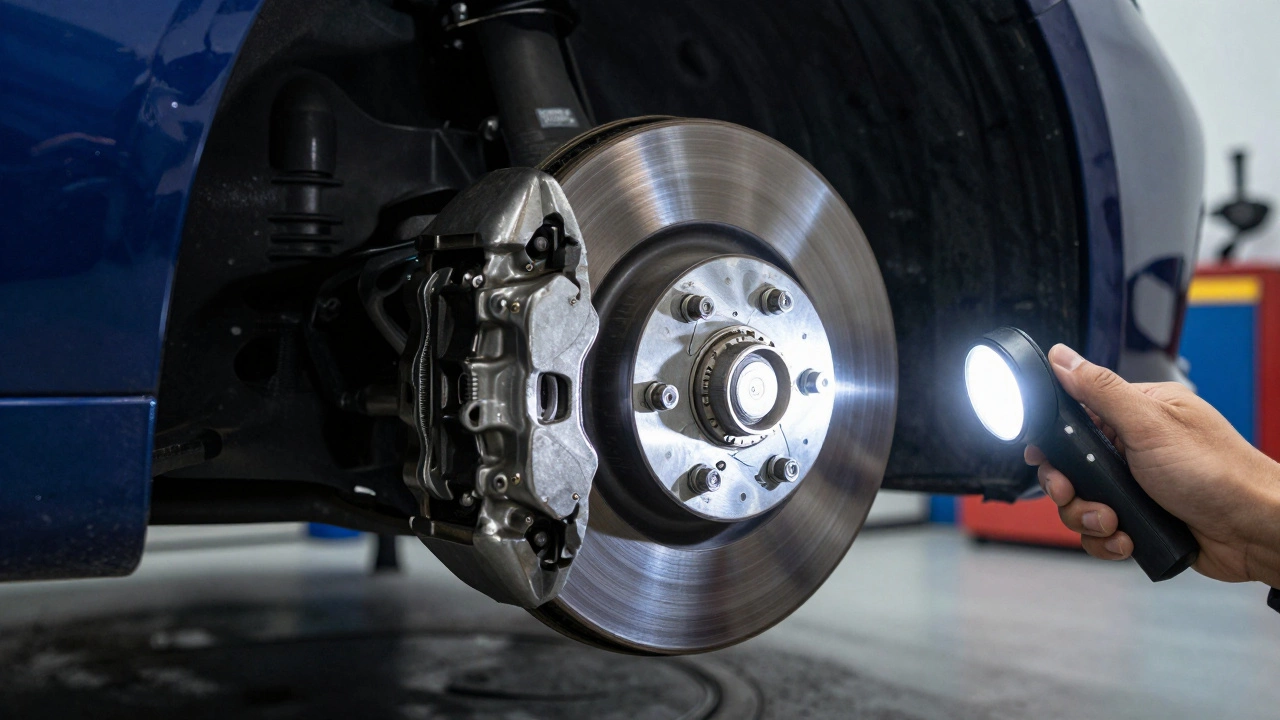
You can actually see your brake pads without removing the wheels. All you need is a flashlight and a bit of curiosity. Look through the spokes of your alloy wheels. You’ll see the rotor (the shiny metal disc) and the caliper (the metal clamp surrounding it). Inside the caliper, you’ll see the brake pad.
Here is a simple rule of thumb for visual inspection:
- New Pads: Typically 10-12mm thick.
- Acceptable Wear: 4-6mm thick. You have some life left, but start budgeting for a replacement.
- Critical Wear: Less than 3mm. Replace immediately.
- Danger Zone: If you can barely see the pad material and mostly see the metal backing plate, you are already damaging your rotors.
If your car has steel wheels with hubcaps, you may need to remove the hubcap or jack up the car to get a clear view. Safety first-always use jack stands, never rely solely on a hydraulic jack.
Dashboard Warning Lights: The ABS and Brake Indicators
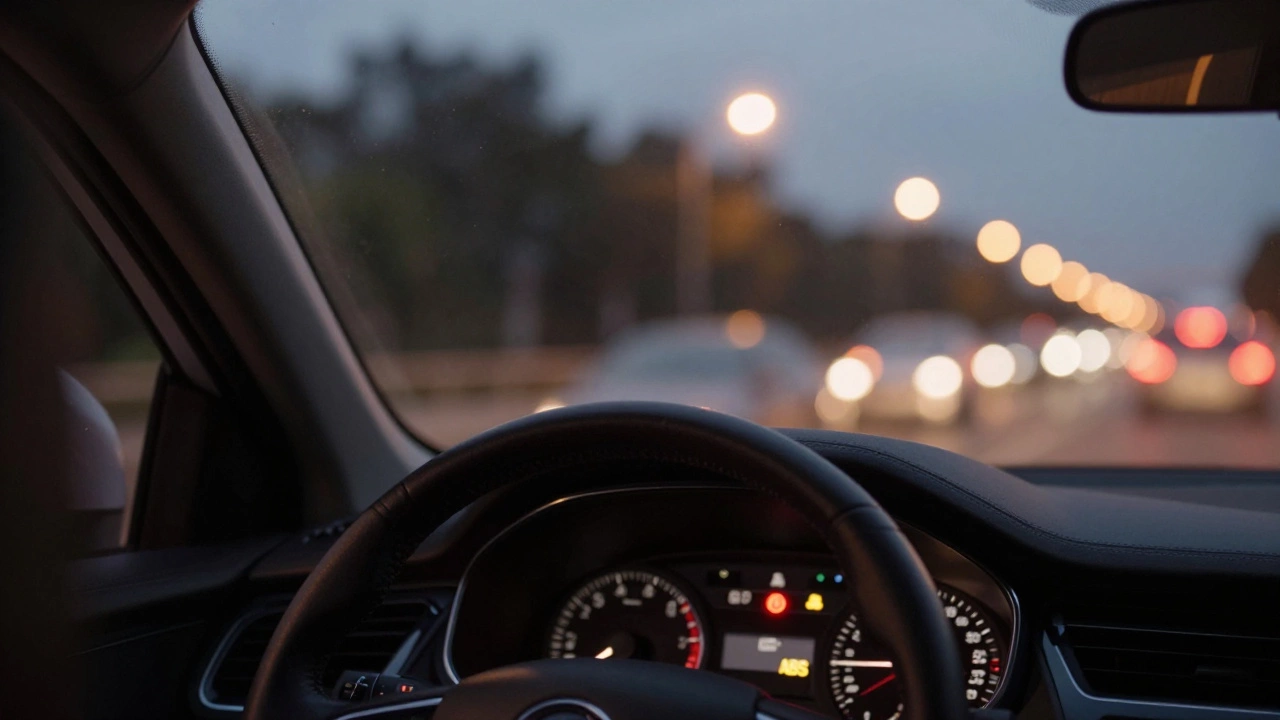
Modern vehicles are equipped with sensors that monitor brake performance. Pay attention to two specific lights on your dashboard:
| Light Symbol | Meaning | Action Required |
|---|---|---|
| (!) inside a circle | General Brake System Warning | Check brake fluid level. If fluid is low, inspect for leaks or worn pads. |
| ABS | Anti-lock Braking System Fault | Brakes still work, but ABS won't engage during skids. Get diagnosed ASAP. |
| Parking Brake (P) | Handbrake Engaged | Ensure handbrake is fully released. If light stays on, sensor may be faulty. |
Some luxury cars also feature a dedicated brake pad wear sensor. This electronic sensor sends a direct signal to the dashboard when the pad reaches a minimum thickness. If you see a message like "Brake Pads Worn" on your instrument cluster, do not ignore it. The manufacturer has determined the remaining friction material is insufficient for safe stopping distances.
Pulling to One Side: Uneven Braking
Do you notice your car drifting to the left or right when you brake firmly? This is a dangerous sign of uneven brake wear or a stuck caliper. Ideally, both front brakes should apply equal pressure. If one caliper is seized due to rust or lack of lubrication, that wheel will drag or grab harder than the other.
This imbalance puts extra stress on the suspension and tires, leading to premature wear elsewhere. It also increases your stopping distance because the car isn't braking efficiently. If you feel this pull, check if one wheel feels hotter than the others after a drive. A significantly hotter wheel indicates a dragging brake, which can overheat the brake fluid and cause total brake failure.
When to Replace vs. When to Repair
Knowing your pads are bad is step one. Step two is understanding the scope of the repair. Can you just change the pads? Not always.
In many cases, replacing the pads is straightforward. However, if you’ve ignored the squealing for months, you’ve likely scored or warped the rotors. Installing new pads on old, damaged rotors is like putting fresh tires on a flat rim-it won’t work properly. The new pads won’t seat evenly, and the noise will return quickly.
A general guideline: if your rotors are thinner than the manufacturer’s minimum specification (usually stamped on the rotor hat), they must be replaced. Most mechanics recommend resurfacing or replacing rotors every other time you replace pads. For modern cars with thin rotors, replacement is often cheaper and safer than resurfacing.
Maintenance Tips to Extend Brake Life
While you can’t stop wear entirely, you can slow it down. How you drive matters more than you think.
- Engine Braking: When approaching a red light or a downhill slope, lift off the accelerator and downshift. Let the engine’s compression slow the car down. This reduces heat buildup in the brakes.
- Avoid Riding the Brake: Keeping your foot lightly on the brake pedal while coasting generates constant friction and heat. Only brake when you need to slow down.
- Reduce Weight: Carrying unnecessary heavy loads in your trunk increases the kinetic energy your brakes must dissipate. Lighter cars stop faster and wear pads slower.
- Regular Fluid Checks: Brake fluid absorbs moisture over time, which lowers its boiling point. Flush your brake fluid every two years or 30,000 miles to prevent vapor lock and corrosion.
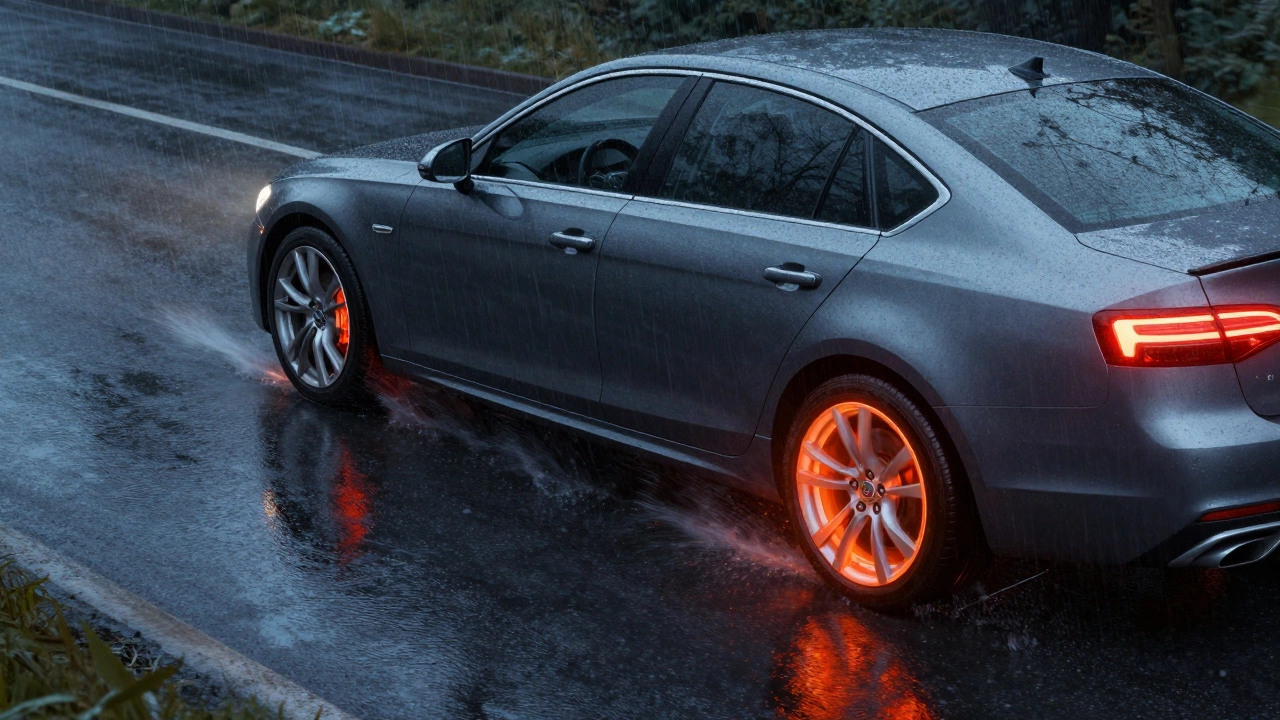
Living in Bristol, where the weather can be wet and roads hilly, puts extra strain on braking systems. Rain reduces traction, meaning you brake harder and longer to stop. Ensure your pads are in top condition before the rainy season hits.
Cost Considerations: DIY vs. Professional Service
Replacing brake pads yourself can save money, but it’s not a job for beginners. You need the right tools: a jack, jack stands, a C-clamp to compress the caliper piston, and torque wrenches. More importantly, you need knowledge. Improper installation can lead to brake fade or failure.
A professional service includes bleeding the brake lines, checking the calipers for leaks, and ensuring the parking brake mechanism (if integrated into the rear pads) is adjusted correctly. In the UK, labor costs vary, but a full front brake job typically ranges from £150 to £300 depending on the vehicle. Given the safety risks, paying for expertise is often worth the peace of mind.
How often should I replace my brake pads?
There is no fixed mileage interval. Brake pad life depends on driving style, vehicle weight, and road conditions. On average, pads last between 30,000 and 70,000 miles. City drivers who stop frequently may need replacements sooner, while highway drivers may go longer. Always check thickness visually every 10,000 miles.
Can I drive with worn brake pads?
You can drive short distances to a repair shop if the pads are still above 3mm thick. However, if you hear grinding noises, do not drive. Metal-on-metal contact destroys rotors rapidly and compromises your ability to stop safely. Never ignore grinding sounds.
Why do my brakes squeak only in the morning?
Morning squeaks are often caused by a thin layer of rust forming on the rotors overnight due to humidity. Once you brake a few times, the rust clears, and the noise stops. This is normal. If the squeaking persists throughout the day, it indicates worn pads or dirty rotors.
Do I need to replace rotors every time I change pads?
Not necessarily. If the rotors are smooth, not warped, and above the minimum thickness specification, you can reuse them. However, if they are scored, cracked, or thinner than recommended, they must be replaced to ensure optimal braking performance and to protect the new pads.
What causes a burning smell from brakes?
A sharp, acrid burning smell usually means your brakes are overheating. This can happen from aggressive driving, towing heavy loads, or a stuck caliper that keeps the pads pressed against the rotor. Pull over safely, let the brakes cool, and have them inspected immediately to prevent fire risk.