Suspension Braking Distance Calculator
How Suspension Affects Stopping Distance
According to a 2023 RAC Foundation study, vehicles with worn suspension take up to 17% longer to stop from 60 mph compared to healthy systems. This means an extra 17 feet of stopping distance at 60 mph.
Key finding: A 60 mph braking distance of 132 feet with healthy suspension increases to 154 feet with worn suspension - that's the length of one full parking space.
Your Braking Distances
Why this matters
When suspension is worn, your vehicle doesn't grip the road properly, especially during braking. This reduces tire traction and increases stopping distances, making you more vulnerable to collisions.
Driving with a bad suspension isn’t just uncomfortable-it’s dangerous. You might not notice right away, especially if the damage crept up slowly. But over time, a failing suspension system turns your car into a rolling liability. It doesn’t just make your ride bumpy. It affects how your car stops, turns, and stays in control-even on dry roads.
Your car doesn’t hug the road anymore
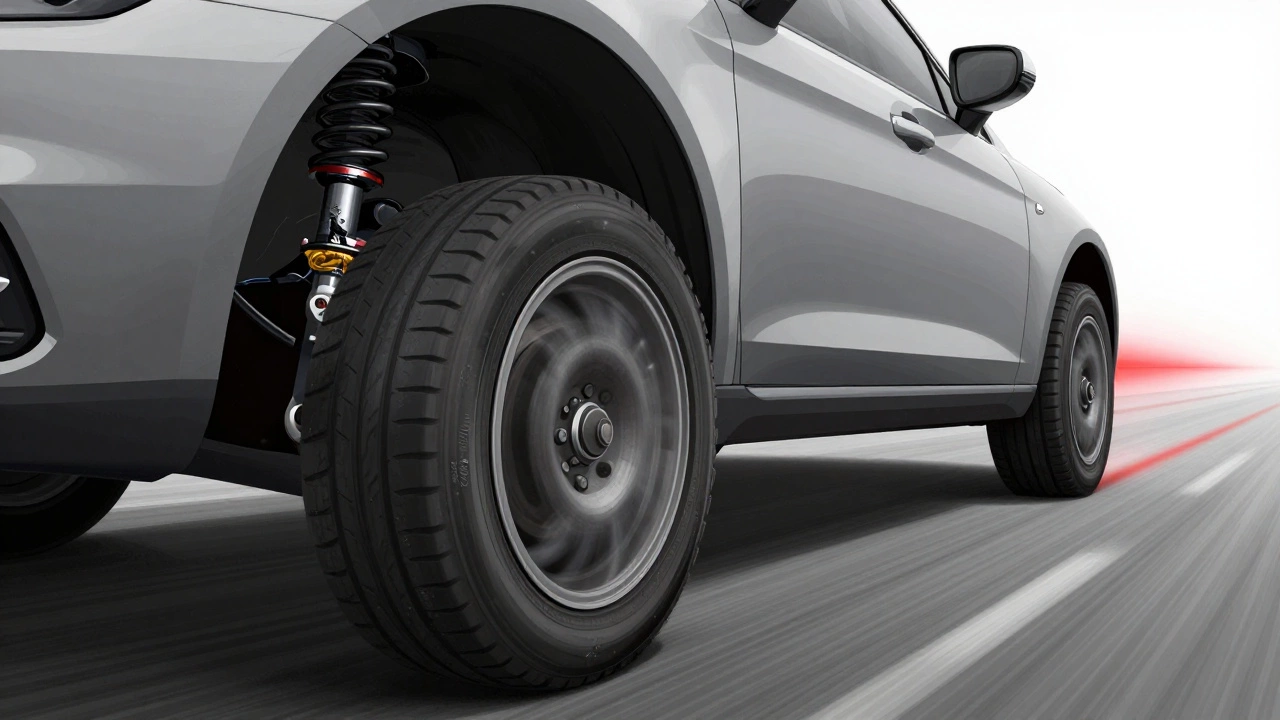
Good suspension keeps your tires pressed firmly against the pavement. When shocks or struts wear out, that connection breaks. You’ll feel the car bouncing over small bumps, but worse-you’ll notice it doesn’t settle quickly. On highways, your car might float or sway in crosswinds. In corners, it leans too far, making you feel like you’re sliding sideways. This isn’t just a nuisance. It means your tires aren’t gripping properly, which directly reduces your ability to steer or avoid obstacles.
Braking gets longer and less predictable
When the front suspension is worn, your car dips forward hard when you hit the brakes. This shifts weight off the rear tires, reducing their grip. The result? Longer stopping distances. In wet conditions, that difference can be deadly. A 2023 study by the UK’s RAC Foundation found that vehicles with worn suspension took up to 17% longer to stop from 60 mph compared to those with healthy systems. That’s the length of a full parking space. And it’s not just about distance-your car might pull to one side if one shock is more worn than the other. You’re not just braking slower-you’re braking unevenly.
Uneven tire wear ruins your tyres faster
Bad suspension throws off your wheel alignment. You won’t see it immediately, but over months, your tires start wearing unevenly. You might notice one side of the tread is bald while the other looks fine. Or the center wears down faster than the edges. This isn’t just expensive-it’s dangerous. Bald tires increase your risk of hydroplaning and blowouts. Replacing a set of tires every 20,000 miles instead of 40,000 adds up fast. And if you ignore it, you’ll end up replacing suspension parts twice because the extra stress from bad alignment wears them out faster.
Steering becomes heavy or loose
Worn control arms, ball joints, or bushings make your steering feel off. Sometimes it’s too loose-you turn the wheel and the car doesn’t respond right away. Other times, it’s stiff or vibrates through the steering wheel. You might hear clunking when you go over bumps or turn corners. These aren’t just noises. They’re signs that parts are loose or broken. A failed ball joint can cause your wheel to collapse while driving. That’s not a hypothetical. The AA reported over 1,200 incidents in the UK in 2024 linked to suspension component failure, with 30% involving loss of steering control.
Passengers and cargo take the hit too
It’s not just you. Everyone in the car feels it. People in the back get bounced around like they’re on a rollercoaster. Packages or luggage shift during braking or turns. If you carry tools, groceries, or gear regularly, a bad suspension means your cargo isn’t secure. That’s not just annoying-it’s a hazard. A loose box in the trunk can become a projectile in a sudden stop. And if you haul heavy loads often, worn springs can sag so badly that your headlights point up at the sky, blinding drivers ahead.
It damages other parts of your car
A bad suspension doesn’t just wear out itself-it ruins everything connected to it. The constant bouncing stresses your exhaust system, causing pipes to crack or hangers to break. Your steering components wear faster. Even your wheel bearings can fail prematurely from the extra vibration. And if you drive on rough roads often, the frame and chassis can start to flex and warp. Fixing a broken shock is one thing. Fixing a bent subframe? That’s a thousand-pound repair.
How to tell if your suspension is failing
- Bouncing test: Push down hard on each corner of the car. If it bounces more than once or twice, your shocks are worn.
- Visual check: Look for oil leaks around the shocks or struts. Wet, greasy spots mean they’re leaking fluid and losing pressure.
- Uneven tire wear: Cupping (scalloped dips along the tread) is a classic sign of bad suspension.
- Noise: Clunks, knocks, or squeaks when going over bumps point to worn bushings or ball joints.
- Driving behavior: If your car feels floaty, dives hard when braking, or sways in wind, your suspension is struggling.

What to do if you suspect bad suspension
Don’t wait for it to fail completely. Get it checked by a mechanic who specializes in suspension systems. Most garages offer a free inspection. If you’re handy, you can do a basic check yourself using the bouncing and visual tests above. But if you’re unsure, don’t gamble. Suspension parts aren’t cheap, but they’re far cheaper than a crash. Replacing shocks or struts usually costs between £200 and £500 per axle, depending on your car. That’s a fraction of the cost of replacing tires, brakes, or worse-repairing damage from an accident.
When to replace suspension parts
Most manufacturers recommend checking suspension components every 50,000 miles. But if you drive on rough roads, gravel, or pothole-filled streets-common in the UK-replace them sooner. Shocks and struts typically last 50,000 to 100,000 miles, but in harsh conditions, they can wear out by 40,000. Springs can last longer, but if your car sits lower than it used to, they’re done. Don’t wait for the warning signs to scream. If your car feels different than it did two years ago, it’s time to look.
What happens if you ignore it
Ignoring a bad suspension doesn’t make it go away. It makes everything worse. Your car becomes harder to control in emergencies. Your tires wear out faster. Your brakes lose effectiveness. Your insurance might not cover damage if they find your suspension was neglected. And if you’re in an accident, you could be held liable for not maintaining your vehicle properly. In the UK, driving with dangerously worn suspension can even land you a fine or a failed MOT. It’s not just about comfort. It’s about safety, cost, and responsibility.
Can bad suspension cause an MOT failure?
Yes. The MOT test checks for worn, damaged, or loose suspension components. If your shocks are leaking, ball joints are loose, or bushings are cracked, your car will fail. Even minor issues like a broken spring mount or excessive play in the steering linkage can result in a failure. Over 20% of MOT failures in 2024 were linked to suspension problems.
Is it safe to drive with a broken shock absorber?
No. Driving with one broken shock absorber makes your car unstable. It increases stopping distance, reduces steering control, and can cause uneven tire wear. In wet or icy conditions, the risk of losing control spikes. Even short trips are risky. Replace it immediately.
How much does it cost to replace suspension parts?
It varies by car and part. Replacing a pair of shocks or struts usually costs £200-£500. Control arms and ball joints range from £150-£400 each. Springs are less expensive-£80-£200-but labor can add £100-£200. Luxury or performance cars cost more. Always get quotes from two garages. Some offer bundle deals if you replace front and rear together.
Do I need to replace all four shocks at once?
It’s not always required, but it’s strongly recommended. If one shock is worn, the others are likely close behind. Replacing only one side creates an imbalance, leading to uneven handling and faster wear on the new part. For safety and performance, replace shocks in pairs-at least front or rear together. Replacing all four is ideal if your car is over 8 years old or has more than 60,000 miles.
Can I drive with a broken spring?
Absolutely not. A broken spring means your car sits unevenly, and the remaining suspension is overloaded. This can cause steering issues, brake problems, and even damage to your wheels or tires. The car may bottom out on bumps, and you risk losing control. Get it towed to a garage.