Radiator Replacement Cost Calculator
Estimate Your Savings
Your Results
Pro Tip: DIY includes £30 for new hoses and coolant (essential to avoid future problems)
New hoses cost £15 but can save £500 in towing costs.
Replacing a car radiator isn’t something most people do on a weekend, but it’s not the nightmare it’s made out to be either. If your engine’s been running hot, you’ve got coolant leaks under the car, or your temperature gauge is flirting with red, chances are your radiator’s done for. And yes, you can do it yourself - if you’re patient, have the right tools, and know what you’re getting into.
Why Radiators Fail
Radiators don’t just wear out randomly. They die because of neglect. Over time, coolant breaks down, loses its protective additives, and turns acidic. That eats away at the metal, especially in older cars with aluminium cores and brass tanks. Rust, corrosion, and tiny cracks start forming. Then, when the engine heats up, pressure builds, and coolant starts leaking - sometimes slowly, sometimes all at once.
Another common killer is debris. In the UK, road salt in winter and grit from poor road conditions clog the radiator fins. Blocked fins mean poor airflow, which means the engine overheats. Even a small stone or leaf jammed in the grille can reduce cooling efficiency by 30%.
And let’s not forget the hoses. A cracked or swollen hose can leak coolant right onto the radiator, causing it to overheat and warp. Most people blame the radiator when it’s actually the hose that failed first.
What You’ll Need
You don’t need a garage full of tools, but you do need the basics:
- Socket set and wrenches (metric, usually 10mm to 17mm)
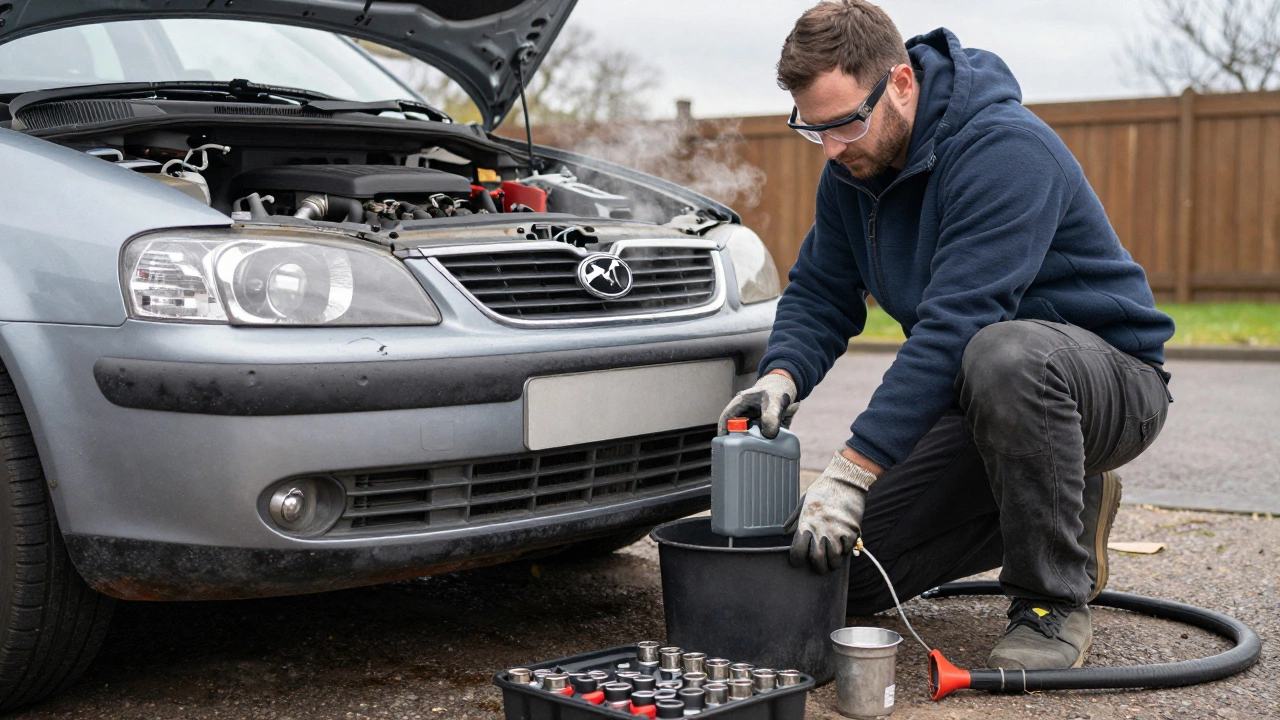
- Drain pan (at least 5 litres capacity)
- New radiator (make sure it’s the exact model for your car)
- New radiator hoses and clips (even if they look fine)
- New coolant (type specified in your owner’s manual - usually ethylene glycol-based)
- Funnel with a long spout
- Protective gloves and safety glasses
- Shop towels or rags
Don’t skip the new hoses. Reusing old ones is like putting new tyres on a bent rim - you’re asking for trouble. A £15 set of hoses can save you from a £500 tow bill later.
Step-by-Step: How to Replace a Radiator
Start with the car cold. Never open a hot cooling system - you’ll get scalded. Wait at least two hours after driving.
- Jack up the front of the car and secure it on axle stands. Never work under a car supported only by a jack.
- Place the drain pan under the radiator petcock or lower hose. Open the petcock or loosen the lower hose clamp and let the coolant drain. Catch every drop - coolant is toxic to pets and wildlife.
- Disconnect the battery. This stops the electric fan from kicking on while you’re working.
- Remove the upper and lower radiator hoses. Use a screwdriver to gently pry the hose off the fitting. Don’t twist it - you’ll crack the plastic tank.
- Unplug the electric fan connector. If your car has an automatic transmission, disconnect the transmission cooler lines (they’re usually small metal tubes near the bottom of the radiator).
- Unbolt the radiator mounting brackets. These are usually two or three bolts on the top and bottom.
- Slide the radiator out slowly. It’s heavy and awkward. Ask someone to help if you can.
- Compare the new radiator to the old one. Make sure the inlet/outlet positions, mounting points, and fan shroud alignment match.
- Install the new radiator. Slide it in, reconnect the transmission lines (if applicable), bolt it down, and reattach the hoses. Use new clips - old ones can lose tension.
- Refill the coolant. Use a 50/50 mix of coolant and distilled water. Pour slowly. Start the engine and let it idle. Watch for leaks. Top up as the air bubbles out.
- Run the heater on full for five minutes. This helps purge air from the heater core. Check the coolant level again after the engine cools down.
That’s it. If you’ve done it right, your car will run cooler than it has in years.
How Long Does It Take?
For a first-timer, expect four to six hours. That includes draining, cleaning up, refilling, bleeding air, and double-checking everything. Experienced mechanics can do it in under two hours.
Some cars make it easier. A Honda Civic or Toyota Corolla? Easy access. A BMW 3 Series or Audi A4? You might need to remove the bumper, air intake, or even the condenser. Always check a repair manual for your exact model. YouTube videos are useful, but not always accurate - make sure the car year and engine match yours.
Cost Comparison: DIY vs Garage
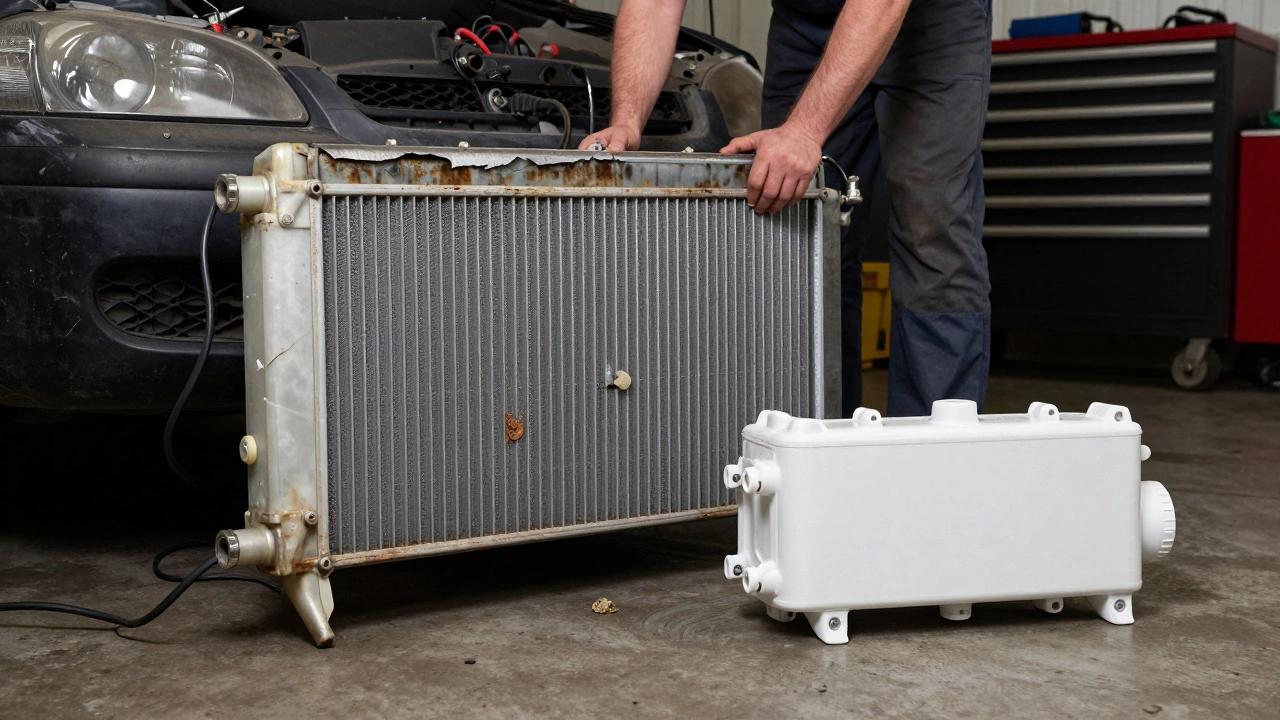
Let’s break it down. A new radiator for a typical UK family car costs between £80 and £200. Hoses and coolant add another £30. Total DIY cost: under £150.
At a garage? Labour alone can be £150 to £300. Total? £300 to £500. Some places charge more if they need to remove the bumper or air conditioning lines.
And here’s the kicker - many garages will replace the radiator and then tell you the water pump or thermostat needs replacing too. Sometimes they’re right. Sometimes they’re not. If you do it yourself, you control the parts and the timing.
When to Call a Pro
There are times when DIY isn’t worth it:
- Your car has a complex cooling system with electric water pumps or dual radiators (common in hybrids or turbocharged engines)
- You don’t have a way to safely lift the car
- You’re not comfortable working around high-pressure systems
- The radiator is rusted to the frame and won’t budge - forcing it can break the mounting points
If you’re unsure, take it to a mechanic. But get a written quote first. Ask them to show you the old radiator and confirm it’s cracked or corroded - not just dirty.
Common Mistakes to Avoid
Here’s what goes wrong when people rush it:
- Using the wrong coolant - mixing types can cause sludge and blockages
- Not bleeding the system properly - air pockets cause overheating
- Tightening hoses too hard - plastic fittings crack
- Forgetting to reconnect the transmission cooler lines - leads to transmission failure
- Not checking for leaks after refilling - the first sign of a bad job
One guy in Bristol replaced his radiator, filled it up, and drove off. Five miles later, steam came out of the hood. He’d forgotten to reconnect the upper hose. It was a £20 mistake that cost him £400 in towing and a new head gasket.
How Often Should You Replace a Radiator?
Most radiators last 8 to 12 years. But if you use the wrong coolant, don’t flush the system, or drive in salty conditions, it might not make it past five. Regular coolant flushes every two years can double its life.
Check your coolant colour. If it’s brown or gritty, it’s done. Clear or green? Good. Orange or red? That’s usually long-life coolant - still okay.
What Happens If You Don’t Replace It?
Ignoring a bad radiator doesn’t just mean overheating. It means:
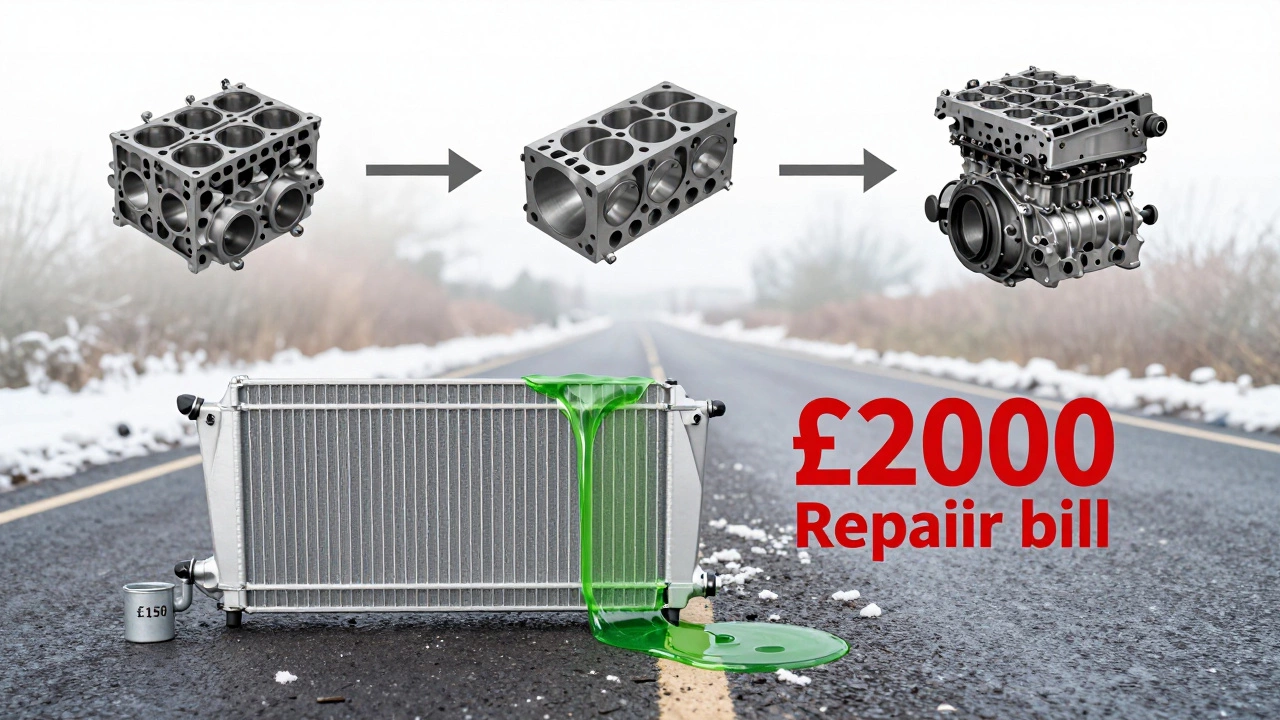
- Warped cylinder head
- Blown head gasket
- Engine seizure
- Transmission damage (from overheated fluid)
One of these repairs can cost £2,000 or more. A radiator? £150. That’s not a gamble - that’s common sense.
Can I drive with a leaking radiator?
No. Even a small leak will drain your coolant over time. Once the engine runs hot, damage starts quickly. If you see coolant on the ground, get it checked before you drive more than a few miles.
Do I need to flush the cooling system before installing a new radiator?
Yes. Old coolant can have rust, scale, and debris. If you leave it in the system, it’ll clog the new radiator or damage the water pump. Use a radiator flush kit or have it professionally flushed before installing the new part.
Is it safe to use water instead of coolant in an emergency?
Only as a last resort. Water doesn’t protect against corrosion or freezing. If you’re stranded and have no coolant, use clean water to get to a garage - then replace it with proper coolant as soon as possible. Never let water sit in the system for more than a few days.
Can a bad radiator cause the heater to stop working?
Yes. The heater core uses hot coolant from the engine. If the radiator is leaking or blocked, coolant flow drops. That means no heat in the cabin - even if the engine is running fine.
How do I know if I bought the right radiator?
Check the part number against your vehicle’s VIN or owner’s manual. Reputable brands like Denso, Valeo, or Behr list compatibility online. If the new radiator doesn’t line up with the hoses, fan, or mounting points, it’s the wrong one.
Final Thoughts
Replacing a radiator isn’t easy, but it’s not impossible. It’s messy, time-consuming, and requires attention to detail - but if you’ve ever changed your own oil or brake pads, you’ve got the skills. The real question isn’t whether it’s hard. It’s whether you’re willing to save £300 and learn something useful in the process.
Most people wait until the radiator fails completely. By then, they’re stressed, out of pocket, and stuck with a garage’s timeline. Do it before it breaks. Check your coolant every few months. Keep your system clean. And if you’re ever unsure - ask someone who’s done it before. There’s no shame in getting help. Just don’t let a £150 part turn into a £2,000 repair.