Air Filter Efficiency & Cost Estimator
Many "polarized" filters are actually electrostatic. This tool helps you visualize how humidity and mileage impact their effectiveness compared to standard paper filters, helping you decide if the premium price is worth it for your driving conditions.
Driving Conditions
Real-Time Analysis
Cost & Value Verdict
Adjust sliders to see recommendations.
You might have heard the term "polarized" thrown around in auto shops or online forums when discussing air filters. But here is the twist: standard automotive air filters aren't typically described as polarized. Polarization is a concept we usually associate with sunglasses (blocking glare) or electrical currents. So, if you are asking about the disadvantages of polarized air filters, you are likely dealing with one of three things: a misunderstanding of terminology, a specific niche industrial application, or a confusion with electrostatic filters that use static charge (often mistaken for polarity).
Let's clear up the confusion immediately. In the vast majority of consumer car maintenance scenarios, there is no such thing as a "polarized" engine air filter. You have paper, cotton gauze, foam, or synthetic media. However, if we interpret your question through the lens of what people *actually* mean-likely referring to electrostatically charged filters or perhaps confusing them with polarized glass coatings-we can uncover some genuine downsides. This guide breaks down why these specialized filtration methods, often marketed with high-tech buzzwords, might not be the upgrade they claim to be.
The Terminology Trap: Polarized vs. Electrostatic
Before we list disadvantages, we need to fix the vocabulary. If a salesperson tells you their filter is "polarized," ask them to demonstrate the dipole moment. It’s almost certainly a marketing spin on an electrostatic filter, which uses trapped static electricity to attract dust particles like a magnet attracts iron filings. This technology is common in home HVAC systems and some premium cabin air filters.
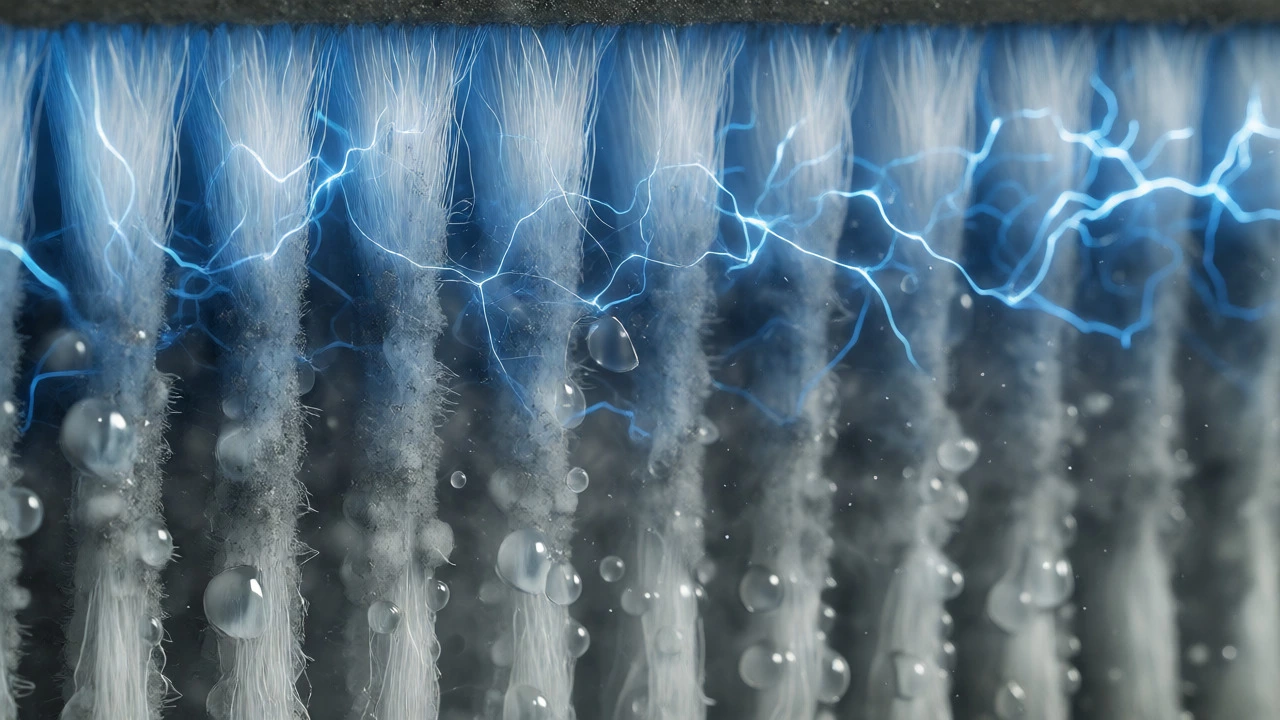
Why does this matter? Because the disadvantages of electrostatic filtration are significant if you don't understand how it works. Unlike mechanical filters that simply block particles based on size (like a net catching fish), electrostatic filters rely on charge retention. Over time, that charge fades. If you treat an electrostatic filter like a standard disposable paper filter, you are setting yourself up for reduced efficiency.
Disadvantage 1: Rapid Efficiency Drop-Off
The biggest flaw in any filter relying on electrical properties (whether truly polarized materials or electrostatic charges) is degradation. A standard cellulose paper filter starts at, say, 90% efficiency and stays roughly there until it clogs. An electrostatic filter might start at 95% efficiency because the static charge helps grab smaller particles that would otherwise slip through the fibers.
But here is the catch: humidity kills static charge. In a humid environment like Bristol, where dampness is a constant companion, the moisture in the air neutralizes the electrostatic potential on the filter media. Within weeks, that high-efficiency filter drops to basic mechanical filtration levels. You paid a premium for polarization/static benefits, but you only got them for a short window. Once the charge dissipates, you are essentially using a lower-quality mesh than a standard high-flow cotton filter.
Disadvantage 2: Increased Airflow Restriction When Dirty
Polarized or electrostatic media tends to load differently than traditional pleated paper. Because the static charge pulls particles from all directions into the depth of the material, the dirt doesn't just sit on the surface; it gets buried deep within the fiber matrix. This sounds good for capacity, but it creates a problem for airflow.
As the filter loads, the resistance to air (measured in Pascals) increases non-linearly. A standard paper filter clogs evenly, giving you a predictable drop in pressure. A charged filter can suddenly become restrictive once the internal pores are saturated with fine particulate matter. For your engine, this means the intake manifold has to work harder to pull air in. In turbocharged engines, this restriction can lead to increased turbo lag or higher fuel consumption as the ECU compensates for the reduced mass airflow sensor readings.
Disadvantage 3: Cost and Availability
Let's talk money. Standard OEM air filters for a Ford Focus or a VW Golf cost between £10 and £20. High-performance cotton filters like K&N cost more, but they are reusable. Specialized "advanced" filters that market themselves with terms like polarized or nano-charged often fall into a middle ground: expensive disposables.
- Price Premium: These filters often cost 30-50% more than standard paper alternatives.
- Availability: You won't find them at every local garage. You often have to order them online, meaning if your filter fails during a long trip, you might not find a replacement quickly.
- Warranty Risks: Some manufacturers void warranties if you use non-OEM aftermarket parts, especially if those parts alter airflow characteristics significantly.
If you are paying extra for a feature that degrades quickly due to humidity, the value proposition weakens rapidly. You are essentially buying a temporary performance boost that disappears before the next service interval.
Disadvantage 4: Potential for Oil Contamination (If Misidentified)
Sometimes, users confuse "polarized" with "oiled" filters. Cotton gauze filters (like K&N) require oiling after cleaning. The oil traps dust. If you over-oil these filters, excess oil can be sucked into the engine, coating the Mass Air Flow (MAF) sensor. A dirty MAF sensor sends incorrect data to the computer, causing poor idle, hesitation, and check engine lights.
While true polarized/electrostatic filters are usually dry, the confusion leads to mistakes. If you bought a "high-tech" filter expecting it to be like a standard dry paper filter, but it required maintenance or had different sealing properties, you might face installation issues. Poor seals allow unfiltered air to bypass the media entirely, rendering the entire filtration system useless. Dust then accumulates on cylinder walls, leading to accelerated wear.

Comparison: Standard Paper vs. Electrostatic/Polarized Media
To make this practical, let's look at how these technologies stack up against each other in real-world driving conditions.
| Feature | Standard Paper Filter | Electrostatic/Polarized Type | Cotton Gauze (Oiled) |
|---|---|---|---|
| Initial Efficiency | High (95-99%) | Very High (98-99.9%) | Moderate-High (90-95%) |
| Efficiency Retention | Stable until clogged | Drops rapidly with humidity/time | Stable if maintained correctly |
| Airflow Restriction | Low initially, rises linearly | Low initially, spikes when loaded | Very Low |
| Lifespan | 15,000 - 20,000 miles | 10,000 - 15,000 miles (effective) | 50,000+ miles (reusable) |
| Maintenance | Replace only | Replace only (cannot clean effectively) | Clean and re-oil regularly |
| Cost per Mile | Low | High | Low (long term) |
Who Should Avoid These Filters?
If you live in a coastal area or a region with high humidity, avoid relying on the "polarized" or electrostatic selling point. The moisture will neutralize the charge faster than you think. If you drive a daily commuter car and want set-and-forget reliability, stick to high-quality OEM paper filters. They are engineered by the manufacturer to balance airflow and filtration perfectly for your specific engine tuning.
Enthusiasts who track their cars might prefer cotton gauze for the airflow benefits, despite the maintenance hassle. But for the average driver, the complexity and rapid degradation of charged media offer little benefit over simple, proven technology.
Final Thoughts: Stick to What Works
The disadvantage of polarized (or electrostatically charged) air filters boils down to fragility of performance. You pay more for a technology that fights a losing battle against humidity and time. While the initial filtration stats look impressive on the box, the real-world application often falls short of expectations. Don't let fancy marketing terms convince you that your engine needs something exotic. Clean, dry, filtered air is what matters, and a well-maintained standard filter delivers that reliably without the headaches.
Do polarized air filters last longer than paper ones?
No, typically they do not. While the physical media might hold dust, the effective filtration capability (due to loss of static charge) diminishes faster. Most experts recommend replacing them at the same interval as standard paper filters, or even sooner if you drive in humid climates.
Can I wash a polarized air filter?
Generally, no. Washing removes the electrostatic charge that makes them effective. Once washed, they revert to being less efficient than a new paper filter. They are designed to be disposable.
Is 'polarized' a real technical term for car filters?
It is rarely used technically. It is mostly a marketing term. Technically, it refers to electrostatic charging. True polarization in physics involves aligning molecules, which isn't the primary mechanism in most commercial automotive air filters.
Will a polarized filter improve my fuel economy?
Not necessarily. While cleaner air can help combustion, the restricted airflow caused by a loaded charged filter can actually hurt fuel economy. Any gains from better filtration are usually offset by the increased pumping losses.
Are polarized filters bad for turbocharged engines?
They can be. Turbo engines are sensitive to airflow restrictions. If the filter loads unevenly or becomes highly restrictive due to deep particle penetration, it can increase strain on the turbocharger and affect boost response.