Tire Replacement Decision Tool
Enter your vehicle details and current tire condition to get a personalized recommendation.
Action Required
- Single Tire: £0
- Pair (Recommended): £0
- Full Set (4): £0
You're staring at a flat or a worn-out patch on one corner of your car. The obvious fix is to buy one new tire, right? It saves money today. But if you drive an All-Wheel Drive (AWD) vehicle with a center differential that can be damaged by uneven tire circumferences, that single-tire swap might cost you thousands in transmission repairs later. Even for standard cars, mixing old and new rubber creates handling quirks that feel like driving on ice during a rainy Bristol afternoon.
The decision isn't just about aesthetics. It's about physics, warranty terms, and mechanical sympathy. Whether you should replace four tires depends entirely on your drivetrain type, the tread depth difference between your remaining tires, and how much grip you actually need. Let's break down exactly when you can get away with two-and when you absolutely must go full set.
The Golden Rule: Drivetrain Dictates Strategy
If you own a rear-wheel-drive (RWD) or front-wheel-drive (FWD) car, you have more flexibility. You can often replace just two tires, provided you put the new ones on the correct axle. However, if you drive an All-Wheel Drive (AWD) or a vehicle where power is sent to all four wheels simultaneously via a transfer case or center diff, the rules tighten significantly.
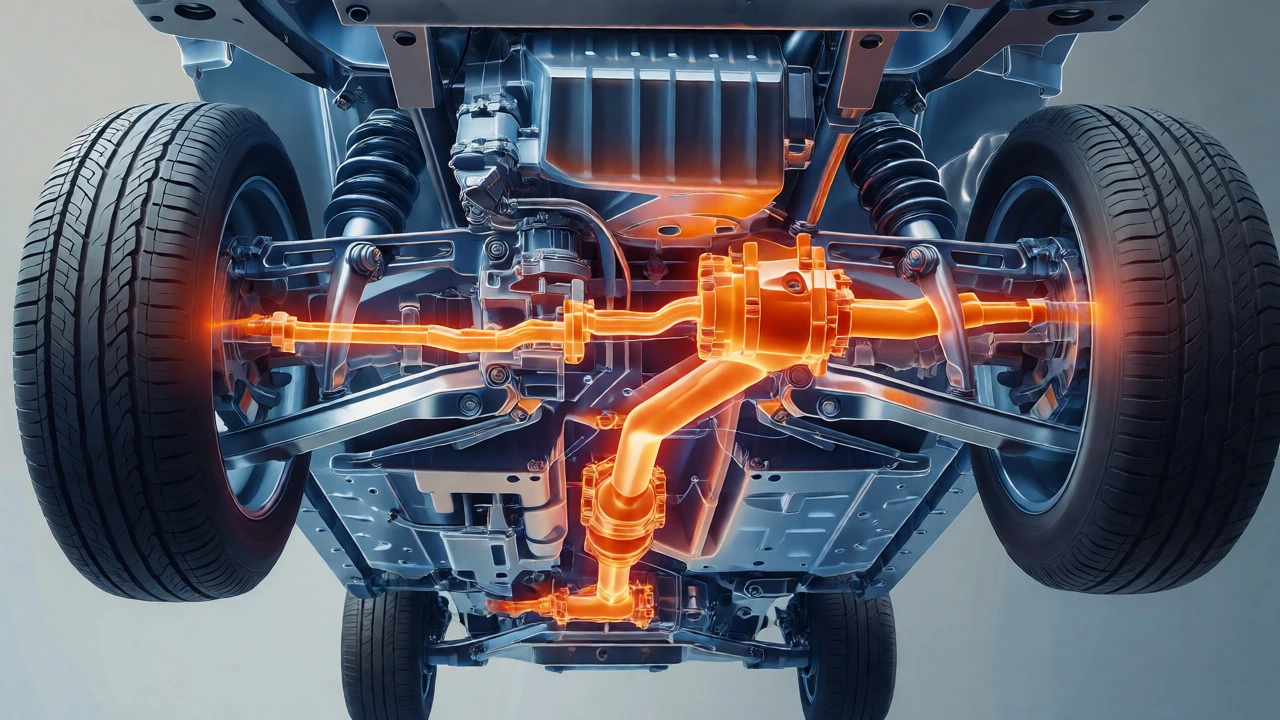
Why does this matter? In AWD systems, the differentials expect all four wheels to rotate at roughly the same speed when traveling straight. If your new tire has a larger diameter because it has deeper tread than the other three, it spins faster. This forces the center differential to work harder to compensate for the speed difference. Over time, this causes excessive heat and wear, potentially destroying a component that costs £1,500 to replace.
For Four-Wheel Drive (4WD) vehicles typically used off-road or in heavy-duty applications, the rule is even stricter: never mix sizes unless you are in an emergency. In 4WD mode, the front and rear axles are locked together. Any circumference difference puts massive stress on the driveline, known as "wind-up," which can snap axles or gears instantly.
Measuring Tread Depth: The 3mm Threshold
Before you decide on quantity, check what you already have. Tire tread wears down over time. New tires usually start with 8mm of tread. By UK law, the minimum legal limit is 1.6mm across the central three-quarters of the tread around the entire circumference. But legal doesn't mean safe. Most experts recommend replacing tires once they hit 3mm, especially for wet weather performance.
Here is the critical metric for mixed sets: the difference in tread depth between your new and old tires. For FWD and RWD cars, a difference of up to 3-4mm is generally acceptable if you manage expectations. For AWD vehicles, most manufacturers specify that the circumference difference must be less than 1% to 2%. Since tread depth directly affects circumference, this means the tread depth difference should ideally be under 2mm.
| Drivetrain Type | Max Recommended Tread Difference | Risk of Mixing Old/New | Recommended Action |
|---|---|---|---|
| Front-Wheel Drive (FWD) | < 3-4mm | Low-Medium | Replace pair (axle) |
| Rear-Wheel Drive (RWD) | < 3-4mm | Medium | Replace pair (rear) |
| All-Wheel Drive (AWD) | < 2mm | High | Replace all 4 or shave |
| Four-Wheel Drive (4WD) | < 1mm | Very High | Replace all 4 |
Why Two New Tires Go on the Rear Axle
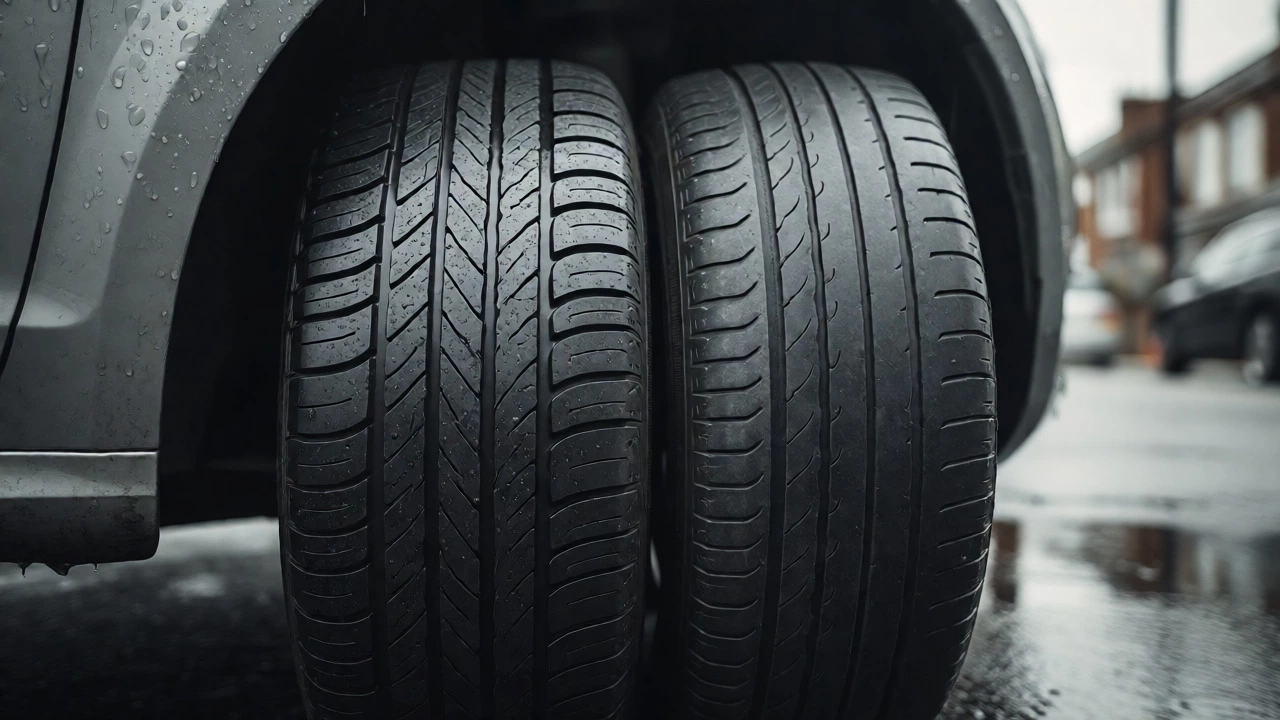
A common misconception is that new tires belong on the drive wheels. For a front-wheel-drive car, logic suggests putting them on the front. Wrong. Michelin, Continental, and the UK's TyreSafe charity all agree: new tires should always go on the rear axle, regardless of whether your car is FWD, RWD, or AWD.
Think about what happens when you lose grip. If your front tires lose traction, the car understeers-it slides wide when you turn. You instinctively lift off the gas and steer into the slide. It's manageable. But if your rear tires lose grip, the back end swings out. This is called oversteer, or a spin. Most drivers cannot correct a spin quickly enough, especially on wet roads. Putting new, high-grip tires on the rear keeps the back of the car planted, giving you control.
If you put new tires on the front of a FWD car, your worn rears will hydroplane first in standing water. Your steering wheel might still feel responsive, but the rear will drift unpredictably. This surprises drivers who think they have good grip because the front feels sticky. Always move your best rubber to the back.
The Shaving Option: Saving Money on AWD Sets
So, you have an AWD Audi Q5 or a Subaru Forester. One tire blew out. The other three have 4mm of tread left. Buying four new tires costs £400+. Is there a middle ground? Yes: tire shaving.
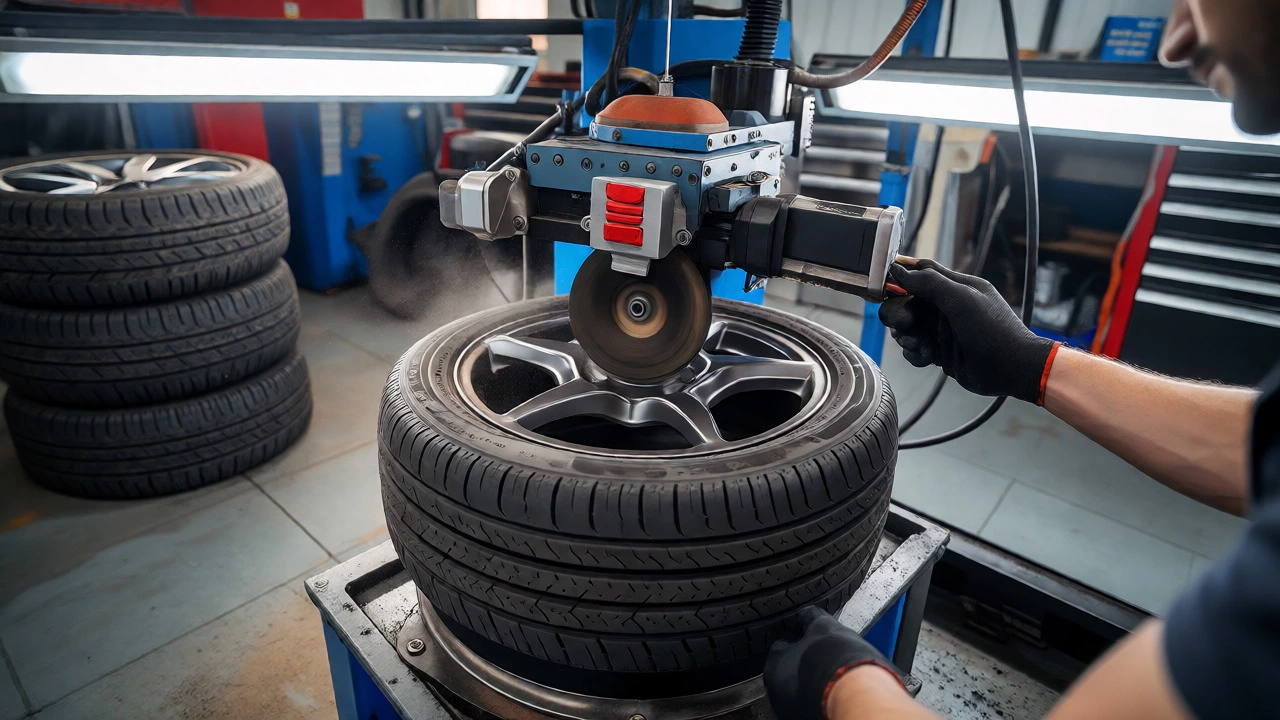
Tire shaving is a service where a specialist uses a machine to grind down the tread of new tires so they match the circumference of your existing partially worn tires. This prevents the differential damage mentioned earlier while saving you from buying a full set unnecessarily.
Not every shop offers this. You need a facility with a dedicated tire shaving machine. It usually adds £20-£40 per tire to the installation cost. Before you pay, check your owner's manual. Some manufacturers void warranties if non-matching circumferences are detected, even within limits. Others, like Subaru, explicitly allow matching circumferences within 1% tolerance, making shaving a viable option.
When You Must Replace All Four
Beyond the AWD requirement, there are specific scenarios where replacing just one or two tires is a bad idea, even for standard cars.
- Mismatched Brands or Patterns: If your current tires are a budget brand with a directional pattern, and you buy premium asymmetric tires, the handling characteristics won't match. The car may pull to one side or feel unstable in corners. Consistency matters.
- Ageing Rubber: Check the DOT code on your sidewalls. The last four digits indicate the week and year of manufacture (e.g., 1220 means week 12 of 2020). If your tires are older than 6 years, the rubber hardens and cracks, losing grip regardless of tread depth. Replacing only one old tire leaves three dangerous ones behind.
- Sports Car Performance: If you drive a Porsche Cayman or BMW M3, the suspension geometry is tuned for equal grip levels. Mixed tires confuse electronic stability control systems (ESC), leading to annoying intervention lights and reduced lap times.
Cost-Benefit Analysis: Single vs. Pair vs. Quad
Let's look at the numbers. Assume a mid-range tire costs £80 installed.
- One Tire (£80): Only viable if the other three are nearly new (>7mm tread) and identical. Risky for anything else.
- Two Tires (£160): The standard choice for FWD/RWD. Ensure the remaining two are in good condition. Best value for most drivers.
- Four Tires (£320): Essential for AWD/4WD or if all tires are near end-of-life. Maximizes resale value and safety.
Consider the hidden cost of poor fuel economy. Mismatched rolling resistance can slightly increase consumption. More importantly, a transmission repair caused by ignoring AWD guidelines averages £1,200-£2,500. Spending £320 on tires now protects a £20,000+ drivetrain later.
Practical Steps for Replacement
Once you've decided on the number, follow these steps to ensure correctness:
- Check Pressure Immediately: New tires settle differently. Inflate them to the manufacturer's recommended PSI (found on the driver's door jamb sticker), not the max pressure listed on the tire sidewall.
- Reset TPMS: Modern cars have Tire Pressure Monitoring Systems. After fitting new sensors or tires, you may need to reset the system via the infotainment menu or a physical button.
- Break-in Period: New tires have a mold release agent coating that makes them slippery for the first 100-200 miles. Drive gently. Avoid harsh braking or sharp turns until this layer wears off.
- Alignment Check: If you're replacing tires due to uneven wear, you likely have an alignment issue. Get a 4-wheel alignment after fitting new tires to protect your investment.
Frequently Asked Questions
Can I mix tire brands?
You should avoid mixing brands if possible. Different compounds and tread designs affect grip levels and noise. If you must mix, keep the same brand and model on each axle (e.g., two Michelin front, two Continentals rear). Never mix different types (e.g., summer and winter) on the same axle.
What if I only have one bad tire on my AWD car?
If the other three are relatively new (less than 2mm wear difference), you can buy one matching tire. If they are worn, you must either replace all four or find a specialist to shave a new tire to match the existing tread depth. Ignoring this risks damaging the center differential.
Do I need to replace tires in pairs?
Yes, for FWD and RWD vehicles, tires should almost always be replaced in axle pairs. This ensures balanced handling and braking. Replacing a single tire is generally only recommended if the other three are practically new and identical.
How long do tires last?
Typically 40,000 to 60,000 miles for average driving, depending on compound hardness and road conditions. However, age is a factor too. Replace tires after 6 years regardless of tread depth, as rubber degrades and loses elasticity.
Is it cheaper to replace two or four tires?
Replacing two is cheaper upfront. However, if your car requires four (like many AWD models), replacing two might lead to costly drivetrain repairs later, making the four-tire option more economical in the long run.