Engine Oil Color Diagnostic Tool
Select the color or appearance of your engine oil below to receive an instant diagnosis and recommended action.
Ready to Diagnose
Please select a color option above or click one of the swatches to see what your oil condition means.
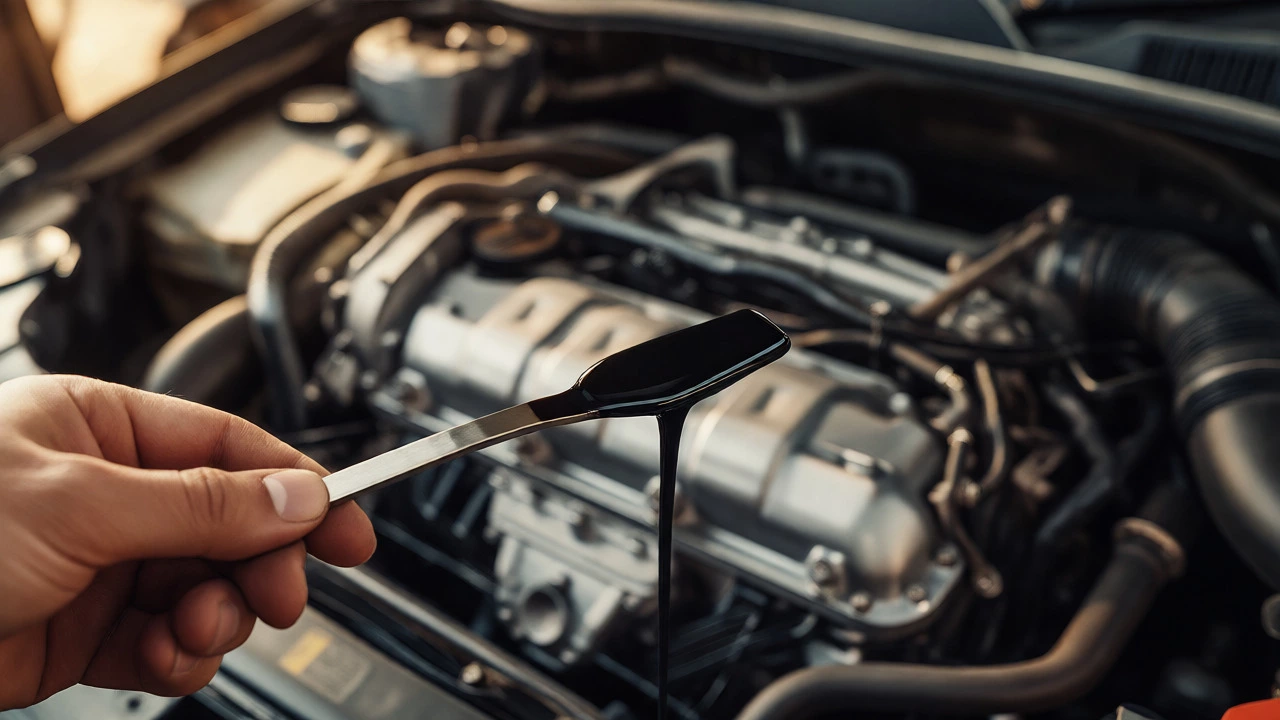
You pull the dipstick out of your engine and look at the fluid clinging to the metal. It’s not that bright, golden amber you saw when you last changed it. Maybe it’s jet black. Maybe it looks like a milkshake. Or perhaps there are sparkly bits floating in it. Panic sets in. Do you need an immediate tow, or is this just normal wear?
Here’s the truth: color alone doesn’t always tell the whole story. But it does tell you something. Understanding what bad engine oil looks like saves you from unnecessary repairs-or worse, catching a catastrophic failure before it seizes your engine. Let’s break down exactly what different colors mean, why they happen, and when you actually need to worry.
The Myth of "Black Means Bad"
Most drivers think black oil equals dead oil. That’s outdated thinking. Modern synthetic oils contain detergents and dispersants designed specifically to trap soot, dirt, and combustion byproducts. When these additives do their job, the oil turns dark quickly-sometimes within 500 miles.
If your oil is uniformly black but feels smooth between your fingers, it’s likely doing its job perfectly. The problem arises when the texture changes or the color shifts into specific, unnatural hues. So, don’t toss your oil just because it’s dark. Look for these warning signs instead:
- Gritty feel: Rubbing the oil between your thumb and finger should feel slick, not sandy.
- Strong odor: Fresh oil smells mild. Burnt oil smells acrid; gasoline-smelling oil indicates fuel dilution.
- Viscosity drop: If it runs off the dipstick like water rather than coating it, it’s lost its protective film.
Milky or Chocolate Milk: The Head Gasket Alarm
This is the one color you cannot ignore. If your oil looks like a chocolate milkshake or has a frothy, creamy residue on the dipstick or under the oil cap, coolant is mixing with your oil. This usually points to a failed head gasket, a cracked cylinder head, or a leaking intake manifold gasket.
Why is this dangerous? Coolant emulsifies with oil, destroying its lubricating properties almost instantly. Metal-on-metal contact follows, leading to warped components and severe overheating. You might also see white smoke coming from your exhaust or notice your coolant reservoir dropping without visible leaks.
| Color/Appearance | Likely Cause | Action Required |
|---|---|---|
| Bright Amber/Golden | New or recently changed oil | No action needed |
| Dark Brown to Black | Normal aging with modern additives | Check level; change if overdue |
| Milky/Frothy | Coolant contamination (Head Gasket) | Immediate mechanic visit |
| Fuel-Smelling & Thin | Gasoline/Diesel dilution | Investigate injectors/rings |
| Metallic Glitter | Internal engine wear | Urgent inspection |

Fuel Dilution: When Oil Smells Like Gas
Sometimes the color isn’t dramatically different-it’s still brownish-but the smell gives it away. If your oil reeks of raw gasoline or diesel, you have fuel dilution. This happens when unburned fuel washes past the piston rings and settles in the crankcase.
This is common in cars that do lots of short trips. The engine never gets hot enough to burn off the excess fuel. Over time, this thins the oil, reducing its ability to protect bearings and camshafts. In direct-injection turbocharged engines, this can be accelerated by faulty injectors leaking fuel even when the engine is off.
How to check? Pull the dipstick after the engine has been off for a few minutes. If the oil level is higher than it was at the last service and it smells strongly of fuel, you’re losing protection. For most vehicles, changing the oil every 3,000-5,000 miles prevents long-term damage from mild dilution.
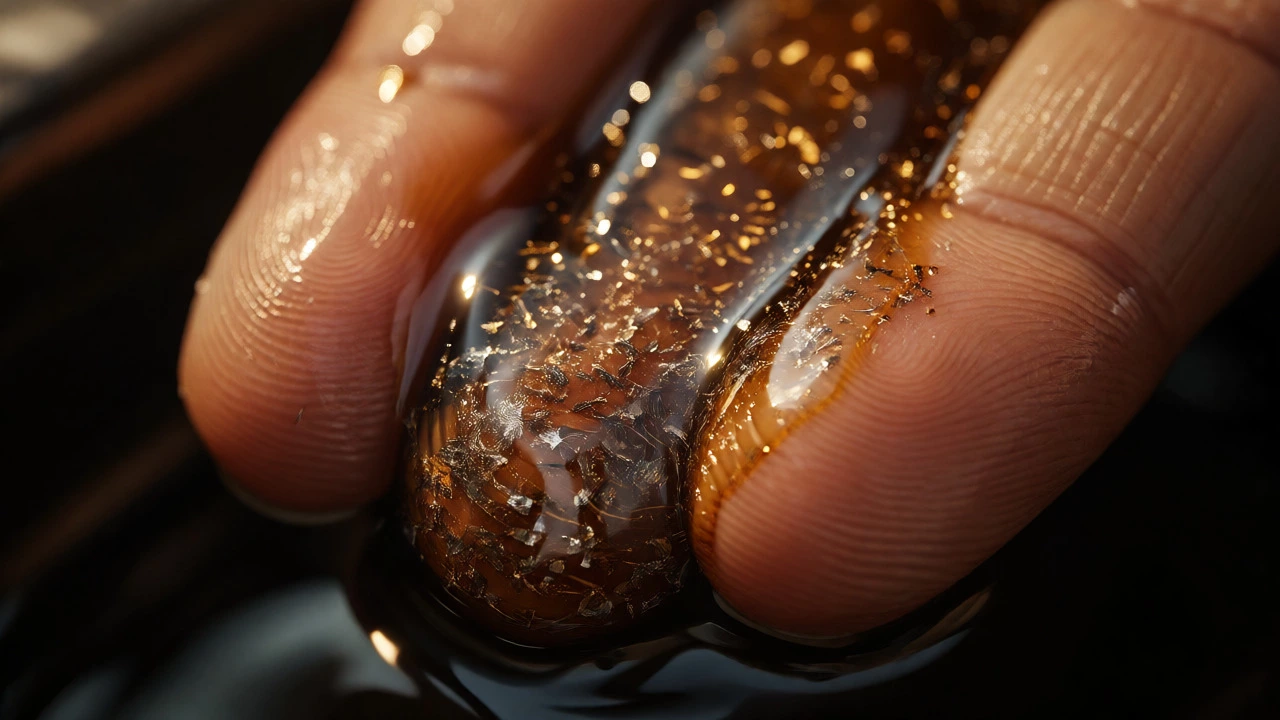
Metal Flakes and Glitter: Internal Wear
Look closely at the light reflecting off the dipstick. Do you see tiny silver or gold flecks? That’s metal. Specifically, it’s often aluminum from the block or steel from the bearings and crankshaft. A small amount of glittery particles is normal during the first 1,000 miles of a new engine as parts seat themselves.
However, large flakes or a significant accumulation of metallic debris signal trouble. This could indicate worn main bearings, rod bearings, or even a failing timing chain tensioner grinding against other components. If you see chunks larger than sand grains, stop driving immediately. Running an engine with compromised bearing surfaces can lead to a spun bearing or complete seizure within hours.
White Smoke vs. White Oil: Don't Confuse Them
Drivers often confuse external symptoms with internal ones. White smoke from the tailpipe suggests coolant burning in the cylinders (head gasket). Milky oil suggests coolant entering the oil galleries. They often happen together, but not always.
If you have milky oil but no white smoke, the leak might be slow or occurring only under specific pressure conditions. Conversely, if you have white smoke but clean oil, the issue might be isolated to the valve cover gasket allowing minor condensation, which evaporates quickly. Always correlate the oil condition with other symptoms: temperature gauge behavior, coolant levels, and exhaust appearance.
When to Change vs. When to Repair
Not every discoloration requires a major repair. Here’s a simple decision tree to help you act fast:
- Is it just dark? Check your mileage since the last change. If it’s within interval, relax. If it’s overdue, change it.
- Does it smell like gas? Shorten your next oil change interval. Investigate driving habits or injector health.
- Is it milky? Stop driving. Call a tow truck. Driving with emulsified oil destroys engines.
- Are there metal flakes? Inspect the oil filter. If the filter is full of metal, you have internal damage. Consult a mechanic for a compression test or borescope inspection.
Remember, prevention is cheaper than cure. Using high-quality synthetic oil with robust additive packages helps suspend contaminants longer, keeping your engine cleaner for more miles. But even the best oil eventually saturates. Stick to your manufacturer’s recommended intervals, especially if you drive in stop-and-go traffic or extreme temperatures.
Is black engine oil always bad?
No. Modern oils contain detergents that turn black as they clean the engine. As long as the oil is smooth and free of grit, black color is normal and indicates the additives are working.
What does milky oil mean?
Milky or frothy oil indicates coolant contamination, typically caused by a blown head gasket or cracked engine block. This requires immediate professional attention to prevent engine seizure.
Can I drive with fuel-smelling oil?
Short distances are usually safe, but prolonged driving with fuel-diluted oil reduces lubrication quality. It increases wear on bearings and camshafts. Plan to change the oil soon and investigate the source of the dilution.
How often should I check my oil color?
Check your oil level and condition once a month. Regular checks help you catch issues like coolant leaks or fuel dilution early, before they cause expensive damage.
Does oil color change with synthetic vs conventional?
Synthetic oils tend to stay cleaner looking for longer due to superior stability, but they will still darken as they collect soot. Conventional oils may turn black faster but both serve the same purpose of trapping contaminants.