Putting regular oil instead of synthetic in your engine might seem like a harmless swap - after all, both are called motor oil. But what happens when you make that switch? The answer isn’t just about performance. It’s about engine life, fuel efficiency, and whether you’re quietly setting yourself up for expensive repairs down the road.
What’s the real difference between regular and synthetic oil?
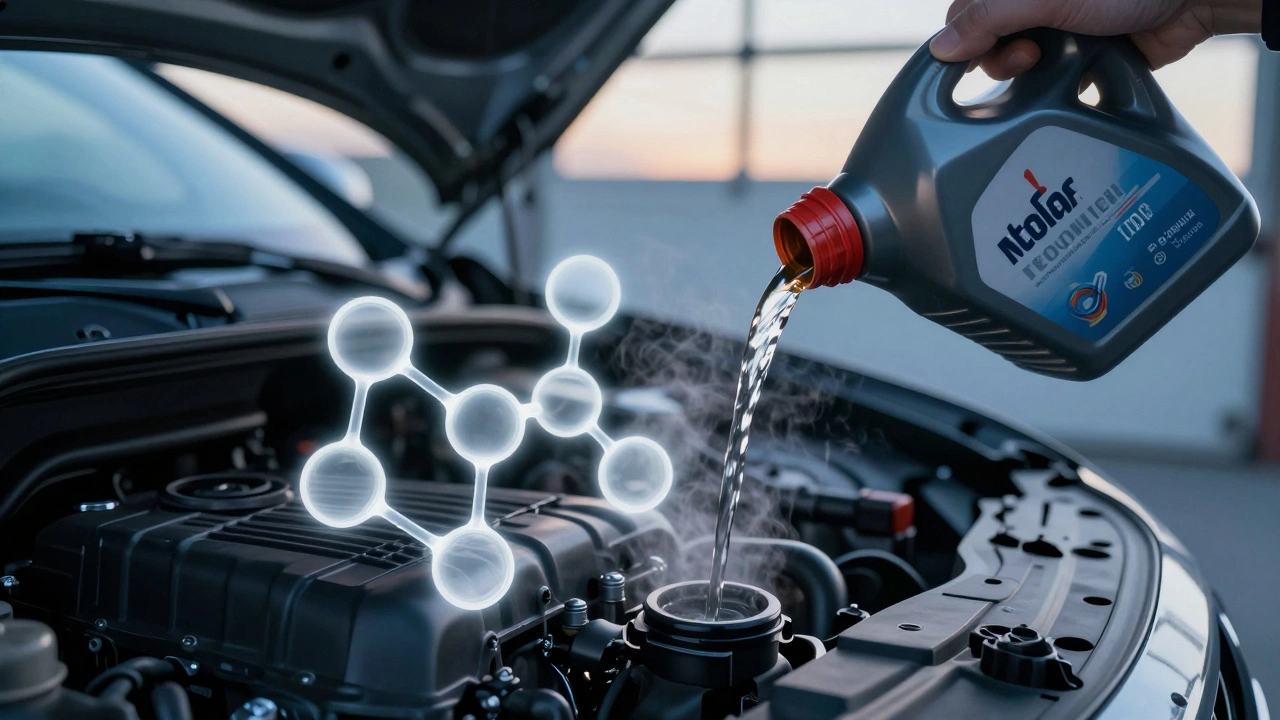
Regular oil - also called conventional or mineral oil - is refined from crude oil. It’s been used for decades and works fine in older cars with simple engines. But it has natural inconsistencies in its molecular structure. Some molecules are long, some are short, some are oddly shaped. That means it breaks down faster under heat and pressure, and it doesn’t flow as smoothly when it’s cold.
Synthetic oil, on the other hand, is engineered in a lab. Its molecules are uniform, clean, and designed to perform under extreme conditions. That’s why it lasts longer, resists sludge better, and flows instantly even at -20°C. Most modern engines are built with tighter tolerances. They need that kind of precision. Using regular oil in them is like using a blunt knife to slice through a tomato - it works, but not well, and it leaves a mess.
What happens if you accidentally use regular oil in a car that needs synthetic?
If your owner’s manual says “synthetic only,” and you put in regular oil, you’re not going to blow up your engine right away. But you are lowering its performance and protection. Here’s what you can expect:
- Slower cold starts: Regular oil thickens in cold weather. That means your engine has to work harder to turn over, and critical parts like bearings and camshafts aren’t lubricated fast enough. In freezing UK winters, this can cause extra wear in the first 30 seconds after ignition - the most damaging time for an engine.
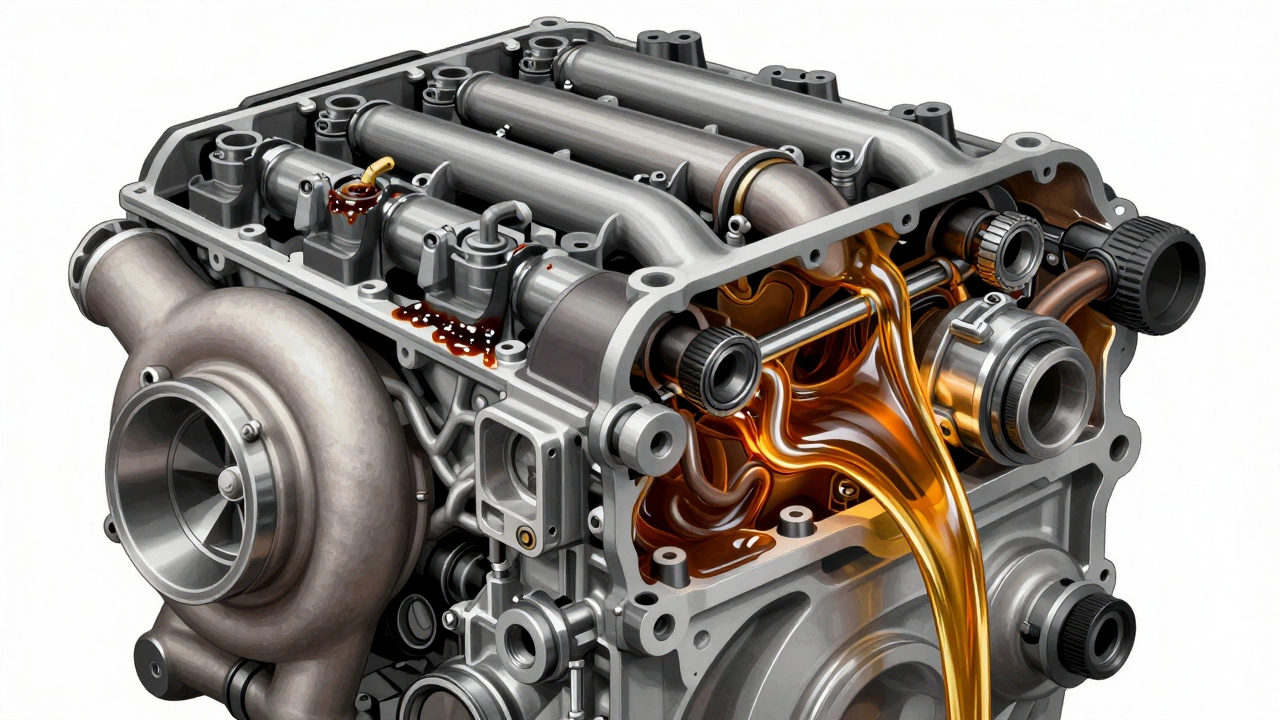
- More sludge buildup: Regular oil breaks down faster under heat. When it does, it leaves behind sticky residues. Over time, this sludge clogs oil passages, especially in turbocharged engines. A clogged passage means oil can’t reach the turbocharger bearings - and that’s a $2,000+ repair waiting to happen.
- Reduced fuel economy: Synthetic oil has lower friction. Studies from the American Petroleum Institute show switching from conventional to full synthetic can improve fuel efficiency by 1-2%. That’s 10-20 extra miles per tank for most drivers.
- Shorter oil change intervals: Regular oil starts degrading after 3,000-5,000 miles. Synthetic can go 7,500-15,000 miles. If you’re using regular oil in a car designed for synthetic, you’ll need to change it more often - and you’ll still get less protection.
Can you mix regular and synthetic oil?
Yes, you can mix them - temporarily. But it’s not smart. Mixing doesn’t create a “better” oil. It just dilutes the benefits of synthetic. If you’re in a pinch and only have regular oil, topping up once won’t ruin your engine. But don’t make it a habit. Once you’ve mixed them, stick with regular oil until your next full change. Then switch back to synthetic if your car needs it.
Think of it like mixing soda with water. You’re still drinking something liquid, but you’ve lost the fizz and flavor. Same with oil. You’re not adding protection - you’re just stretching it thinner.
Why do modern engines require synthetic oil?
Since 2010, nearly every new car sold in Europe and North America has been designed for synthetic oil. Why? Because engines are smaller, hotter, and more powerful than ever. Turbochargers spin at over 200,000 RPM. Direct injection systems run at pressures over 2,000 psi. These parts need oil that won’t break down under stress.
Manufacturers test their engines for 200,000 miles. They design them around synthetic oil’s stability. Using regular oil voids the warranty on many newer vehicles. It also increases the risk of premature wear on components like variable valve timing systems and piston rings.
Even if your car is older, synthetic oil can still help. A 2015 Ford Focus with 120,000 miles runs smoother and quieter on synthetic. The oil stays cleaner longer. The engine doesn’t overheat as easily. The difference isn’t just theoretical - it’s measurable in oil analysis reports from independent labs.
What about older cars? Do they need synthetic?
Older engines - say, pre-2000 - often used looser tolerances and different seal materials. Some mechanics still swear by conventional oil in these cars. But modern synthetic oils are now formulated to be safe for older engines. Many brands even make “high-mileage synthetic” blends with additives that help seal leaks and reduce oil consumption.
If your classic car has been rebuilt with modern seals, synthetic is a great choice. If it’s all original and has oil leaks, you might want to stick with conventional - but only until you fix the leaks. Then switch to synthetic. It’ll give you better protection and longer intervals.

How to tell if your car needs synthetic oil
Check your owner’s manual. If it says “synthetic motor oil” or “synthetic blend,” that’s your answer. If it says “conventional,” you’re safe with regular oil - but you’re still missing out.
Look at the API service rating on the bottle. If it says SN, SP, or higher, it’s designed for modern engines. Older ratings like SJ or SL are for older cars. But even those are being phased out. Most oil sold today is synthetic or synthetic blend.
Another clue: if your car has a turbocharger, direct injection, or automatic start-stop, it almost certainly needs synthetic. These features create extra heat and stress. Regular oil can’t handle it.
What’s the cost difference?
Synthetic oil costs about £5-£10 more per oil change than regular oil. But you’re not just paying for the oil. You’re paying for:
- Longer intervals - fewer changes per year
- Better engine protection - fewer repairs
- Improved fuel economy - less money at the pump
- Longer engine life - your car lasts longer
For a typical UK driver doing 12,000 miles a year, switching to synthetic saves £150-£250 over three years, even after accounting for the higher price per change. That’s not a cost - it’s a smart investment.
Bottom line: Don’t risk your engine
Putting regular oil in a car that needs synthetic isn’t a shortcut. It’s a gamble. You might get away with it for a few months. But over time, the damage adds up. Sludge. Wear. Overheating. Reduced power. Eventually, it leads to expensive fixes.
On the other hand, using synthetic oil in a car that accepts it? It’s like giving your engine a high-performance suit. It moves smoother, stays cooler, lasts longer, and runs cleaner.
If you’re unsure what your car needs - check the manual. If the manual’s gone, look up your model online. Or ask a trusted mechanic. But don’t guess. Your engine doesn’t have a backup.