Car Battery Life Estimator
Answer the questions below to estimate how long your current battery might last and receive personalized maintenance tips.
Driving & Usage Habits
Environment & Maintenance
You turn the key, and nothing happens. Just a click, or worse, silence. It’s a feeling every driver knows, usually arriving at the worst possible time-maybe you’re late for work, or it’s freezing outside in Bristol and your heater is dead. Most people blame old age, but that’s rarely the whole story. A car battery is designed to last three to five years on average, yet many die young, often within two years. Why? Because batteries don’t just fail; they are killed by specific habits, environmental conditions, and mechanical faults.
If you want to avoid being stranded, you need to understand what actually eats away at your battery’s capacity. It isn’t just about how old the battery is. It’s about how you use your car, where you park it, and whether your electrical system is healthy. Let’s break down the real killers of lead-acid batteries so you can spot the warning signs before you’re stuck with jumper cables in hand.
Extreme Temperatures Are Silent Killers
We tend to think cold weather breaks batteries because engines are harder to start when frozen. That’s true-cold oil thickens, making the engine drag-but the actual damage to the battery chemistry often starts in the heat. High temperatures accelerate the chemical reactions inside the battery cells. This sounds good, but it causes the internal plates to corrode faster than they should. Once those plates degrade, the battery loses its ability to hold a charge permanently.
In the UK, we deal with both extremes. Summer heat waves cook the electrolyte fluid, leading to evaporation and plate warping. Winter cold slows down the chemical reaction, reducing available power. If your battery is already weakened by summer heat, winter will finish it off. Keeping your battery clean and ensuring it’s securely mounted helps mitigate vibration damage, which worsens in rough, potholed roads common here in Bristol during freeze-thaw cycles.
Parasitic Drain: The Vampire Effect
Imagine leaving your headlights on overnight. You know you’ll wake up to a dead battery. But what if something is quietly sipping power while your car sits idle? This is called parasitic drain, an unwanted current draw from the vehicle's electrical system when the ignition is off. Modern cars are full of electronics-alarms, clocks, ECU memory, and aftermarket stereos-that need constant power. Usually, this draw is minimal (under 50 milliamps). But if a component fails or gets stuck, the drain spikes.
A faulty glovebox light switch, a trunk lid sensor that doesn’t trigger, or a poorly installed dashcam can drain a battery flat in a few days. If your car sits unused for more than a week, check for these silent thieves. A simple test involves disconnecting the negative terminal and using a multimeter to measure the current flow. If it’s high, pull fuses one by one until the drain drops. That’s your culprit.
Frequent Short Trips Prevent Recharging
Your alternator recharges the battery while you drive. But it takes time. Starting the engine uses a massive amount of energy-often equivalent to driving for 15-20 minutes just to replace what was used. If you only drive 5 miles to the shops and back, the battery never fully recovers. Over weeks and months, this leads to chronic undercharging, known as sulfation.
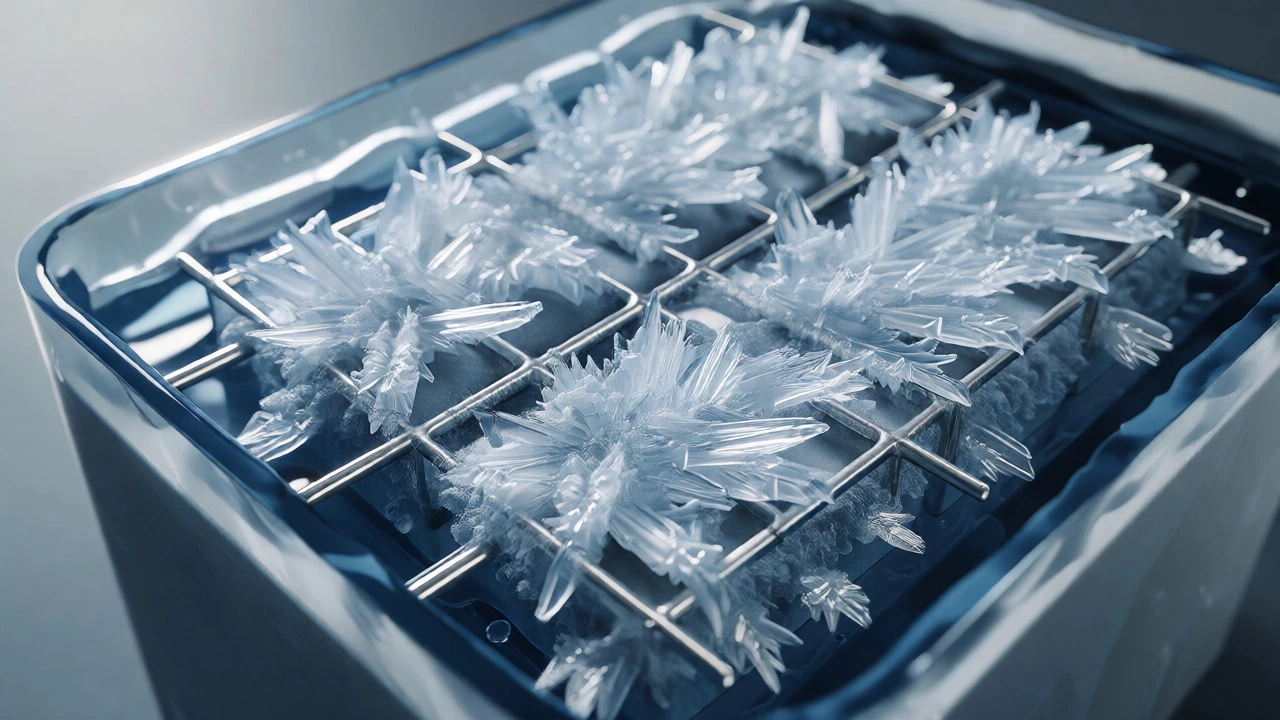
Sulfation occurs when lead sulfate crystals harden on the battery plates. Instead of dissolving back into the electrolyte during charging, they build up like scale in a kettle. Once hardened, they reduce the surface area available for chemical reactions, permanently lowering capacity. City drivers are most at risk. If you do mostly short urban runs, consider taking a longer highway drive once a week or using a smart trickle charger to keep the battery topped up.
Corrosion Blocks Electrical Flow
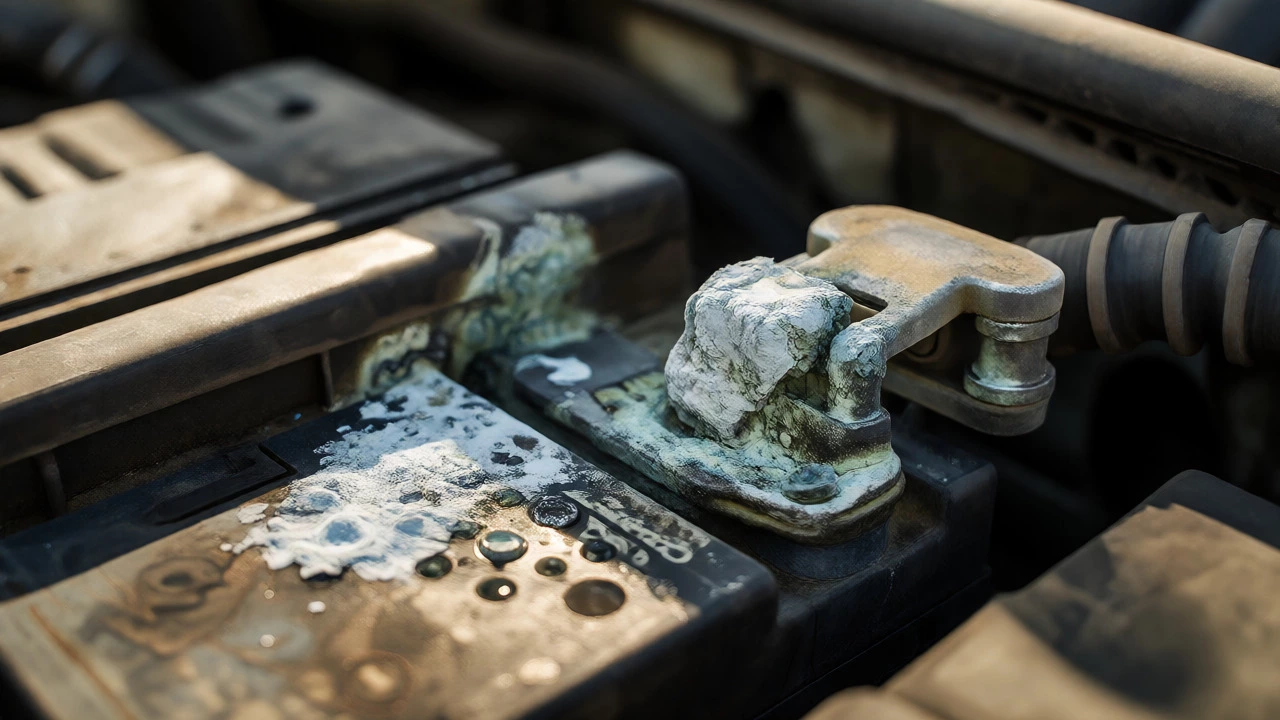
Look at your battery terminals. Do you see white or blue-green powdery buildup? That’s corrosion. It’s not just ugly; it’s resistive. Corrosion acts like a thin layer of grease between the terminal and the cable clamp. Even a small increase in resistance forces the starter motor to work harder, drawing more current than necessary. This extra load strains the battery and generates excess heat.
More importantly, corrosion prevents the alternator from sending a proper charge back to the battery. You might think your alternator is failing because the battery keeps dying, but often it’s just a bad connection. Cleaning terminals with a wire brush and applying dielectric grease is a five-minute job that can extend battery life significantly. Ensure the clamps are tight; loose connections cause arcing, which further damages the posts.
Vibration Shakes Batteries Apart
Batteries are heavy, fragile glass-and-lead structures inside a plastic case. They hate movement. If your battery tray is cracked or the hold-down clamp is missing, the battery bounces around every time you hit a speed bump. This vibration physically shakes the active material off the internal plates. That material settles at the bottom of the cell, eventually bridging the gap between positive and negative plates, causing an internal short circuit.
This is why a battery might seem fine one day and be completely dead the next. There’s no gradual decline; the internal short just happens. Check your mounting hardware regularly. In older cars, rubber mounts deteriorate, allowing the battery to slide. Replace them immediately. It’s cheap insurance against premature failure.
Alternator Issues Starve the Battery
The battery provides the spark to start the engine, but the alternator, a generator driven by the engine belt, powers all electrical systems and recharges the battery while running. If the alternator is weak, the battery works overtime to supply electricity for lights, radio, and ignition. It’s like asking a marathon runner to sprint the entire race without water.
A failing voltage regulator inside the alternator can also overcharge the battery, boiling the electrolyte and destroying the plates. Symptoms include dimming headlights at idle or flickering dashboard lights. Use a multimeter to check voltage across the battery terminals while the engine is running. It should read between 13.8 and 14.4 volts. Anything lower means undercharging; anything higher means overcharging. Both scenarios kill batteries quickly.
Age and Natural Degradation
Even with perfect care, batteries age. Internal components wear out. Sulfation builds up naturally over time, even with regular driving. After four years, most standard flooded lead-acid batteries have lost significant capacity. Start-stop systems put extra strain on batteries, requiring specialized AGM (Absorbent Glass Mat) or EFB (Enhanced Flooded Battery) units. If you have a modern car with stop-start technology, a standard battery won’t last long-it’s simply not built for the frequent deep discharges.
Don’t wait for total failure. Have your battery tested annually after year three. Most auto parts stores offer free testing that measures Cold Cranking Amps (CCA) and state of health. If CCA drops below 70% of the rated value, replacement is wise. Planning ahead saves you from emergency service fees.
Quick Summary / Key Takeaways
- Heat damages more than cold: High temps corrode internal plates; cold reveals the weakness.
- Short trips cause sulfation: Frequent short drives prevent full recharge, hardening crystals on plates.
- Check for parasitic drains: Faulty lights or accessories can drain a battery flat in days.
- Clean terminals matter: Corrosion increases resistance, straining the battery and blocking charges.
- Secure your battery: Vibration shakes active material off plates, causing internal shorts.
Battery Health Comparison Table
| Failure Mode | Cause | Symptom | Fix |
|---|---|---|---|
| Sulfation | Undercharging / Short trips | Slow cranking, low capacity | Longer drives or smart charger |
| Internal Short | Vibration / Age | Sudden death, no warning | Replace battery, secure mount |
| High Resistance | Corrosion / Loose clamps | Dim lights, hard starting | Clean terminals, tighten bolts |
| Overcharging | Bad Voltage Regulator | Boiling electrolyte, swollen case | Replace alternator/regulator |
| Parasitic Drain | Stuck relay / Light | Dead after sitting overnight | Pull fuses to isolate fault |
Frequently Asked Questions
How long does a car battery typically last?
Most standard lead-acid car batteries last between three and five years. However, factors like climate, driving habits, and electrical load can shorten this lifespan significantly. In hot climates or with frequent short trips, a battery may fail in as little as two years.
Can I revive a dead car battery?
Sometimes. If the battery died due to discharge (e.g., left lights on), a slow charge with a smart charger can restore it. If the battery is old and sulfated, or has an internal short, charging won't help. Testing the battery's Cold Cranking Amps (CCA) will tell you if it holds enough charge to be worth saving.
Does idling charge the car battery?
Yes, but inefficiently. At idle, the alternator produces less current than at higher RPMs. While it does provide some charge, it often barely keeps up with the car's electrical demand (lights, fans, ignition). Driving at steady speeds above 1,500 RPM is much more effective for recharging a depleted battery.
Why does my battery die when I leave my car parked?
This is usually caused by a parasitic drain. Modern cars have computers, alarms, and clocks that draw small amounts of power continuously. If a component malfunctions-like a trunk light staying on or a faulty module-the drain exceeds the normal standby current, depleting the battery over several days or weeks.
Is it bad to let a car battery go completely dead?
Yes. Deep discharges harm lead-acid batteries. Allowing the voltage to drop too low causes severe sulfation, which hardens the lead sulfate crystals on the plates. This reduces the battery's overall capacity and lifespan. Try to recharge the battery as soon as possible after it goes flat.