Shock Absorber Safety Estimator
Select your current symptoms and driving context to determine your remaining safe driving distance and immediate action required.
Risk Assessment
LowYou hit a pothole in Bristol and your car bounces like it’s on a trampoline. Then again. And again. That sinking feeling hits: are those shock absorbers finally gone? The immediate question isn’t just about comfort-it’s about how long you can safely keep rolling before the situation gets dangerous. The short answer? It depends entirely on how bad they are. But "how bad" is subjective until you understand what’s actually failing under your chassis.
| Condition Level | Symptoms | Safe Driving Distance | Risk Factor |
|---|---|---|---|
| Mild Wear | Slight bounce after bumps; no fluid leaks | 1,000-3,000 miles | Low (Comfort only) |
| Moderate Failure | Noticeable sway in corners; longer braking distance | 200-500 miles | Medium (Handling issues) |
| Severe Damage | Loud clunking; visible oil; tire cupping | < 50 miles | High (Loss of control) |
| Catastrophic | Shocking collapse; wheel touching arch | Immediate Stop | Critical (Accident risk) |
The Real Cost of Ignoring Worn Shocks
Most drivers think shocks are just for comfort. Wrong. They are critical safety components that keep your tires glued to the road. When suspension parts fail, your vehicle loses contact with the pavement during turns or braking. This isn't hypothetical. The UK's MOT test includes checks for shock absorber efficiency. If they fail, you’re not just getting a ticket; you’re risking an accident.
Think about hydroplaning. On wet roads, worn shocks prevent your tires from maintaining consistent pressure against the surface. This increases stopping distances significantly. In fact, studies by automotive safety organizations have shown that vehicles with worn shocks can take up to two meters longer to stop from 50 mph compared to those with new ones. That’s roughly the length of a small car. Would you gamble that distance at a busy junction?
Signs Your Shocks Are Giving Up
How do you know if you’re in the "mild" category or the "catastrophic" one? Look for these specific signs:
- Excessive Bouncing: Push down hard on one corner of your car and let go. If it bounces more than twice before settling, the dampers are shot.
- Tire Cupping: Run your hand over the tread. If it feels wavy or scalloped rather than smooth, the tires are bouncing on the road surface due to poor damping.
- Nose Dive: Does your front end dip aggressively when you brake? Or does the rear squat when you accelerate?
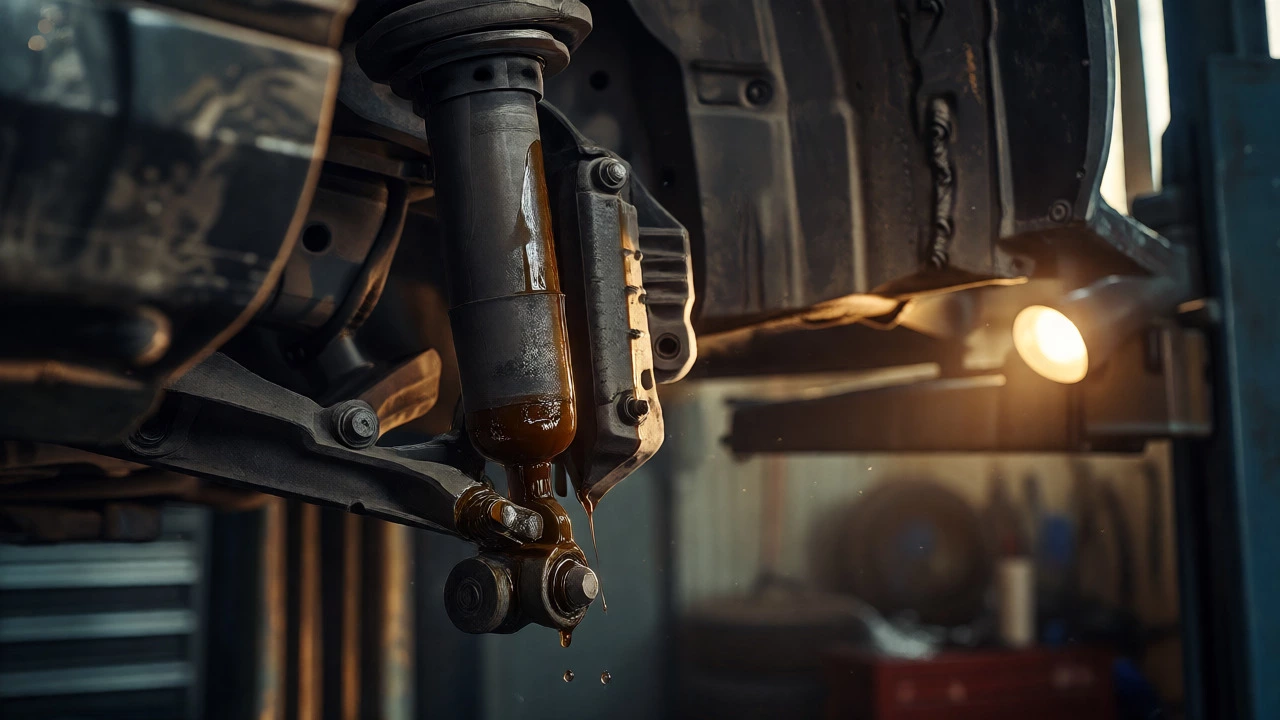
- Fluid Leaks: Look behind the wheels. If you see oily residue on the shock body, the seal has failed. Once the oil is gone, the part is dead.
Can You Drive Miles or Just Minutes?
This is where context matters. If you have mild wear and you’re driving gently on flat motorways, you might manage another few thousand miles. But if you live in an area with rough roads-like many rural routes around Somerset-or you drive a heavier vehicle like an SUV, the timeline shrinks fast.
Consider this scenario: You have a moderate leak on one rear shock. You drive 20 miles to work daily. Within a week, the imbalance causes uneven tire wear on that side. Now you need new tires too. By ignoring the $150 shock replacement, you’ve incurred a $600 tire bill. Is it worth the risk?
For severe damage, the clock ticks differently. If you hear metallic clunking, metal-on-metal contact is happening. This can destroy mounting points, making the repair far more expensive later. In this state, you should limit driving to essential trips only, ideally under 50 miles total, while arranging a mechanic visit.
Factors That Shorten Your Timeline
Not all cars age equally. Several variables dictate how long you can stretch it out:
Vehicle Weight and Type
Heavier vehicles put more stress on suspension components. A Ford Transit van will degrade shocks faster than a Ford Fiesta because of the sheer mass involved. If you tow a caravan or carry heavy loads regularly, your margin for error is smaller.
Road Conditions
Living in cities with frequent roadworks and potholes accelerates wear. The constant impact forces fatigue the internal valves. If you recently drove through a construction zone without slowing down, you might have accelerated failure by months.
Driving Style
Aggressive driving-hard braking, sharp cornering, rapid acceleration-multiplies the workload on your shocks. If you’re a spirited driver, don’t expect worn shocks to last as long as a cautious commuter’s would.
What Happens If You Wait Too Long?
Beyond the obvious discomfort, there are cascading failures. First, your tires suffer. Uneven wear leads to blowouts, especially at high speeds. Second, other suspension components take the hit. Springs, bushings, and ball joints aren’t designed to absorb impacts alone. When shocks fail, these parts endure excessive stress, leading to premature replacement costs.
There’s also the legal aspect. While not every country has strict laws like the UK’s MOT, police in many jurisdictions can deem a vehicle unsafe if the suspension is visibly broken. If you’re pulled over for swerving, and the officer sees leaking shocks, you could face fines or even have your car impounded.

DIY Check vs. Professional Inspection
You can do the bounce test yourself, but it’s not foolproof. Some modern cars use electronic damping systems that mask symptoms initially. A professional inspection involves putting the car on a lift and checking for play in the mounts and leakage on both sides. They can also assess spring integrity, which often fails alongside shocks.
If you’re unsure, err on the side of caution. Suspension repairs are rarely cheap, but they are predictable. Waiting for a catastrophic failure on the motorway is neither predictable nor cheap.
When to Replace All Four
A common mistake is replacing only the failed shocks. Unless one was damaged by a specific incident (like hitting a curb), replace them in pairs-at least. Ideally, replace all four. Why? Because new shocks on one axle and old ones on the other create an imbalance. Your car will handle unpredictably, potentially causing understeer or oversteer situations that surprise you in emergencies.
Is it safe to drive with a leaking shock absorber?
It depends on the severity. A slight weep might be manageable for a few hundred miles, but a dripping leak means the damper is ineffective. Driving with a dripping leak risks loss of control, especially in wet conditions, so immediate replacement is recommended.
How much does it cost to fix bad shocks?
Costs vary widely based on vehicle make and labor rates. In the UK, parts can range from £50 to £200 per shock, plus labor. Replacing all four typically costs between £400 and £1,200 at an independent garage. Dealerships may charge more.
Do bad shocks affect fuel economy?
Yes, indirectly. Poor suspension increases rolling resistance and reduces aerodynamic stability, forcing the engine to work harder. Additionally, uneven tire wear caused by bad shocks further decreases fuel efficiency.
Can I pass my MOT with worn shocks?
Unlikely. The MOT test includes a check for shock absorber condition. If they are excessively worn, leaking, or insecurely attached, you will receive a major defect, requiring repair before re-testing.
How long do shock absorbers usually last?
Typically, shock absorbers last between 50,000 and 100,000 miles. However, harsh driving conditions, heavy loads, and aggressive driving styles can shorten this lifespan significantly.