Radiator Replacement Cost & Risk Calculator
Estimated Total Cost (Parts + Labour)
Risk Assessment
Your car has been running fine for years, but the clock is ticking on one of its most critical components. If your vehicle is approaching or has passed the 20-year mark, you might be wondering if that original car radiator is still doing its job or if it’s just waiting to fail catastrophically. The short answer? Yes, replacing a 20-year-old radiator is almost always worth it, but not just because it’s old. It’s about preventing expensive engine damage and ensuring your safety on the road.
We often ignore our car's cooling system until we see steam rising from the bonnet. By then, the damage might already be done. This guide breaks down why age matters, what signs to look for, and how much you can expect to pay in the UK market today.
The Hidden Decay: Why Age Matters More Than Mileage
You might think that if your car hasn't overheated, the radiator is fine. That’s a dangerous assumption. A radiator is made of metal-usually aluminium or copper-and plastic tanks. Unlike brake pads that wear down visibly with use, radiators degrade chemically over time, regardless of how many miles you’ve driven.
Inside your cooling system, coolant (or antifreeze) circulates to absorb heat from the engine. Over two decades, this fluid loses its chemical properties. It becomes acidic. This acidity eats away at the internal fins and tubes of the radiator. Even if there are no visible leaks on the driveway, microscopic holes may have formed inside the core. These tiny breaches reduce efficiency, causing the engine to run hotter than designed, which accelerates wear on other parts like the head gasket.
Additionally, the plastic end tanks used in most modern cars (even those built 20 years ago) become brittle with age. Heat cycles-expanding when hot, contracting when cold-cause stress cracks. A tank that looks solid can shatter under pressure during a long motorway drive. I’ve seen plenty of older classics here in Bristol where the radiator held up for ten years only to fail completely in week one after sitting unused in a garage for five.
Signs Your Old Radiator Is Failing
Before you commit to the cost of replacement, check for these warning signs. If your 20-year-old radiator exhibits any of these, don’t wait.
- Overheating: The temperature gauge climbs higher than normal, especially in traffic or on hills. This is the most obvious sign that heat exchange isn’t happening efficiently.
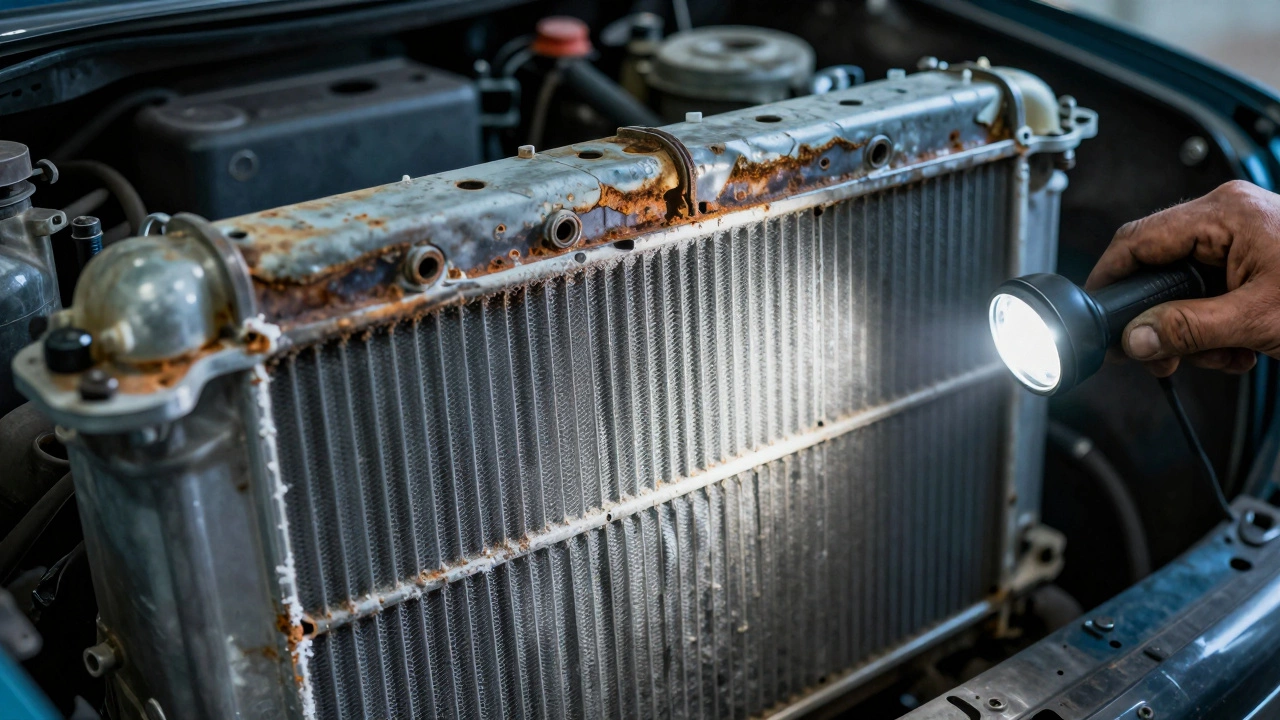
- Discoloured Coolant: Pull the overflow cap (when the engine is cold!). If the fluid looks rusty, brown, or has sludge floating in it, your radiator internals are corroding. Fresh coolant should be bright green, orange, or blue depending on the type.
- Sweet Smell: Antifreeze has a distinct sweet odour. If you smell it outside the car or notice a sticky residue under the front bumper, you have a leak.
- Low Coolant Level: Having to top up the reservoir every few weeks indicates a slow leak. In a 20-year-old system, this is rarely the hoses; it’s usually the radiator core or tank seals.
- Visible Damage: Check the front grille area. Look for bent fins, corrosion spots, or white powdery residue around the seams. This suggests electrolysis or chemical breakdown.
The Cost-Benefit Analysis: Repair vs. Replace
Some mechanics might suggest flushing the system or patching a small leak. For a 20-year-old unit, this is usually a false economy. Here’s why replacing the entire assembly makes more financial sense.
| Option | Estimated Cost (UK) | Longevity | Risk Level |
|---|---|---|---|
| Flush & Bleed System | £50 - £80 | Temporary (months) | High (internal corrosion remains) |
| Epoxy Patch Kit | £10 - £20 | Very Short (weeks) | Critical (patch fails under heat/pressure) |
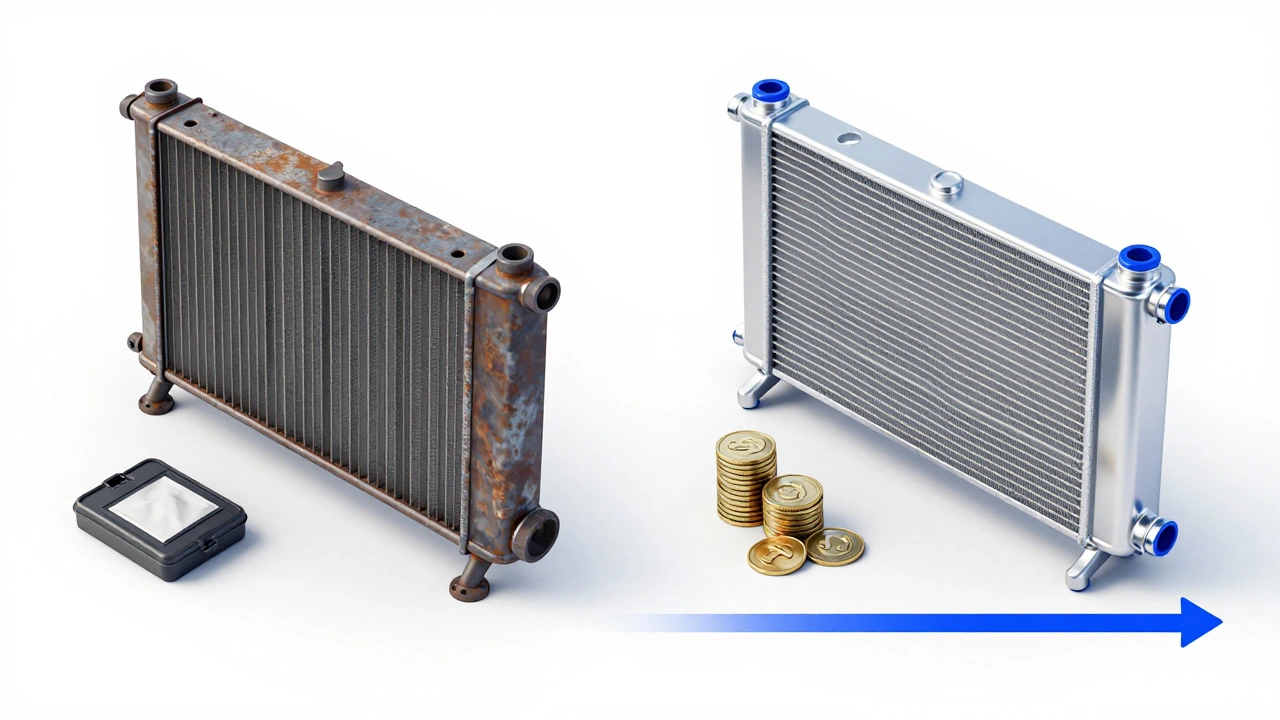
| New Aftermarket Radiator | £150 - £300 (parts only) | 10+ Years | Low |
| OEM Replacement Radiator | £300 - £600 (parts only) | 15+ Years | Very Low |
When you factor in labour, a full replacement typically costs between £400 and £700 in the UK, depending on your car model. Compare that to the cost of a blown head gasket (£800+) or a warped cylinder head (£1,500+), and the radiator swap looks like a bargain. You’re paying for peace of mind and reliability.
Also, consider that new radiators come with improved designs. Even if your car is 20 years old, aftermarket manufacturers often release updated versions with better flow rates or more durable plastic tanks. You aren’t just getting the same old part; you’re getting a refined version.
Should You Do a Full Cooling System Overhaul?
If you decide to replace the radiator, do not just swap the unit and refill with water. That’s a recipe for disaster. A 20-year-old cooling system has accumulated sediment, rust, and degraded rubber throughout. Installing a shiny new radiator into a dirty, acidic system will kill the new part within months.
To get the most value from your investment, follow this checklist:
- Replace the Thermostat: These are cheap (£10-£20) and prone to sticking. A stuck thermostat causes overheating just like a bad radiator.
- New Hoses: Rubber degrades. Squeeze your upper and lower radiator hoses. If they feel hard, cracked, or mushy, replace them. It adds minimal labour since they’re being disconnected anyway.
- Water Pump: If your water pump is original or nearing 100,000 miles, replace it now. Bearing failure here leads to coolant loss and engine seizure.
- Flush the Block: Use a proper chemical flush to remove sludge from the engine block before installing the new radiator. This ensures clean coolant flows through the new unit.
- Use Correct Coolant: Don’t mix types. Modern coolants are either OAT (Organic Acid Technology) or IAT (Inorganic Acid Technology). Using the wrong one can cause gelation inside the radiator. Check your owner’s manual or ask a specialist.
DIY vs. Professional Installation
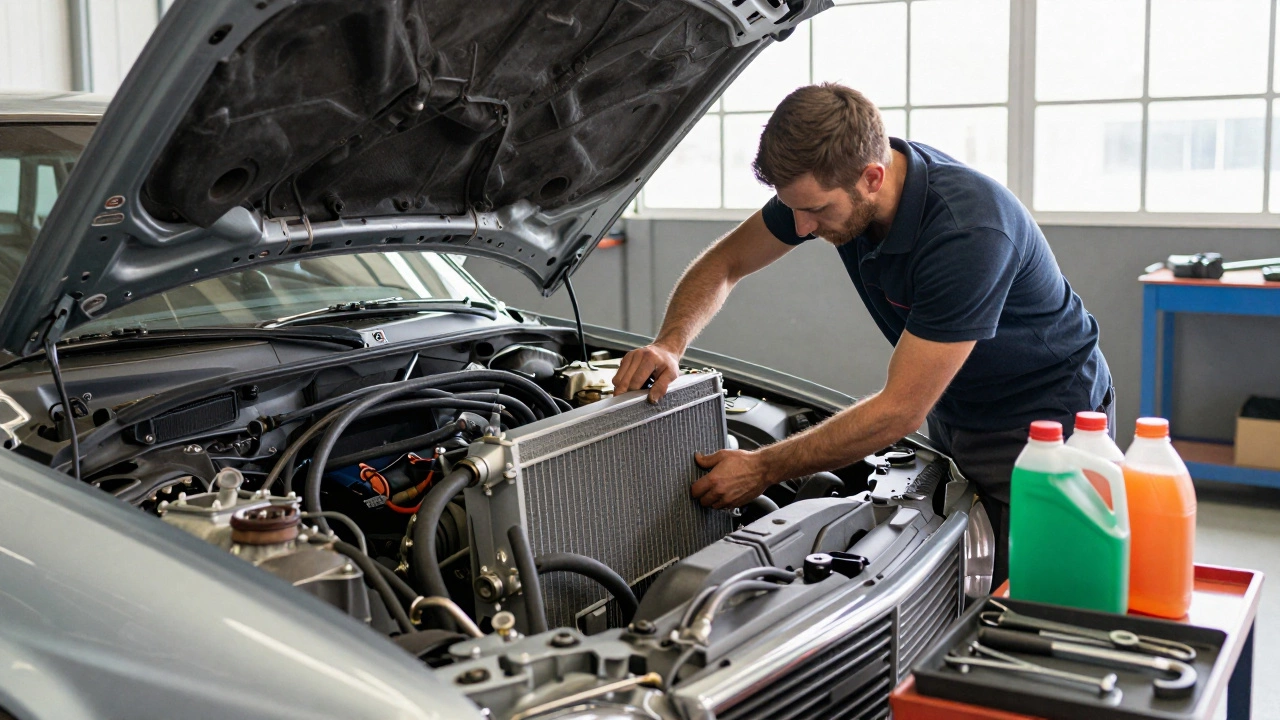
Replacing a radiator is a moderate DIY job if you have basic tools and mechanical confidence. However, there are risks. Air pockets trapped in the cooling system can cause localized overheating, leading to engine damage even with a perfect installation. Bleeding the system correctly requires knowledge of your specific engine’s bleed points.
If you’re not comfortable working under the bonnet, take it to a trusted independent mechanic rather than a dealership. Dealerships charge premium rates for labour, while independents offer competitive pricing and often specialize in older vehicles. In Bristol, many local garages are familiar with classic and aging cars, offering fair quotes without the markup.
Ask for a warranty on both parts and labour. A reputable shop will guarantee their work for at least 12 months. This protects you if the new radiator has a manufacturing defect or if the installation wasn’t quite right.
Environmental Considerations
It’s worth noting that old radiators contain metals and fluids that shouldn’t go to landfill. When you replace your radiator, ensure the scrap unit is recycled properly. Most auto parts stores and scrapyards accept old radiators for recycling. The aluminium and copper can be melted down and reused, reducing the environmental footprint of your repair. Also, dispose of the old coolant responsibly-it’s toxic to pets and wildlife.
Final Verdict
Is it worth replacing a 20-year-old radiator? Absolutely. The risk of sudden failure on a busy road far outweighs the cost of proactive replacement. You’re not just fixing a leak; you’re safeguarding your engine’s health and your own safety. With proper installation and a full system refresh, your car could run reliably for another decade. Don’t let a cheap part compromise an expensive engine.
How long does a new car radiator last?
A new radiator typically lasts between 8 to 10 years, or up to 100,000 miles, provided the cooling system is maintained regularly with proper coolant changes. Factors like driving conditions, climate, and coolant quality affect longevity.
Can I drive with a leaking radiator?
No, you should not drive with a leaking radiator. Even a small leak reduces coolant levels, leading to overheating. Engine overheating can cause catastrophic damage such as a blown head gasket or warped cylinder heads, costing thousands to repair.
What is the average cost of replacing a radiator in the UK?
The total cost including parts and labour ranges from £400 to £700 for most standard vehicles. Luxury or rare models may cost more due to specialized parts. Labour rates vary by region, with London and Southeast England typically higher.
Do I need to change the coolant when replacing the radiator?
Yes, always replace the coolant. Old coolant is acidic and contaminated with debris. Using fresh coolant ensures the new radiator functions efficiently and prevents premature corrosion. Always use the manufacturer-recommended type.
Can a radiator be repaired instead of replaced?
Minor leaks in the plastic tanks can sometimes be welded or patched, but this is rarely recommended for a 20-year-old unit. Internal corrosion cannot be fixed by patching. Replacement is safer, more reliable, and often more cost-effective in the long run.
What happens if I ignore an overheating car?
Ignoring overheating can lead to severe engine damage. Extreme heat expands metal components, potentially cracking the engine block or warping the cylinder head. This results in loss of compression, oil contamination, and eventual engine failure requiring a complete rebuild or replacement.
Is it better to buy OEM or aftermarket radiators?
OEM (Original Equipment Manufacturer) radiators match factory specs exactly and are ideal for restoring classics. Aftermarket radiators are often cheaper and may include design improvements. For daily drivers, high-quality aftermarket units offer excellent value and performance.