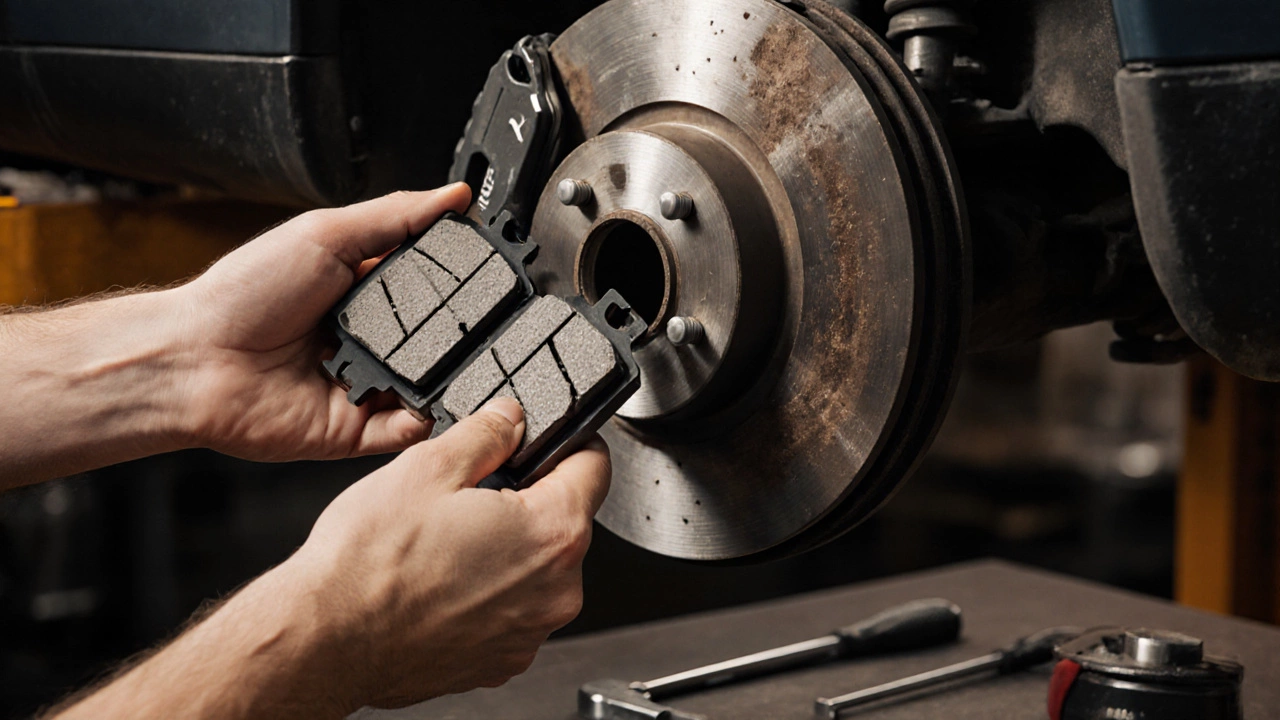
When your brakes start squeaking or feel spongy, the first thing you think about is brake pad cost, the price of replacing the friction material that slows your car by pressing against the rotors. Also known as brake lining, brake pads are one of the most frequently replaced safety parts on any car—especially Italian models like Alfa Romeos and Fiats that love spirited driving. But the real question isn’t just how much they cost—it’s whether you need new rotors too, and why some shops charge double for the same job.
Brake rotors, the metal discs the pads clamp onto, are often the hidden cost in a brake job. If your pads wore down too long, the metal backing can scratch the rotor surface, making it uneven. That’s when you can’t just swap pads—you need new rotors or a resurface. Some mechanics push rotor replacement even when it’s not needed, but if your rotors are still smooth and over 10mm thick, new pads alone will fix the issue. Check your owner’s manual or look up your model’s minimum thickness online—it’s usually printed on the rotor edge. And don’t assume all brake pads are the same. OEM-grade pads for a Maserati cost more than generic ones, but they last longer, stop better, and don’t wear out your rotors as fast. Cheaper pads might save you £50 upfront but cost you £200 in rotor damage later.
Brake maintenance, the routine checks and replacements that keep your stopping power reliable, isn’t just about parts—it’s about timing. Most drivers replace pads every 30,000 to 70,000 miles, but if you drive in cities with heavy braking or haul heavy loads, you might need them every 20,000 miles. Listen for that high-pitched squeal—it’s not a bug, it’s a built-in wear indicator. Ignore it, and you’ll hear grinding, which means metal-on-metal contact and a much bigger bill. You can replace brake pads yourself with basic tools, and we’ve got step-by-step guides showing how. But if you’re not comfortable lifting the car or bleeding the brake lines, a professional install is worth the peace of mind.
What you pay for brake pads depends on your car, the brand, and where you buy them. For a Fiat 500, expect £60–£120 for a full set. For a performance Alfa, it could be £150–£300. Labor adds another £80–£150 if you don’t do it yourself. But here’s the trick: some places sell pads for £40 and charge £180 to install them. Others bundle pads and rotors for £350 and call it a deal. Know what your car actually needs before you agree to anything.
There’s no magic number for brake pad cost—it’s a mix of part quality, vehicle type, and your driving habits. The smart move? Check your pads every oil change. Look at the thickness—less than 3mm and it’s time. Listen for noise. Feel for vibration. And if you’re replacing pads, always inspect the rotors. Don’t let a shop talk you into a full brake job unless the numbers back it up. You don’t need to spend a fortune to stop safely—you just need to know what you’re paying for.
Below, you’ll find real guides from drivers who’ve been there: how to tell if you need new rotors or just pads, whether you can replace brake pads yourself, and what parts to check when your brakes start acting up. No fluff. Just what works.