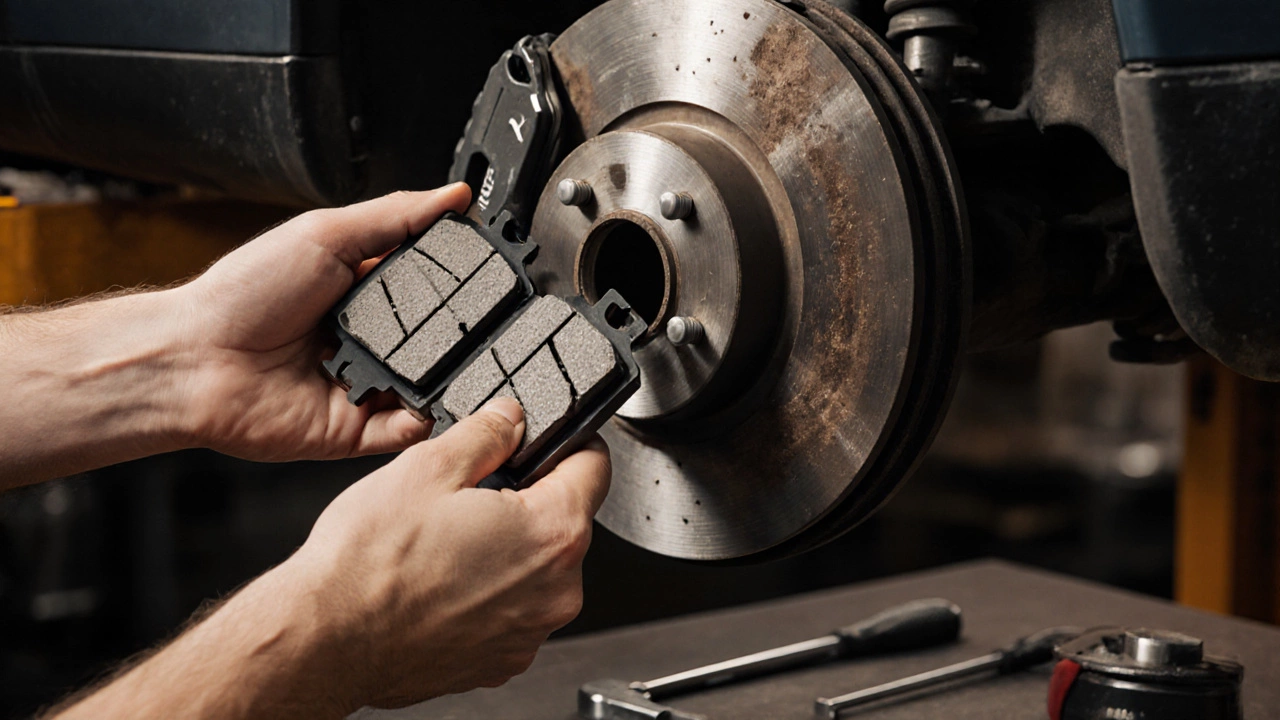
When it comes to stopping power, brake pad types, the friction material that presses against the rotor to slow your car. Also known as brake linings, they’re one of the most critical safety components in any vehicle—especially in performance-focused Italian cars like Alfa Romeos, Fiats, and Maseratis. These cars don’t just look fast—they stop fast too, and that means the right brake pad isn’t just a preference, it’s a necessity.
There are three main types you’ll find in Italian cars: organic, soft, non-metallic pads made from materials like glass, rubber, and resins, semi-metallic, durable pads with metal fibers that handle heat well, and ceramic, high-end pads made from ceramic fibers and copper filaments that offer quiet, clean braking. Organic pads are quiet and gentle on rotors, but they wear out faster—common in older Italian models. Semi-metallic pads are tougher, handle high heat better, and are often factory-fit on sportier models like the Giulia or 147 GTA. Ceramic pads are the premium choice: less dust, longer life, and better performance under repeated hard stops, which matters if you drive twisty roads or track your car occasionally.
Choosing the wrong type can lead to noise, uneven wear, or even rotor damage. A ceramic pad on a daily-driven Fiat 500 might be overkill and cost more than needed. A semi-metallic pad on a weekend-only Alfa might be too harsh and noisy around town. It’s not about going for the most expensive option—it’s about matching the pad to how you drive and what your car was built for. Many owners replace pads without checking the rotors, but worn rotors can ruin new pads fast. That’s why posts like "New rotors or just pads? How to decide the right brake fix" exist—to help you avoid costly mistakes.
Brake pad wear doesn’t always come with a loud squeal. Sometimes it’s just a longer stopping distance, a vibration in the pedal, or a faint grinding sound when you slow down. And if you’ve ever replaced pads yourself, you know it’s not just about popping them in—you need the right tools, clean slides, and proper bed-in procedures. That’s why guides like "Can You Change Brake Pads Alone? A DIY Guide" are so valuable. You don’t need to be a mechanic to do it right, but you do need to know what you’re doing.
Whether you’re restoring a classic Giulietta or upgrading a modern Maserati, the right brake pad type makes a real difference in safety, feel, and longevity. The posts below cover everything from how to tell if your pads are worn to which brands actually work on Italian cars, and why some "performance" pads are just marketing hype. You’ll find real-world advice, cost comparisons, and clear checks you can do yourself—no guesswork needed.