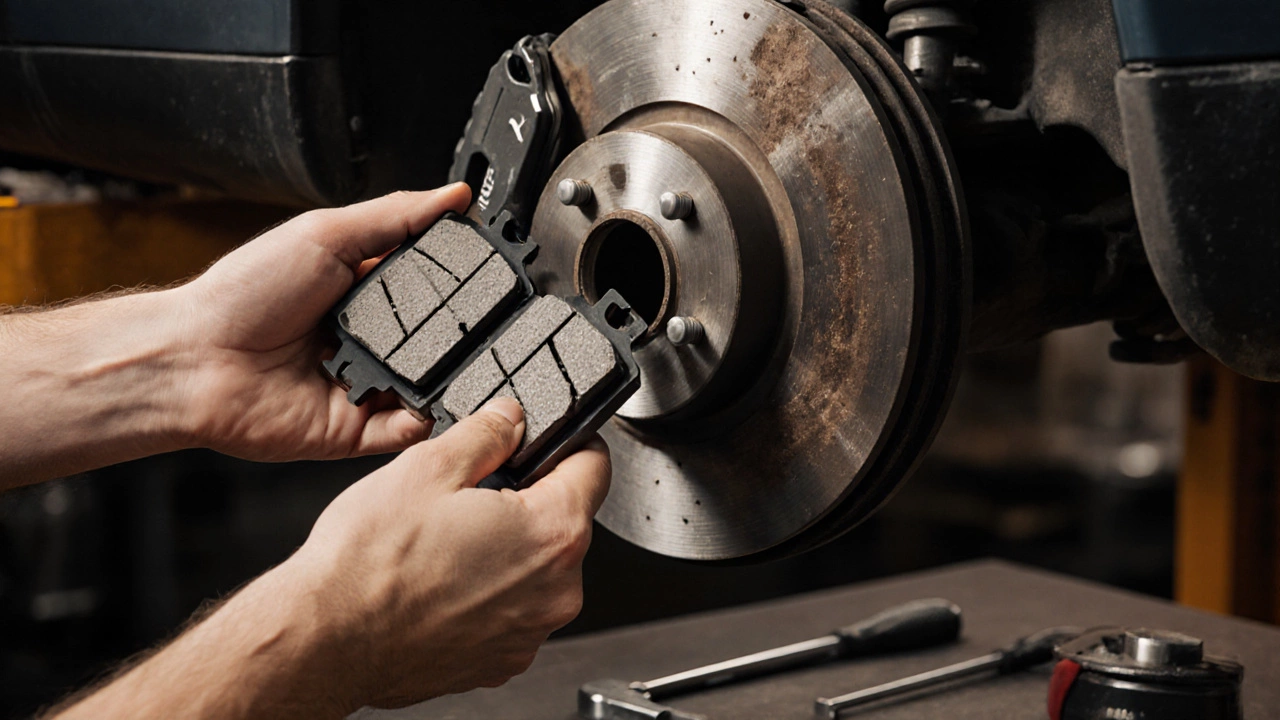
When your car’s brake pads, the friction material that presses against the rotors to slow or stop your vehicle. Also known as brake linings, they’re one of the most critical safety components in any car—especially in the UK, where wet roads and stop-start traffic wear them down faster than you think. If you hear squealing, feel vibration in the pedal, or notice longer stopping distances, it’s not just noise—it’s a warning.
Brake pads don’t last forever, and they don’t wear evenly. In the UK, most drivers replace them between 25,000 and 50,000 miles, but that depends on driving style, road conditions, and the type of car you drive. Aggressive braking in city traffic? You’ll need new pads sooner. Towing or carrying heavy loads? Same thing. And here’s the thing: brake rotors, the metal discs the pads clamp onto often get overlooked. You don’t always need new rotors when replacing pads—but if they’re warped, scored, or thinner than 2mm, keeping them is a gamble. Skipping rotor checks can lead to uneven wear, noise, and even brake failure.
It’s not just about the pads and rotors. The brake caliper, the part that squeezes the pads against the rotor can stick or leak fluid, which means even new pads won’t work right. And don’t forget the hardware—brake pad clips, shims, and anti-rattle components. Reusing old ones can cause noise, uneven contact, and premature wear. Most DIYers skip these, but professionals know: replacing the full kit saves money long-term.
Here’s what most drivers in the UK get wrong: they wait until the warning light comes on. But that light usually means the pads are already down to the metal. By then, you’ve probably damaged the rotors—and paid double to fix it. A better habit? Check your pads every 10,000 miles. You don’t need to lift the car. Just look through the wheel spokes. If the pad looks thinner than a £1 coin, it’s time to act.
And yes—you can change brake pads yourself. We’ve got step-by-step guides that show you how, with the right tools and safety steps. No need to pay £150 at a garage if you’re comfortable with a socket set. But if you’re unsure, or if your car has electronic parking brakes or complex sensors, it’s worth getting help. Brakes aren’t something to guess on.
What you’ll find below isn’t just a list of articles. It’s a practical toolkit. From how to tell if you need new rotors or just pads, to why brake safety matters more in UK weather, to whether you can do the job alone—every post here comes from real experience. No fluff. No theory. Just what works when your car needs to stop, fast.