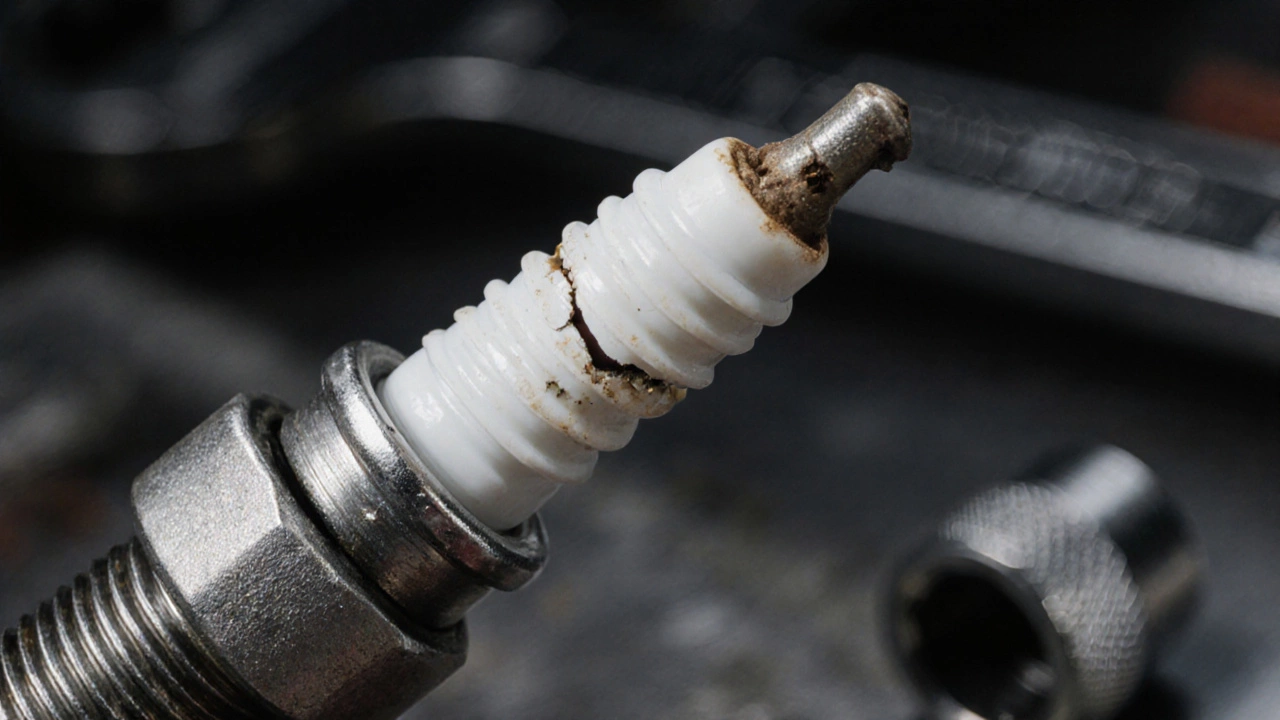
When your spark plug damage, a failure in the ignition component that ignites fuel in the engine cylinder. Also known as faulty ignition electrodes, it’s one of the most common but overlooked problems that can lead to engine misfires, poor fuel economy, and even permanent engine damage. Spark plugs aren’t just small parts—they’re the heartbeat of your engine’s combustion process. If they fail, your car doesn’t just run poorly—it risks overheating, catalytic converter failure, or worse.
Spark plug damage doesn’t happen overnight. It’s usually the result of long-term neglect or a bigger issue like a rich fuel mixture, oil leaks into the cylinder, or using the wrong plug type for your engine. You might notice a rough idle, hesitation when accelerating, or the check engine light blinking. These aren’t just inconveniences—they’re red flags. A damaged spark plug can cause unburned fuel to flood into the exhaust system, overheating the catalytic converter, a critical emissions component that converts harmful gases into less toxic ones and costing you over £1,000 to replace. And if you keep driving, you could crack a piston or warp a valve.
Many people think spark plugs last forever, but they wear out. The gap widens. The ceramic cracks. The electrode erodes. That’s why engine misfire, when one or more cylinders fail to ignite fuel properly is often the first clear sign. It’s not just a glitch—it’s the engine screaming for help. And if you’ve ever seen black, oily deposits on a spark plug, that’s not normal. It means oil is leaking past worn valve seals or piston rings, and that’s a deeper problem needing attention.
It’s rarely just the plug’s fault. Over-tightening during installation can crack the ceramic insulator. Using the wrong heat range can cause pre-ignition or fouling. A faulty fuel injector dumping too much gas into the cylinder? That’ll coat the plug in carbon. A leaking head gasket letting coolant in? That’ll turn the tip into a chalky mess. And if you’re using cheap, non-OEM plugs, you’re gambling with your engine’s life.
Italian cars—like Alfa Romeos, Fiats, and Maseratis—are especially sensitive to spark plug quality. Their high-compression engines demand precision. A mismatched plug can trigger knock, reduce power, or even cause detonation. That’s why replacing them isn’t just about maintenance—it’s about protecting your investment.
You don’t need a garage full of tools to spot early damage. Check your owner’s manual for the replacement interval—usually between 30,000 and 100,000 miles depending on the type. But don’t wait for the schedule. If your car feels sluggish, hesitates on takeoff, or uses more fuel than usual, pull a plug and take a look. A quick visual check can save you hundreds.
What you’ll find in the posts below are real-world guides on how to diagnose spark plug issues before they turn into engine repairs. You’ll learn how to tell if your plugs are worn, why some last longer than others, and what other parts—like ignition coils or fuel injectors—might be hiding behind the problem. No fluff. No guesswork. Just clear, practical steps to keep your Italian car running right.