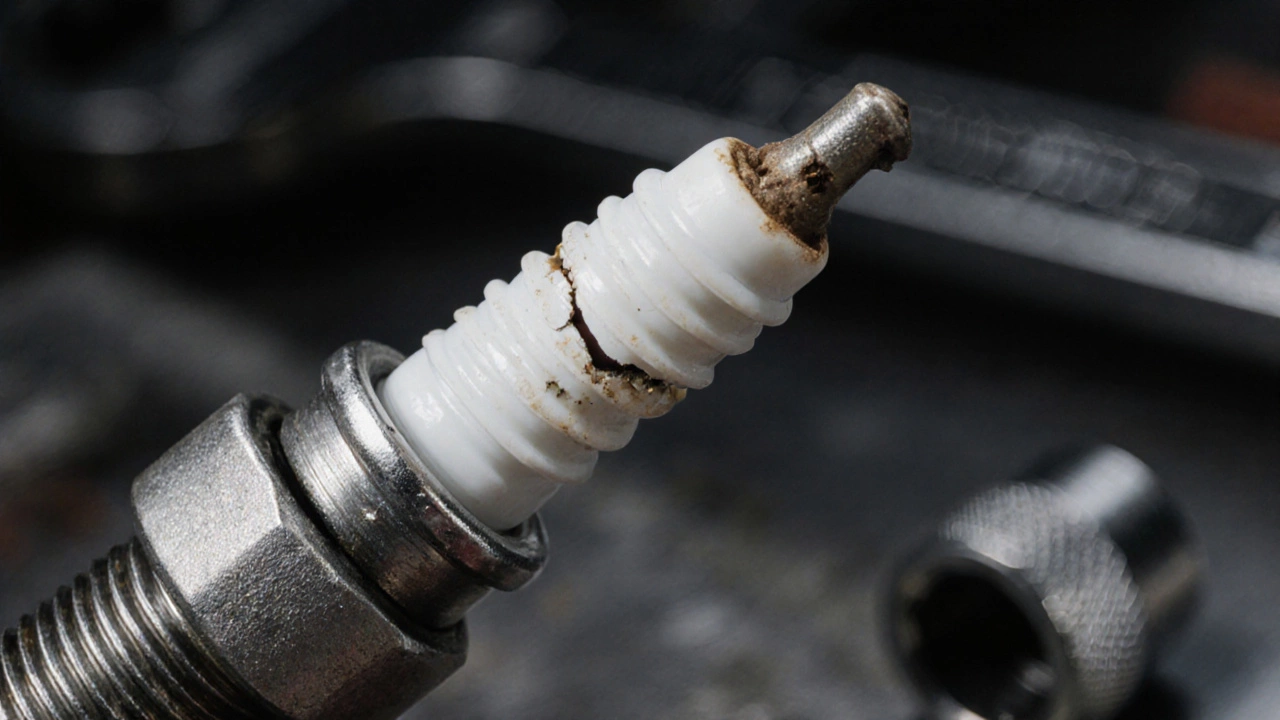
When you’re doing a spark plug inspection, a simple check of the ignition components that ignite fuel in your engine. Also known as ignition plug check, it’s one of the most overlooked but critical maintenance steps for any Italian car—whether it’s a Fiat 500, Alfa Romeo Giulia, or Maserati GranTurismo. These little parts handle the job of creating the spark that starts combustion, and when they fail, your engine doesn’t just lose power—it starts misfiring, sputtering, and wasting fuel.
A worn spark plug, a degraded ignition component that no longer fires efficiently can cause a chain reaction: poor fuel economy, hard starts, rough idling, and even damage to your catalytic converter. You don’t need fancy tools to inspect them—just a socket wrench, a gap tool, and a little time. Look for black soot, white deposits, or cracked porcelain. A gap that’s too wide means the spark is weak. If you see any of this, replacement isn’t just recommended—it’s urgent.
The ignition system, the network of parts that delivers spark to the engine cylinders doesn’t work in isolation. Faulty spark plugs strain the coil packs, which then overheat and fail. And if you’re driving with a misfire, you’re not just wasting gas—you’re risking long-term engine damage. Many drivers wait until the check engine light comes on, but by then, the problem’s been brewing for hundreds of miles. A quick spark plug inspection every 20,000 miles can save you hundreds in repairs.
Italian cars often run on high-performance engines that demand precision. Standard spark plugs won’t cut it—many models need specific heat ranges, thread sizes, or iridium tips. That’s why knowing your exact plug type matters. Your owner’s manual lists it, but if you’re unsure, cross-reference with your engine code. Don’t guess. A mismatched plug can cause pre-ignition or carbon buildup, both of which are expensive to fix.
And here’s something most people miss: spark plugs don’t just wear out from age. They get fouled by oil leaks, rich fuel mixtures, or even low-quality fuel. If you’ve got a spark plug that’s oily or wet, the problem isn’t the plug—it’s what’s leaking into the combustion chamber. That’s when you need to dig deeper, not just swap parts.
What you’ll find below are real, practical guides from drivers who’ve been there. How to tell if your plugs are dead before your car leaves you stranded. What the different types of deposits mean on the electrode. When you can wait and when you must act now. And yes—how to do it yourself without spending a fortune on labor. No fluff. No theory. Just what works on real Italian cars, on real roads, in real conditions.