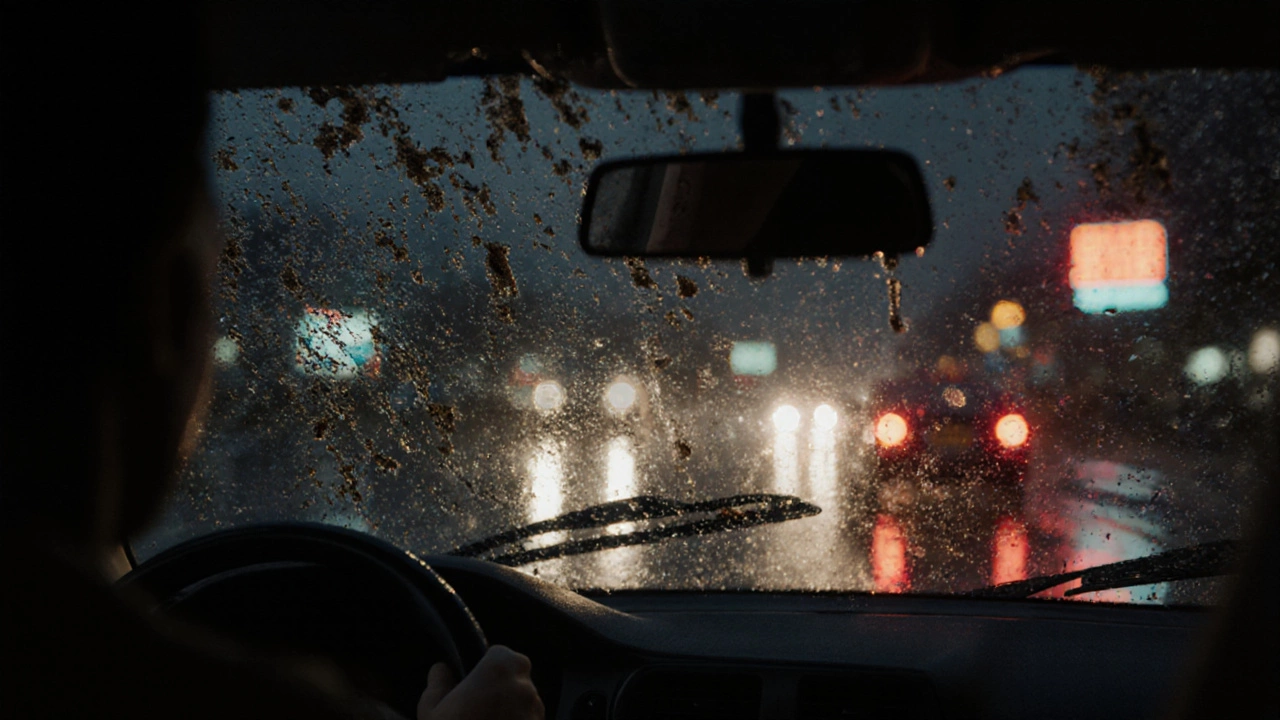
When you flick your wipers and nothing happens but streaks, it’s not the blades failing—it’s probably the windscreen wiper fluid, a specialized cleaning solution designed to remove dirt, bugs, and road grime without damaging glass or rubber. Also known as windshield washer fluid, it’s the unsung hero that keeps your vision clear in rain, snow, or dusty conditions. Most people treat it like an afterthought, but using the wrong kind can crack your nozzles, leave smears, or even freeze solid in winter.
Not all windscreen wiper fluid, a blend of water, methanol, surfactants, and anti-freeze agents is made equal. Cheap supermarket brands often skip the anti-freeze, meaning they turn to ice at -2°C and clog your system. In the UK, where frost and mud are common, you need fluid rated for at least -10°C. Look for the freeze point on the bottle. Some include bug remover for summer, others have water-repellent additives that make rain bead off the glass. The right fluid doesn’t just clean—it helps your wiper blades, rubber or silicone strips that sweep water from your windshield last longer by reducing friction and preventing streaking.
It’s not just about the fluid. Your wiper blade performance, how well the blades clear water without smearing or chattering depends on the fluid you use. If your blades are old or cracked, no fluid will fix that. But if they’re new and still leaving smears, the problem is likely the fluid. Silicone-based cleaners can leave oily films. Alcohol-heavy formulas dry too fast, leaving residue. The best fluids balance cleaning power with slow evaporation and low freezing.
Most cars hold 1 to 2 litres, and you’ll need a refill every few months if you drive regularly. Don’t wait until you can’t see. Top up before winter hits. Check your owner’s manual—some high-end Italian cars like Alfa Romeos or Maseratis have specific fluid recommendations. Using the wrong type can void warranty or damage the pump. And never use water alone, even in summer. Tap water leaves mineral deposits that cloud your glass and gunk up the nozzles.
You’ll find plenty of advice online about homemade mixes—vinegar, soap, or even vodka. Skip them. They might seem cheap, but they corrode rubber, leave streaks, and can kill your washer pump. Stick to purpose-made fluids. They’re designed for your car’s system, not your kitchen.
What you’ll find below are real-world guides on how to spot bad wiper blades, why silicone lasts longer than rubber, whether stores like AutoZone offer free installs, and how to avoid the most common mistakes people make when topping up. No fluff. Just what works on UK roads, for Fiat 500s, Alfa Romeos, and everything in between.