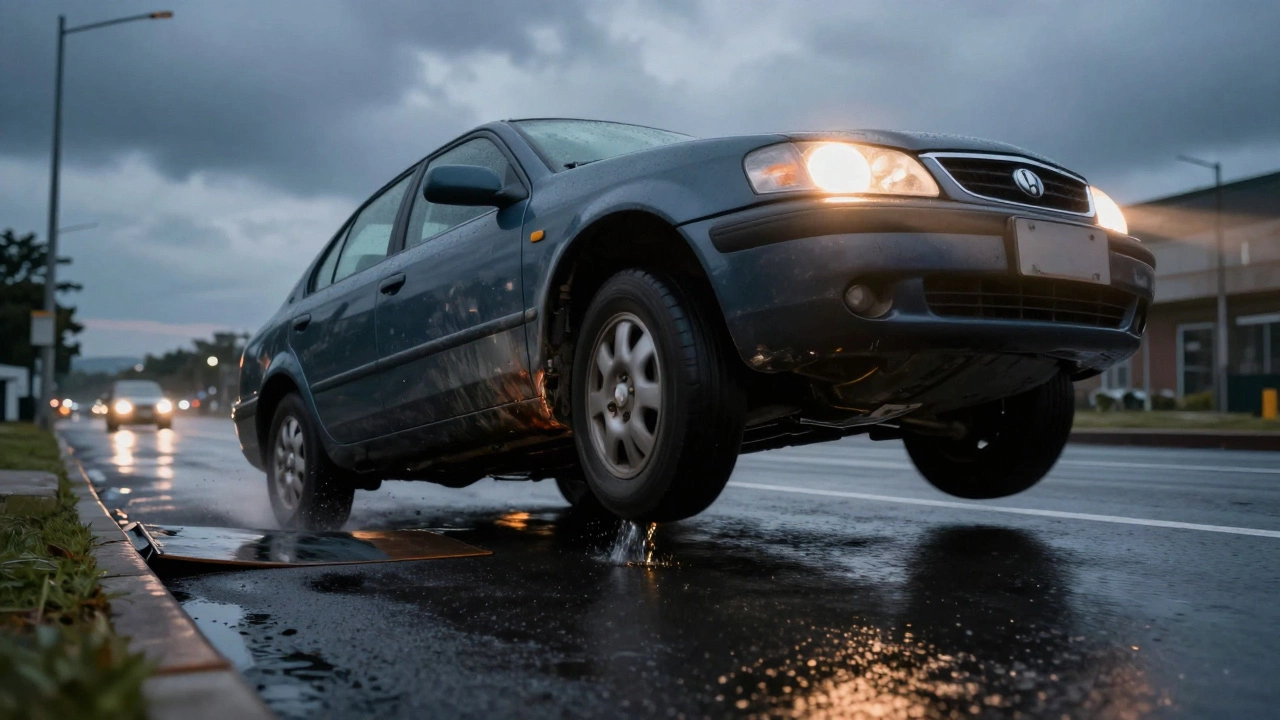
When your car bad suspension, a condition where shocks, struts, or other components fail to absorb road impacts properly. Also known as worn suspension, it doesn’t just make your ride uncomfortable—it makes it unsafe. Ignoring it means your tires wear out faster, your brakes take longer to stop the car, and you lose control on uneven roads or in emergency maneuvers.
You don’t need to be a mechanic to spot trouble. If your car bounces like a basketball after hitting a bump, that’s a classic sign of worn struts, critical parts that combine shock absorbers and coil springs to support weight and control movement. Look for oil leaks on the strut shafts—those are clear signs they’re done. If you hear clunking noises, loud thuds or rattles when driving over bumps or turning, your control arms, bushings, or mounts are likely cracked or loose. And if your tires show uneven wear—especially cupping or scalloping—you’re not just wearing out rubber, you’re fighting a failing suspension system.
Driving with bad suspension isn’t just annoying—it’s risky. Your car won’t handle well in rain or snow. Braking distances increase because the weight shifts unpredictably. In a sudden turn or dodge, your vehicle might skid or roll. It’s not a "maybe fix it later" issue. It’s a "do something now" problem. And the good news? You don’t always need a full replacement. Sometimes it’s just one strut, one bushing, or one mount. But you need to catch it before the damage spreads to your wheels, steering, or even the frame.
This collection pulls together real-world fixes, clear warning signs, and what actually works on UK roads. You’ll find guides on spotting suspension problems, common failures in Italian cars like Alfa Romeo and Fiat that often show up sooner due to lower ground clearance and sportier setups, how to tell if it’s your struts or something else, and why cheap parts can cost you more in the long run. No fluff. No theory. Just what you need to know before you head to the garage—or decide to tackle it yourself.