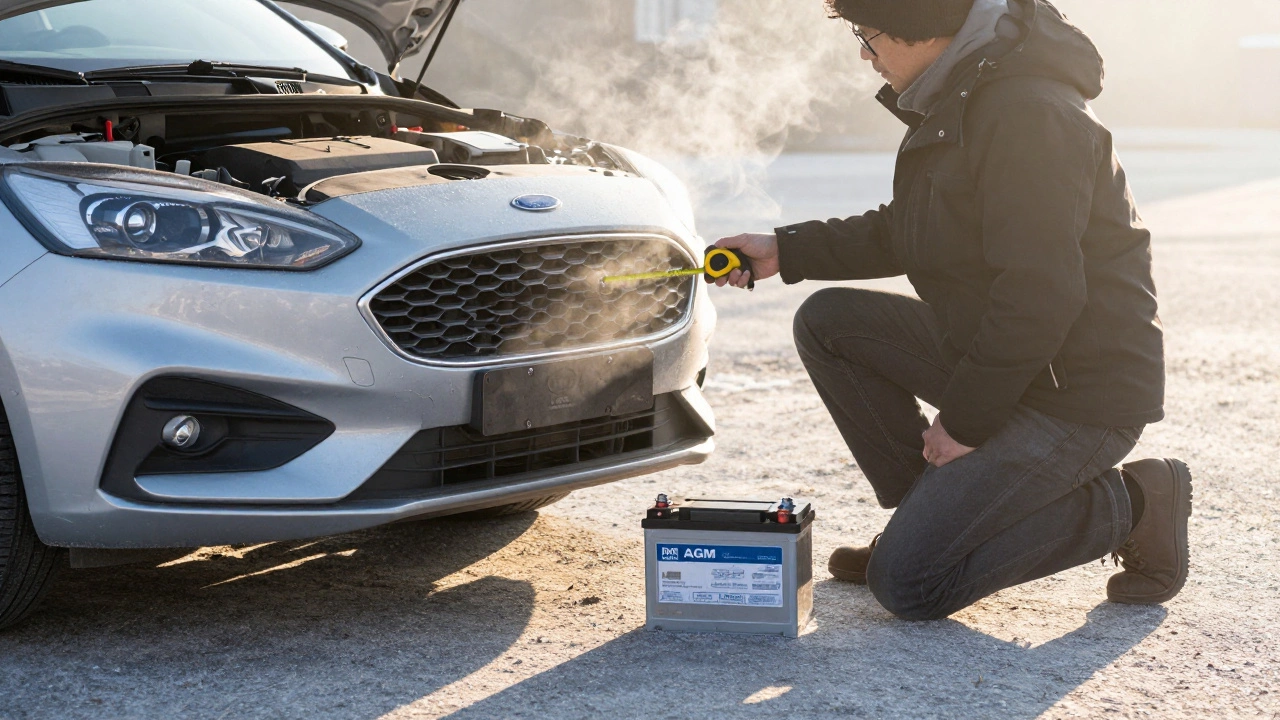
When your car won’t start, it’s rarely the starter motor—it’s the car battery type, a power source that delivers the initial jolt to turn over your engine. Also known as a starting battery, it’s not just a box of chemicals; it’s a system designed to match your engine’s demands, climate, and electrical load. Most cars still use lead-acid batteries, the traditional design with liquid electrolyte and lead plates, but that’s changing fast. Modern Italian cars like Alfa Romeos, Fiats, and Maseratis often need something tougher: the AGM battery, a sealed, maintenance-free type with glass mat separators that handle high electrical demands and frequent stop-start cycles. If you swap in a cheap lead-acid battery where an AGM is required, you’ll kill it in months—and possibly damage your car’s smart charging system.
The battery terminal, the metal connectors that link the battery to your car’s electrical system matters just as much. European cars often use side terminals or proprietary fittings, not the standard top-post style common in American models. Using the wrong terminal adapter can cause poor connections, voltage drops, or even fires. And don’t assume all batteries labeled "European fit" are the same—size, cold cranking amps (CCA), and reserve capacity vary by model. A 2020 Alfa Giulia needs a different battery than a 1995 Fiat Panda, even if they look similar. Your car’s manual lists the exact specs, but most people ignore it until the battery dies in winter.
What you’ll find in the posts below isn’t theory—it’s real-world fixes and comparisons. You’ll see how a failing battery mimics a bad alternator, why AGM batteries last longer in city driving, and how to test your battery without a multimeter. We cover what happens when you mix battery types, why terminal corrosion kills performance, and how to pick a replacement that won’t void your warranty. No fluff. No guesses. Just what works for Italian cars on UK roads.