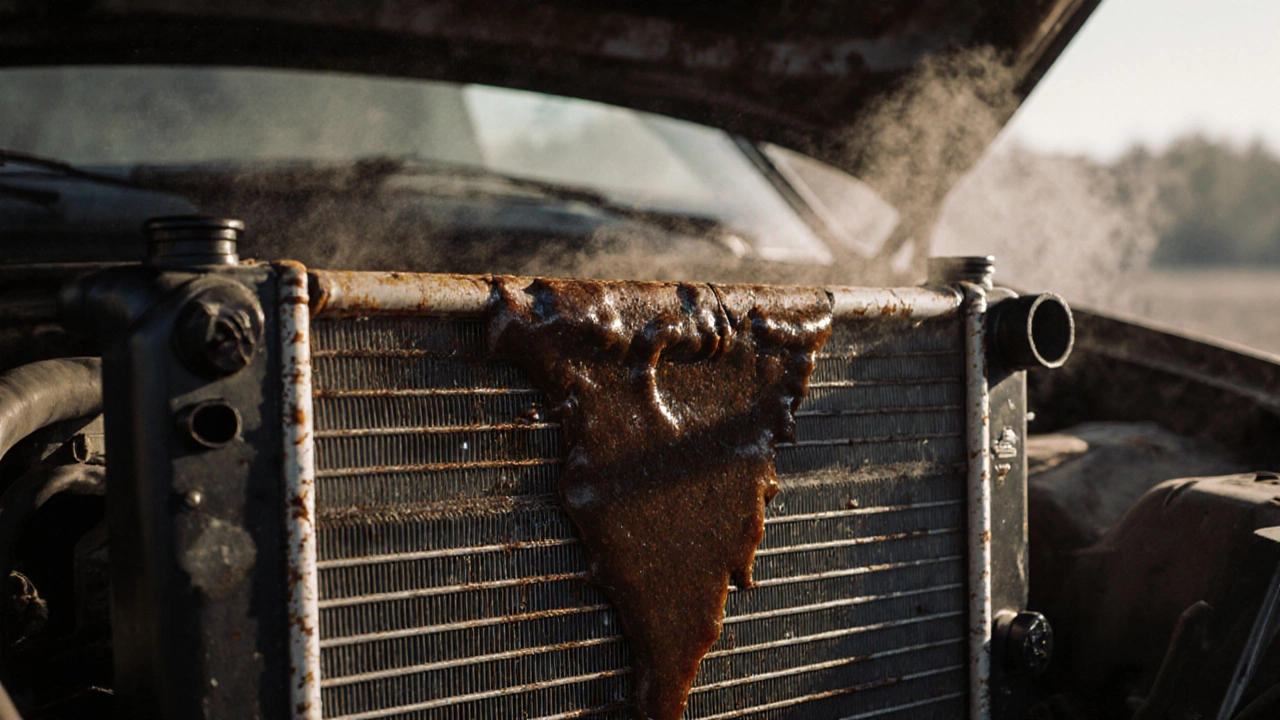
When your car’s coolant system, the network of hoses, radiator, water pump, and fluid that regulates engine temperature. Also known as the engine cooling system, it’s not just a backup—it’s the reason your engine doesn’t turn into scrap metal on a hot day. Most people ignore it until the temperature gauge spikes. But in Italian cars—like Alfa Romeos, Fiats, and Maseratis—where performance meets precision, a failing coolant system can wreck your engine faster than you think.
The radiator, the main heat exchanger that cools circulating fluid before it returns to the engine is the heart of this system. If it’s clogged with rust or debris, or if the plastic tanks crack from age, your car will overheat even on a mild drive. You don’t need a fancy upgrade unless you’re towing or modifying your engine, but you do need to check it every 12 months. Look for leaks under the car, especially near the bottom of the radiator. A slow drip isn’t just a mess—it’s a countdown to failure.
The coolant, the fluid mixture of water and antifreeze that absorbs and transfers heat away from the engine itself needs attention too. Old coolant turns acidic and eats away at metal parts, seals, and hoses. Most manufacturers say every 5 years, but if you drive in heavy traffic or hot weather, swap it every 3. Use the right type—Italian cars often need specific formulations, like G12 or G13, not generic green stuff. Mixing wrong types can cause gunk that blocks flow and leads to overheating.
Don’t forget the water pump, the component that circulates coolant through the engine and radiator. It’s driven by the timing belt or chain, so if you’re replacing one, check the other. A worn pump bearing makes a whining noise, and if it fails, coolant stops moving. No flow means no cooling. And that’s when your engine starts to warp, crack, or seize.
Some signs you’re missing: the heater blows cold air when it should be hot, the temperature needle creeps up in traffic, or you notice a sweet, syrupy smell under the hood. That’s coolant leaking onto hot parts. It’s not just a fluid loss—it’s a warning you’re running on borrowed time.
What you’ll find in the posts below isn’t theory. It’s real fixes from people who’ve been there. How to spot a coolant leak before it costs you a new engine. Why upgrading your radiator might be smarter than you think. What happens when you skip coolant changes. And how to tell if your car’s overheating is a simple fix—or a sign of something deeper. No fluff. No jargon. Just what works.