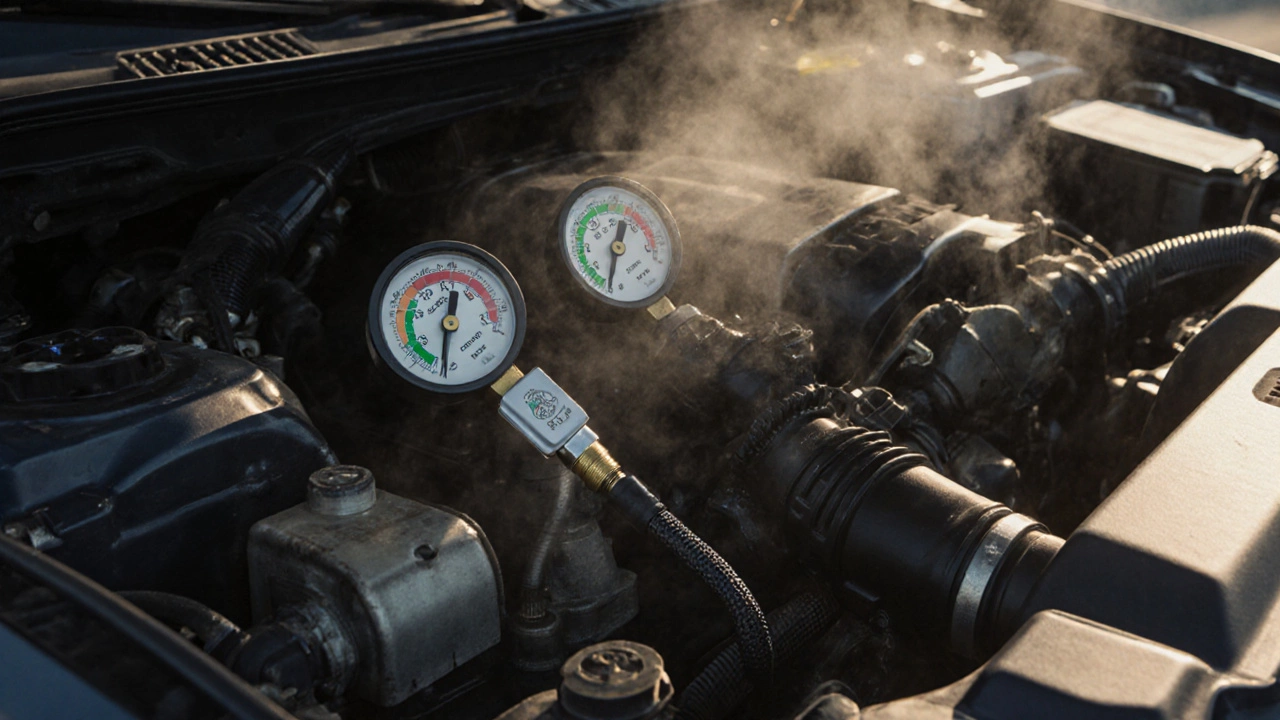
When your car air conditioning, a system designed to cool and dehumidify the cabin using refrigerant, a compressor, and a condenser. Also known as automotive HVAC, it’s one of the most relied-on systems in summer—but also one of the most prone to failure. If your AC blows warm air, smells musty, or makes strange noises, you’re not alone. Most car owners face this issue at least once, and the fix isn’t always expensive—if you know what to look for.
The AC compressor, the heart of the system that circulates refrigerant under pressure is often the culprit. If it’s seized or leaking, the whole system shuts down. But before you assume it’s the compressor, check the simpler stuff first. Low refrigerant is the #1 reason AC stops working, and it’s usually caused by a small leak in the car coolant, the fluid that carries heat away from the cabin and cools the refrigerant lines. You don’t need a garage to find a leak—just look for oily residue near hoses or fittings. A can of refrigerant with sealant from the store can fix minor leaks and restore cooling for months.
Another common issue? A clogged cabin air filter. It’s easy to forget this part exists, but a dirty filter restricts airflow so badly the AC can’t push cool air into the cabin. It’s not a compressor problem—it’s a filter problem. Replace it every 12,000 to 15,000 miles, especially if you drive in dusty or urban areas. And if you smell mildew when you turn the AC on, that’s mold growing in the evaporator drain. A quick cleaning with a spray designed for car AC systems can clear it out without a single tool.
Don’t ignore electrical issues either. A blown fuse, bad relay, or failing AC clutch can stop the system cold—even if the refrigerant is full. These are cheap fixes if you’ve got a multimeter and 20 minutes. Most modern cars have a diagnostic code for AC problems, and you can read them with a basic OBD2 scanner.
Fixing your car’s air conditioning doesn’t mean spending hundreds on a dealership quote. Often, it’s about spotting the small signs early: weak airflow, warm air after the engine warms up, or a hissing sound when you turn it on. The posts below cover exactly these scenarios—what to check, what tools you need, how to test the compressor, why your AC only works on high speed, and how to avoid scams when buying parts. Whether you’re dealing with a Fiat 500, an Alfa Romeo Giulia, or a Maserati, the fundamentals are the same. You’ll find real-world fixes from people who’ve been there, not theory from a manual.