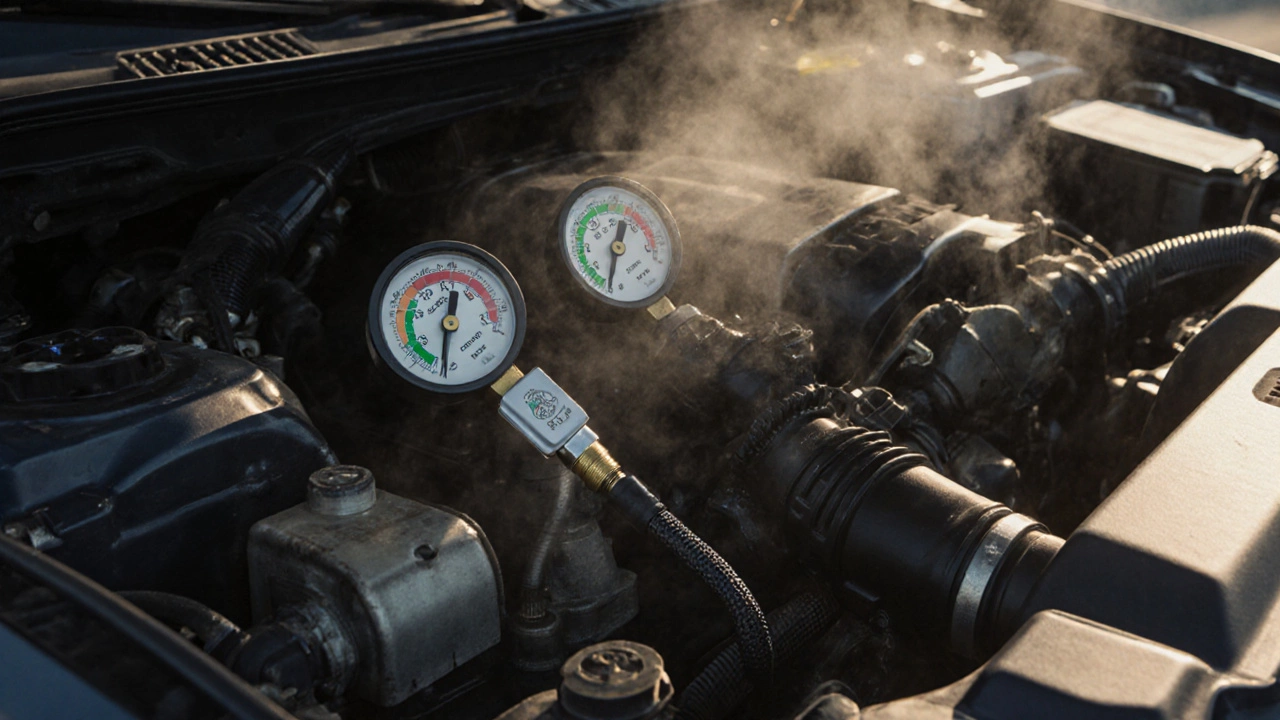
When your car’s air conditioning stops blowing cold air, it’s often not because the system is just low on refrigerant—it’s because refrigerant leak, a loss of pressurized coolant in the A/C system that prevents proper cooling. Also known as A/C gas leak, it’s one of the most common reasons your AC fails, especially in older Italian cars like Alfa Romeos and Fiats that have aging rubber hoses and seals. Refrigerant doesn’t just disappear; it escapes through cracks, worn O-rings, corroded lines, or damaged components. If you’re noticing warm air when the AC is on, or a hissing sound near the engine bay, you’re likely dealing with a leak.
A coolant leak, a related issue where the liquid coolant escapes from the engine’s cooling system might get confused with a refrigerant leak, but they’re totally different systems. One keeps the engine from overheating; the other keeps your cabin cool. Mixing them up leads to wrong repairs. Refrigerant leaks show up in the car air conditioning, the system that cools the cabin using pressurized refrigerant and a compressor—not the radiator or coolant reservoir. Common spots for leaks? The evaporator core under the dash, the compressor shaft seal, the condenser in front of the radiator, or the hoses connecting them. These parts wear out over time, especially in hot climates or after years of vibration from rough roads.
Ignoring a refrigerant leak doesn’t just make your ride uncomfortable—it can kill your compressor. Without enough refrigerant, the compressor runs dry, overheats, and seizes. That’s a £500+ repair instead of a £100 fix. You might also notice oily residue around fittings or hoses—that’s refrigerant carrying oil out of the system. A professional can use UV dye and a blacklight to find the exact spot, or use an electronic leak detector. DIY kits exist, but they’re tricky and often miss small leaks. If your car’s AC used R134a refrigerant (common in cars up to 2013), it’s easier to find parts and repairs. Newer models use R1234yf, which is more expensive and requires certified tools.
Before you rush to refill the system, check for the real signs: AC that blows warm air even on full blast, reduced airflow, unusual noises when the compressor kicks on, or a musty smell (which can mean moisture got in after the leak). And don’t forget to inspect the cabin air filter—if it’s clogged, it can mimic poor cooling by restricting airflow. Most of the posts below cover related fixes: how to spot failing components, what parts wear out fastest in Italian cars, and how to avoid overpaying for A/C repairs. You’ll find real-world advice on diagnosing leaks without a shop, what tools actually help, and which fixes last. No fluff. Just what works.