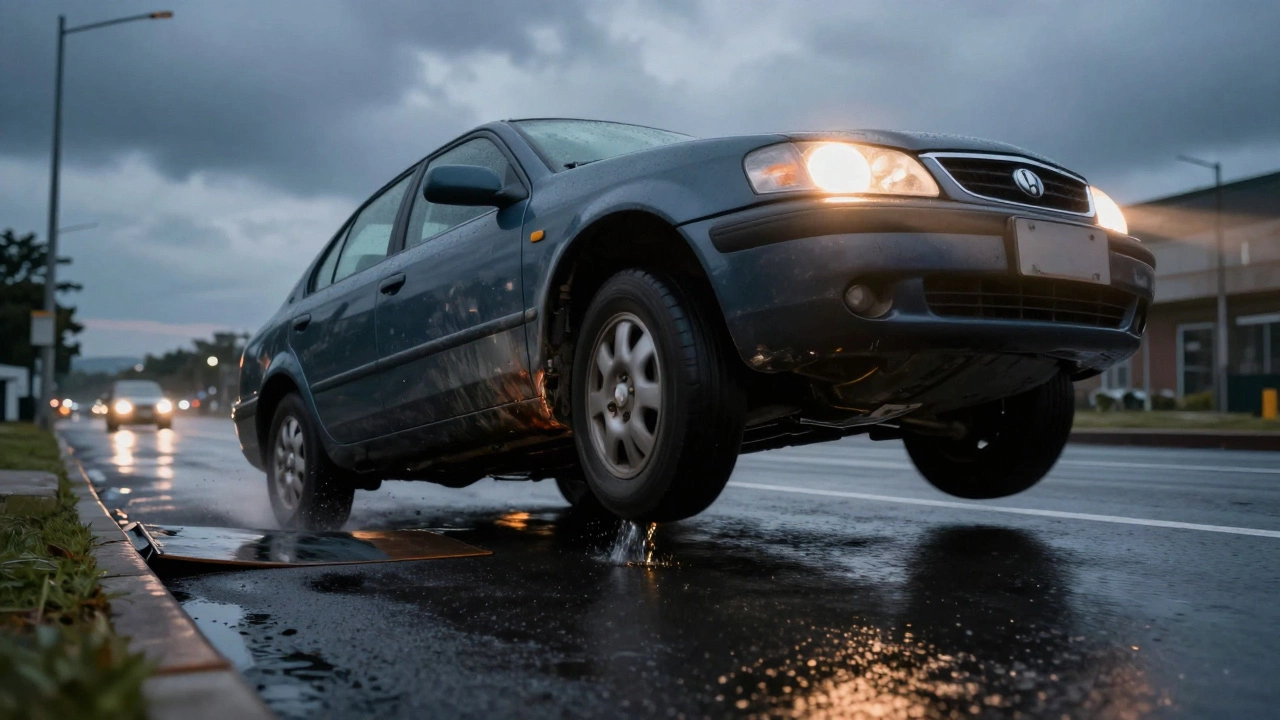
When your car starts bouncing like a pogo stick over bumps, or you hear loud clunks when going over speed bumps, you’re not just dealing with an uncomfortable ride—you’re facing suspension failure, the breakdown of components that control how your car handles road imperfections and keeps tires in contact with the surface. Also known as worn suspension, it’s not just about ride quality—it’s a safety issue that affects braking, steering, and tire life. Most drivers wait too long to notice the warning signs, thinking it’s just an old car acting up. But suspension failure doesn’t happen overnight. It creeps in slowly, starting with small changes you might ignore: a slight dip when braking, a tire wearing unevenly, or a faint knocking sound that disappears when you slow down.
What’s actually failing? Usually, it’s the bad struts, the shock-absorbing units that work with springs to control up-and-down motion. Also known as shock absorbers, they’re the first to go in cars driven on rough roads or in the UK’s patchy pavement conditions. When they wear out, your car doesn’t just bounce—it takes longer to stop, sways more in turns, and can even make your tires lose grip on wet surfaces. Then there’s the worn suspension, the broader system including control arms, bushings, and ball joints that connect the wheels to the chassis. When these parts loosen or crack, you get that unsettling feeling that your car is drifting or wobbling, even on straight roads. You might not realize it, but these failures also speed up tire wear. A car with bad suspension doesn’t hold its tires flat on the road, so they wear on the edges instead of evenly. That means you’re replacing tires more often, not because you drive hard, but because the suspension can’t do its job.
Ignoring suspension failure isn’t just expensive—it’s dangerous. Studies show that vehicles with worn struts can increase stopping distances by up to 20% in emergency braking. That’s the difference between avoiding a collision and hitting it. And if you hear clunking or feel your car leaning heavily when turning, you’re already past the point of minor repair. The good news? Most of these issues are easy to spot if you know what to look for. In the posts below, you’ll find real-world guides on how to tell if your struts are done, why your car bounces like a basketball, what those strange noises really mean, and how to fix them without getting ripped off. No fluff. No guesswork. Just clear, practical advice from drivers who’ve been there.