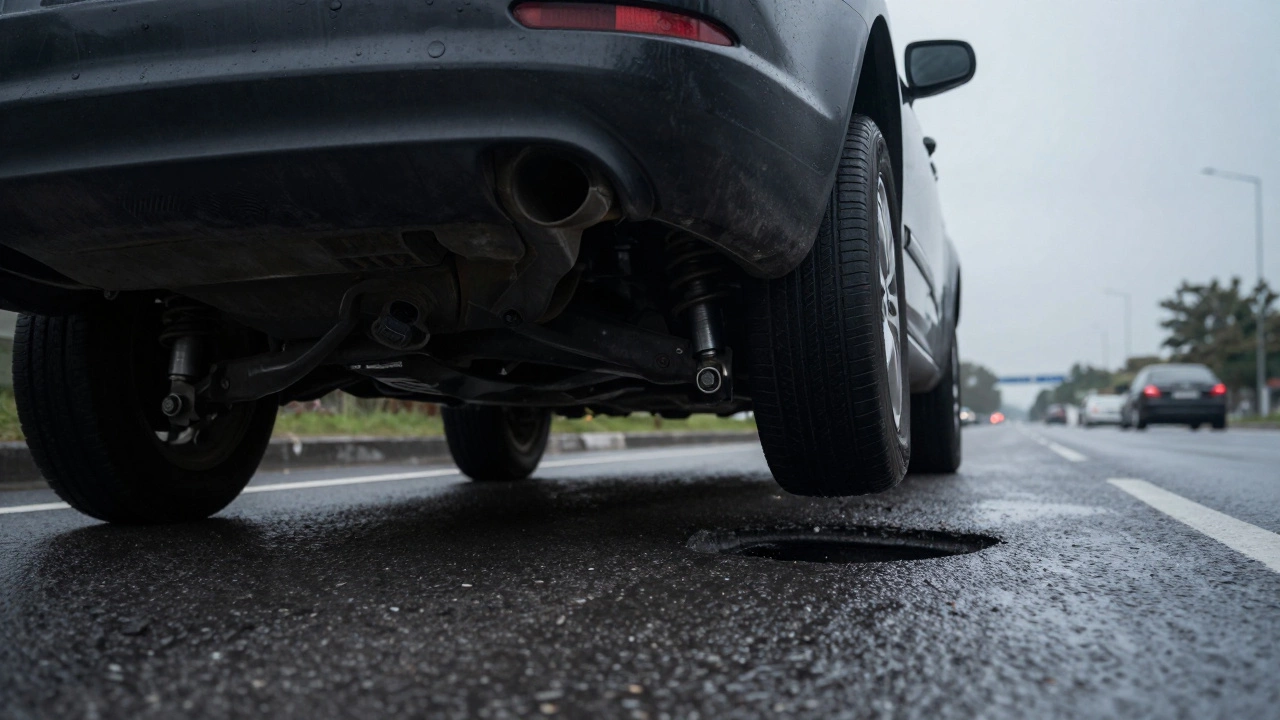
When your car feels bouncy, pulls to one side, or makes clunking noises over bumps, it’s not just annoying—it’s a sign your suspension, the system that connects your wheels to the car and absorbs road shocks. Also known as ride control system, it keeps your tires on the road and your passengers comfortable. Ignoring it doesn’t make the problem go away. It makes it worse—and more expensive.
The suspension repair cost isn’t one number. It depends on what’s broken, what car you drive, and where you live. If your struts, combined shock absorbers and spring supports that handle both ride control and structural support are worn out, you’re looking at £200–£500 per axle for parts and labour. Shock absorbers, simple dampers that control spring movement alone cost less—£80–£200 each—but they don’t handle the weight like struts do. If your suspension parts, includes control arms, bushings, ball joints, and sway bar links that connect and support the wheels are all shot, the bill can jump to £800 or more. And if you drive an Alfa Romeo or a Maserati, expect to pay more for parts that aren’t made for mass-market cars.
What makes suspension wear out? Rough roads, heavy loads, and neglect. If you’ve been driving with a bad suspension, you’re not just riding poorly—you’re wearing out your tires faster, straining your brakes, and risking control in emergencies. One post in this collection explains how driving with worn struts can add 20% to your braking distance. Another shows how a simple clunking noise from the front end often means a failed ball joint—not a $50 fix, but a $300 one if you wait too long.
You don’t need to replace everything at once. But you do need to know what’s broken. Some signs are obvious: the car dips when braking, leans hard in turns, or bounces like a trampoline after hitting a speed bump. Others are quieter—uneven tire wear, a crooked steering wheel, or a vague feeling when turning. These aren’t just "niggles." They’re warnings.
This collection pulls together real-world advice from drivers who’ve been there. You’ll find posts that break down what actually needs replacing, how to spot early damage, and why skipping a strut replacement isn’t saving money—it’s just delaying a bigger bill. Whether you’re trying to decide if you can live with a noisy suspension for another month, or you’re ready to fix it once and for all, you’ll find the facts here—no sales pitch, no fluff, just what works on UK roads.