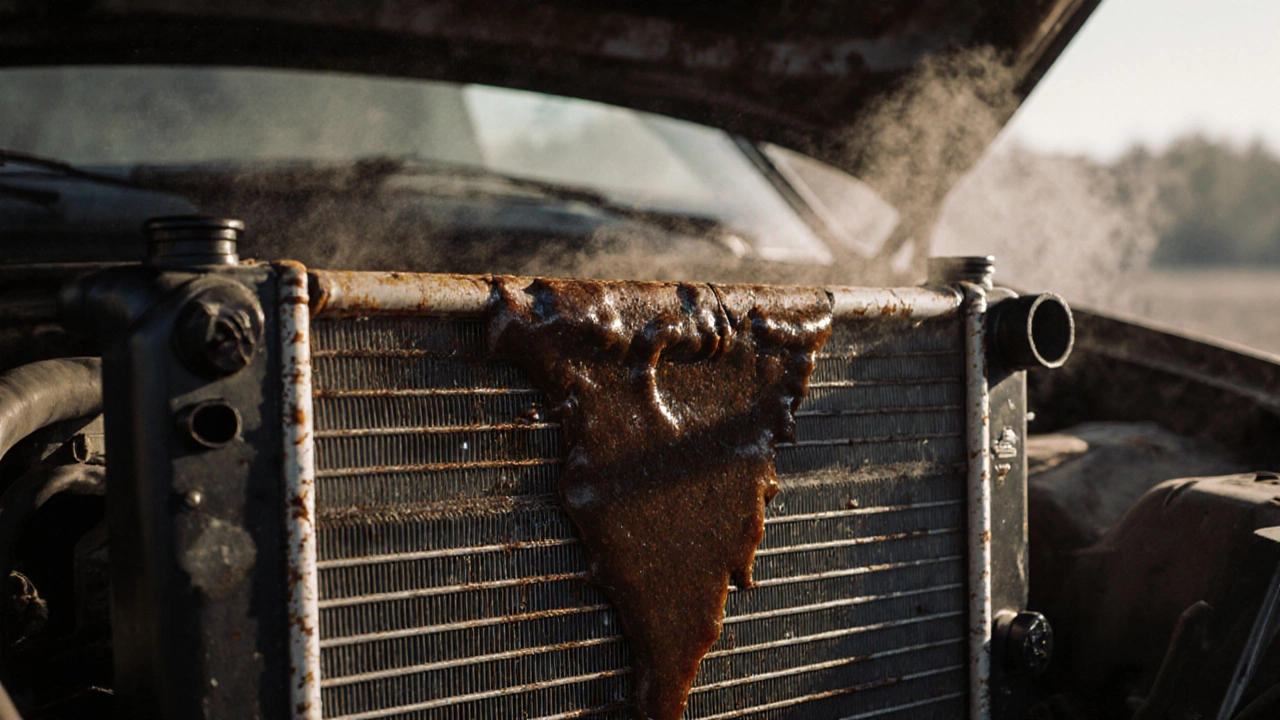
When your radiator, the main component that cools your engine by circulating coolant through fins and tubes. Also known as a cooling radiator, it’s the unsung hero keeping your engine from turning into a melted mess. Most people don’t think about it until the temperature gauge hits red. But waiting that long is like waiting for your brakes to fail before checking the pads. A failing radiator doesn’t always scream—it just slowly lets your engine overheat, and that’s when the real damage starts.
So when should you actually replace a radiator? It’s not just about age. If you’re seeing coolant leaks under your car, especially green, orange, or pink puddles, that’s a red flag. Cracks in the plastic tanks, rusted metal fins, or a radiator that feels hot on top but cold on the bottom? Those aren’t normal. Even if your car isn’t overheating yet, a clogged radiator can’t move coolant properly, and that leads to hot spots in the engine. Over time, that warps heads, blows gaskets, and turns a £200 radiator replacement into a £2,000 engine rebuild. And if you drive in hot climates, tow trailers, or have a modified engine? Your radiator is under more stress than factory specs ever planned for. Upgrading isn’t just optional—it’s smart.
Don’t confuse radiator issues with other cooling problems. A bad thermostat, low coolant, or a failing water pump can mimic radiator failure. But if you’ve checked those and the problem sticks, the radiator’s the next suspect. Look for corrosion around the caps and hoses, or if the radiator feels spongy when you squeeze the top hose. A simple pressure test at a garage can confirm if it’s holding pressure—or if it’s leaking internally. And if your radiator’s more than 8 years old and you’ve never replaced the coolant? You’re running dirty fluid through a system designed for clean flow. That sludge builds up, blocks tubes, and kills efficiency.
Some people think a radiator is a "fit and forget" part. It’s not. It’s a precision cooling device that works with your thermostat, fan, hoses, and coolant. If one part fails, the others get stressed. That’s why replacing a radiator often means checking the thermostat, flushing the system, and inspecting the water pump. You don’t want to install a brand-new radiator and then let a worn-out thermostat ruin it in a month.
And here’s the thing—most radiator replacements aren’t about performance. They’re about survival. You’re not upgrading for speed. You’re replacing because your engine’s begging for mercy. The posts below show you how to spot the quiet signs before it’s too late, what to look for when buying a replacement, and why some "budget" radiators fail faster than others. You’ll also find real stories from people who ignored the warning signs and paid the price. This isn’t theory. It’s what happens when you wait too long.