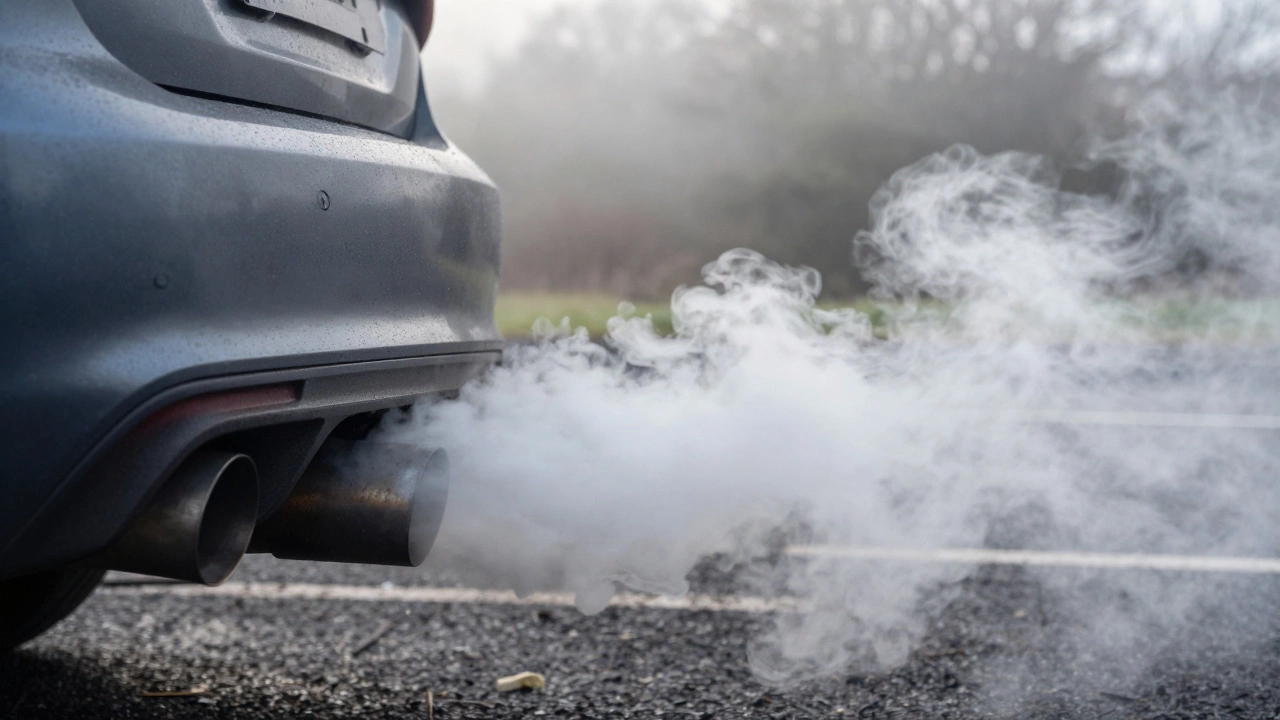
When you see white smoke from exhaust, a visible vapor rising from your car’s tailpipe, often mistaken for steam. Also known as steam-like exhaust, it’s not just condensation—it’s a signal your engine is burning something it shouldn’t be. Unlike black smoke (fuel overload) or blue smoke (oil burning), white smoke usually means coolant is getting into the combustion chamber. This isn’t a minor issue. It’s often the first sign of a failing head gasket, a seal between the engine block and cylinder head that keeps coolant and oil separate, or a cracked engine block. If ignored, it can lead to overheating, warped parts, or even a seized engine.
What causes coolant to enter the cylinders? The most common culprit is a blown head gasket, a critical component that maintains pressure and separation in the engine’s internal systems. Overheating, poor maintenance, or old age can cause it to fail. You might also have a cracked cylinder head, the metal piece that sits on top of the engine and holds valves and spark plugs, or a warped surface where the head meets the block. In rare cases, a damaged engine block, the main structure of the engine that houses cylinders and coolant passages can let coolant seep in. All of these problems result in the same symptom: white smoke, especially when the engine is cold or under load. You might also notice a sweet smell—like antifreeze—or milky oil under the dipstick, which means coolant is mixing with engine oil.
Some people think white smoke is just moisture in the exhaust, especially on cold mornings. That’s true for light, brief puffs—those are harmless. But if the smoke sticks around, gets thicker as the engine warms up, or shows up during acceleration, you’ve got a real problem. Ignoring it won’t make it go away. It’ll just get worse—and more expensive. Fixing a head gasket isn’t cheap, but it’s far cheaper than replacing an engine. The good news? You can spot early signs before total failure. Check your coolant level regularly. Look for leaks under the car. Smell the exhaust. And if you see thick white smoke every time you start the car, don’t wait. Get it checked now.
Below, you’ll find real-world guides from drivers who’ve faced this exact issue—how they diagnosed it, what parts they replaced, and what actually worked. No guesswork. Just clear steps to figure out if it’s a head gasket, a coolant leak, or something else entirely.