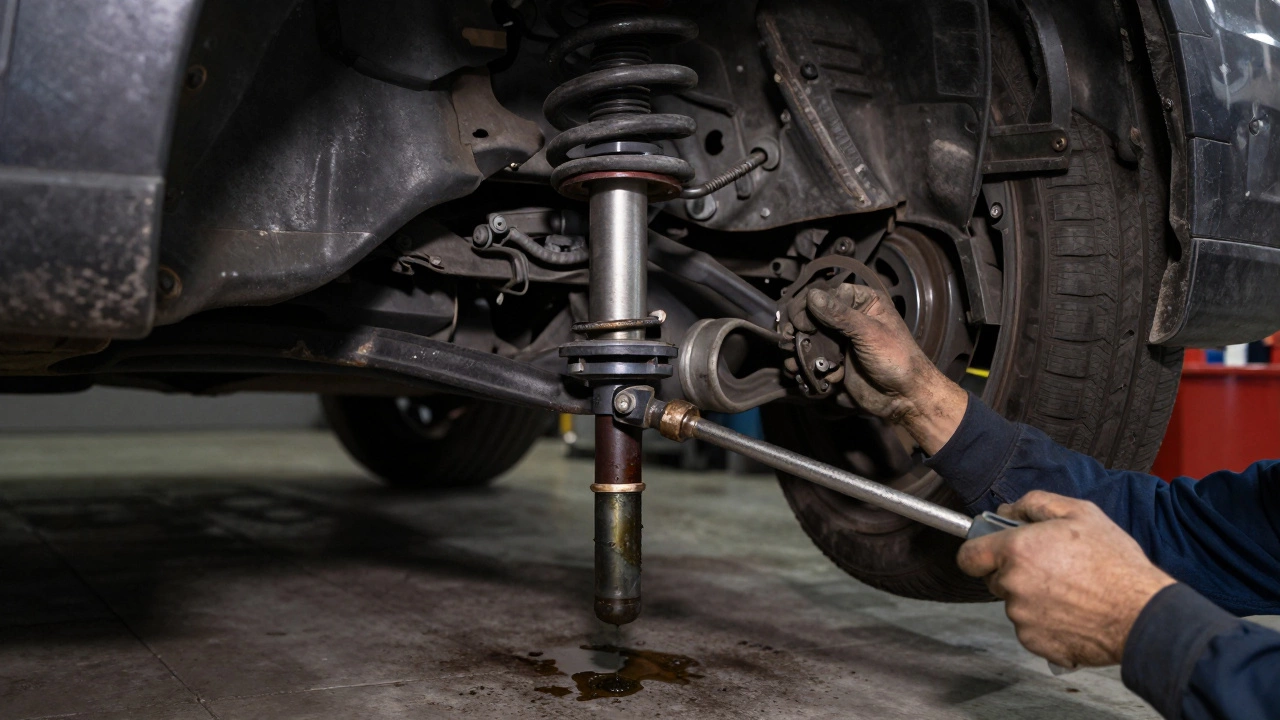
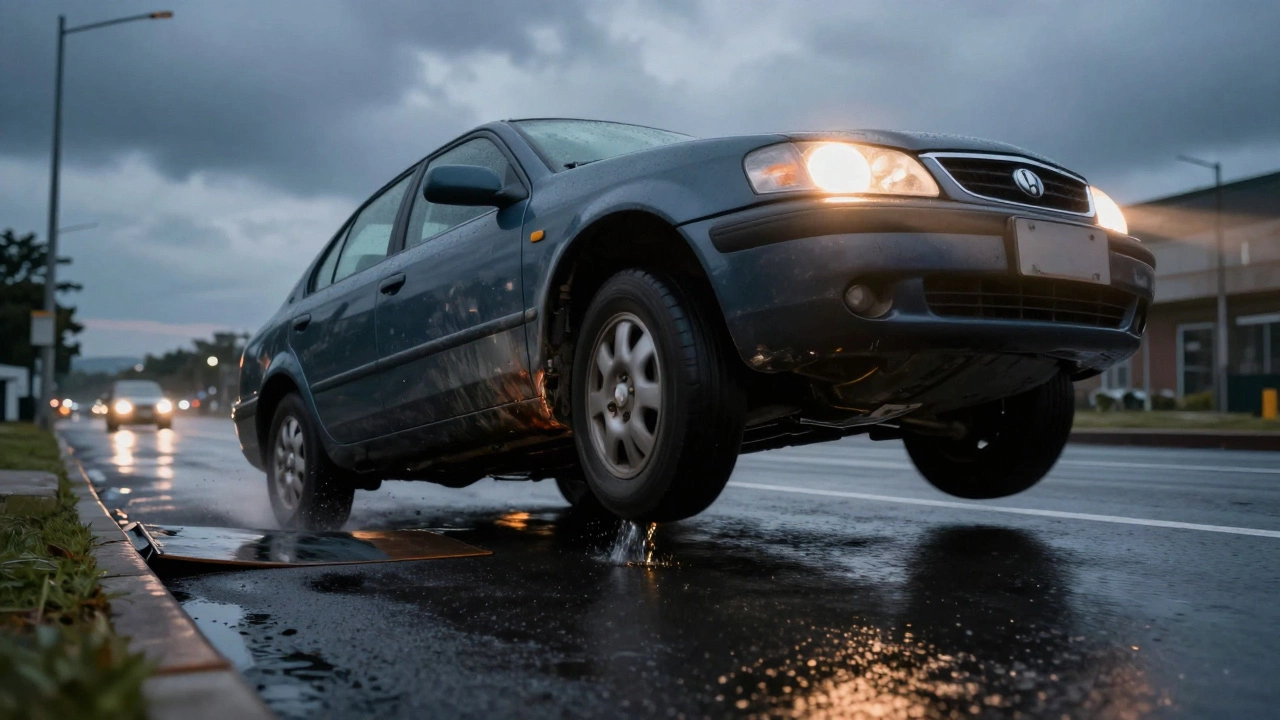
When your worn suspension, the system that keeps your car stable over bumps and controls how tires grip the road. Also known as suspension failure, it doesn’t just make your ride rough—it makes it unsafe. Many drivers ignore the early signs, thinking it’s just an old car acting up. But worn suspension isn’t a minor annoyance. It’s a silent threat to your braking, steering, and overall control.
Look for bad struts, the shock-absorbing components that prevent your car from bouncing uncontrollably. If your car feels like it’s floating over speed bumps or dives hard when you brake, those are red flags. You might also notice uneven tire wear, a clear sign that your wheels aren’t staying flat on the road. This isn’t just about replacing tires—it’s about fixing the root cause. And if you hear clunking or knocking when you go over bumps, that’s metal hitting metal inside your suspension. That’s not normal. That’s wear. That’s danger.
Driving with worn suspension means longer stopping distances, less control in emergencies, and faster damage to other parts like your tires and steering components. It’s not just expensive—it’s risky. The UK has plenty of rough roads, potholes, and wet conditions. Your suspension isn’t just for comfort; it’s your first line of defense. The posts below cover real cases: how to spot failing struts, why your car bounces like a trampoline, and what noises mean you need parts replaced now—not later. You’ll find clear, no-fluff advice from people who’ve been there. No guesswork. Just what works.